
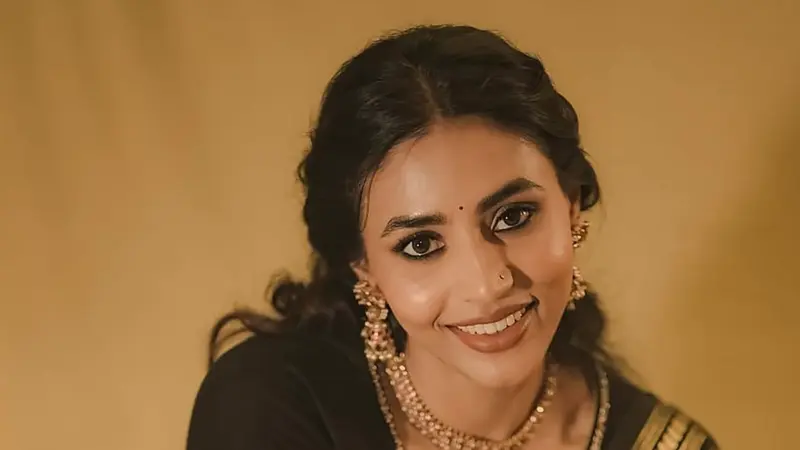

The Kannada film fraternity is speaking out against photographers using voyeuristic angles to shoot women actors at film events.
Sapthami Gowda, the female lead in the blockbuster hit 'Kantara', protested against it earlier this week.
"Repeatedly, videos and photographs of female actors at public events are shot and circulated from inappropriate angles, with unnecessary zooms that focus on our bodies rather than our work," she wrote on social media.
Instagram and other social media platforms are replete with titillating images and videos of women actors, reminiscent of paparazzi culture.
"It is part of today's new media," senior journalist Sunayana Suresh tells Showtime. "Marketing teams of low-budget films often invite these 'paps' to premieres and events," she says.
Senior female journalists are aware of this, and sometimes alert the actors to what is happening at film events. There are whispers that a senior photographer refuses to shoot women actors in 'salwar kameez'.
Rukmini Vasanth supports Sapthami Gowda as she slams paparazzi for 'unnecessary zooms'Recurring problem
This is not the first time actors have called out paparazzi for such behaviour.
In 2013, Ramya (Divya Spandana) had called out two Bengaluru photographers on the sets of the film 'Neer Dose'. Actors Aindrita Ray, Sharmila Mandre and Priyanka Upendra have also shared similar experiences.
Deepika Padukone, in 2014, called out a leading newspaper for zooming in on her cleavage. She wrote on Twitter (now X): 'Yes I am a woman. I have breasts and a cleavage. You got a problem?'
In 2015, at an event, when photographers positioned their cameras to shoot Aishwarya Rai Bachchan from a low angle, she had told them to "stand up and shift".
Clickbait approach
Apoorva Bharadwaj, known for films like 'Nodidavaru Enantare' and 'Nimma Vastugalige Neeve Javaabdaararu', is appalled that some accounts circulated photos of her in a bikini from a film when they were talking about her efforts as an actor.
"It wasn't even relevant to the news. Photos of actors where the cleavage is visible are picked as clickbait. It is so disrespectful that the focus shifts to our bodies from our work," she says.
When Sapthami called out the paparazzi on social media, many questioned her choice of clothing, and posted obscene comments. "All this happens because these are anonymous accounts. And what a man wears is never discussed," says Apoorva.
No accountability
Films need media, paparazzi and publicity, but accounts posting such videos must be reined in, actor Hitha Chandrashekhar urges. "We have requested the Karnataka Film Chamber of Commerce to set clear rules and boundaries," she adds. Some film teams believe any publicity is good publicity, observes Apoorva. "They must look into what kind of people are being invited," she says.
Influenced by Bollywood trends, many YouTubers started these pages on Instagram, says Harish Arasu, who manages public relations for Kannada movies.
"For publicity, many young actors get their pictures taken when they are working out at the gym. This content attracts millions of views on social media, so producers think it is a good way to get the word out about their films. It saves them the Rs 5 lakh they would otherwise have to spend on TV channels," he observes.
Now that it has turned into a serious problem, Harish says he will invite only those who behave in a dignified manner.
Male gaze extension
Cinema has long used women's bodies to sell male-driven stories. Paparazzi culture follows the same logic - sexualised framing from a voyeuristic gaze.
"It is a result of years of conditioning," says Hitha. "Our society is still largely conservative; people ask 'why are you wearing such clothes' instead of 'why are you shooting her like that'."
"Films and society mirror each other. Women are raised to guard their dignity and bodies, and men exploit that vulnerability," Apoorva says, adding that she finds it perplexing when women put down other women.