



Application of the nursing process in a complex health care environment
The acuity of patient care in the hospital setting has grown significantly over the last 10 years. For the nurse who works on an acute medical-surgical unit, it can be challenging to address the demands of post-operative assessment and care, as well as common medical challenges such as advanced age, obesity, and co-morbid disease. The 79-year-old female who has just had a hip fracture repair is not just “a hip” patient, but may also be an individual with diabetes, osteoporosis, hypertension, alcohol use disorder, asthma, obstructive sleep apnea, or early-stage dementia.
The acuity of patient care in the hospital setting has grown significantly over the last 10 years. For the nurse who works on an acute medical-surgical unit, it can be challenging to address the demands of post-operative assessment and care, as well as common medical challenges such as advanced age, obesity, and co-morbid disease. The 79-year-old female who has just had a hip fracture repair is not just “a hip” patient, but may also be an individual with diabetes, osteoporosis, hypertension, alcohol use disorder, asthma, obstructive sleep apnea, or early-stage dementia.
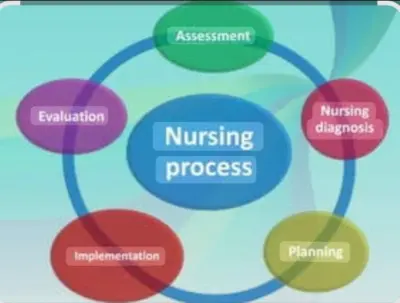
Nursing students are introduced to the nursing process during academic preparation. The nursing process is a stepped approach to assess and care for patients. It is a tool for both students and nurses to help ensure a consistent and strategic approach to patient care. The steps of the nursing process include assessment, nursing diagnosis, planning, intervention, and evaluation. These five steps are used cyclically and repeatedly during patient care. The sequence must be followed from start to finish to ensure that the needs of the patient are addressed (Morris, 2006).
signs. Every 2 years these clinical order sets are reviewed and updated. This typically involves ensuring that the current processes meet the standards of care and best practice recommendations. This biannual revision process includes a review of the literature and external site surveys. Recently, this involved verifying that the clinical order sets were up to date with respect to how frequently nurses are directed to obtain vital signs in post-operative care.
Key themes
A literature review identified a few key themes. It was noted that collection of vital signs generally included a pattern of hourly vitals for the first 4 hours, then a reduction to every 4 hours. Despite some variance in both the literature and in the external site review, overall the most common pattern identified was that post-operative vital signs were assessed every 4 hours (Zeitz & McCutheon, 2002). However, another theme identified was the paucity of research outlining a clear standard for the frequency of taking vital signs. This theme reinforces the importance of applying the nursing process and critical thinking to facilitate early identification of concerns regarding a patient’s status. Embedding the nursing process in care supports a comprehensive approach and strategy, and can mitigate delayed interventions, failure to treat, and the related negative sequelae. Nurses have an important role in the development of policies and procedures; their input supports the policy and aligns with the systematic and comprehensive approach recognized in the nursing process (Zeitz & McCutheon, 2002).
A review of the literature, as well as nursing associations and governing bodies, does not outline a specific directive on best practice in the frequency of obtaining vital signs. The Academy of Medical-Surgical Nurses recognizes this variance in vital signs routines, from every 15 minutes for the first hour, to every 4 hours once the patient is stable (AMSN, 2019). As in the cyclical nature of the nursing process, one must circle back to the patient and apply the nursing process to identify the patient’s current needs. Obtaining vital signs is a basic and quick assessment that nurses complete as part of a comprehensive assessment. A proactive approach to care and use of the nursing process can ensure early identification of complications and avoid failure to rescue and the resulting negative sequelae (Watkins, Whisman, & Booker, 2015).
While the organization’s policy directs the frequency of vital sign assessments, nurses may also be required to take additional vital signs, such as before providing additional analgesic or cardiac medications. Routine assessment of vital signs is a key step in the nursing process to help identify trends and patterns. This can be helpful in the early identification of complications such as hypotensive shock or infection, or a cardiac event such as atrial fibrillation or pulmonary embolism.
Invaluable tool
Although the five steps of the nursing process may flow naturally for experienced nurses, one should never become complacent. All nurses must ensure that this stepped approach is embedded in their practice. While there may be a sense of repetition with post-operative routines, each patient is a unique individual in how they present and respond to a surgical procedure. The nursing process is an invaluable tool that helps us to not lose sight of this central fact. Application of the nursing process supports high-quality patient care and helps nurses avoid falling into the trap of a reactive and task-focused approach to care.
In the stressful environment of acute health care, there is risk for gaps in situational awareness related to human factors, cognitive overload, interruptions, and distractions. However, the nursing process can help us maintain vigilance in our focus on patient safety and optimal care outcomes (Ead, 2015). We are seeing the use of technology in facilitating early identification and communication of clinical complications. Electronic documentation tools can allow input of the patient assessment to provide a calculated score, which triggers the appropriate action based on the severity of the score. For example, if the nurse inputs a low pulse, blood pressure, and level of consciousness, the calculated score indicates that communication with the physician and/or medical emergency team is warranted. These early warning systems align with the nursing process and support excellent patient care.
Nursing staff collaborate with many health care disciplines and act as gatekeepers for the patient’s well-being. As the length of patient stay in hospital continues to shorten while our patient population ages and becomes more complex, it is vital that nurses maintain the basic principles taught in college and university. While the literature does not offer clear guidance with respect to the optimal frequency of monitoring post-operative vital signs, the nursing process provides direction to continually assess, plan, implement, and reassess the patient’s status.
Take a moment to consider the challenges you face in patient care, and how resources such as policies, procedures, and clinical order sets are part of your nursing tool belt. If you identify a gap in one of these resources, use the nursing process to advocate for a review to ensure that care protocols are up to date in your clinical setting. It has been identified that nurses largely drive practices and policies in patient care (Zeitz & McCutheon, 2002). Nurses must continue to influence and set high standards of care to ensure that our complex surgical patient population receives the best care possible.
Author
Ram Bharosh Dubey Guest Expert Udan Project, Government, non Government and Corporate Sector, Editorial Board Member international Journals UGC aproved
KM anuradha Gupta
M A, Bed ,
CMS (community medical sarvice) 2007