
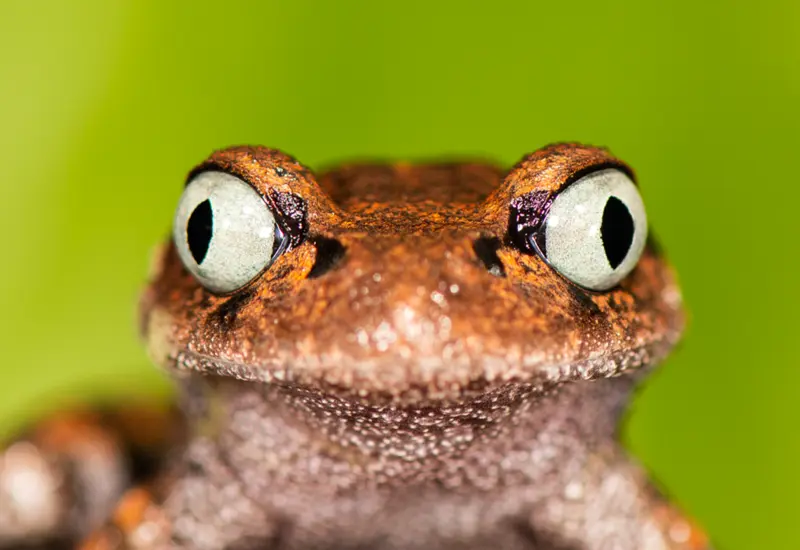

Guwahati: For years, scientists believed that a frog called Leptobrachium bompu was one of India's rarest amphibians. First discovered in 2011 in Eaglenest Wildlife Sanctuary, Arunachal Pradesh, the species was known from just a single specimen.
No one had seen it again for over a decade.
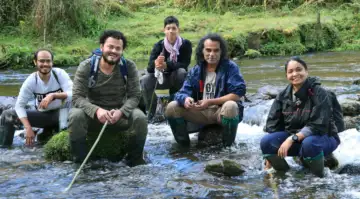
That changed recently, when a group of researchers led by Prof S.D. Biju from the University of Delhi returned to the forests where it was first found. What they discovered surprised them: the frog wasn't rare after all. In fact, it was living quietly in several locations across Arunachal Pradesh.
Between 2020 and 2023, the team carried out surveys in Eaglenest, Tale Valley Wildlife Sanctuary, and nearby areas. They worked mostly at night, when frogs are more active, and listened for the distinctive calls of males. They found not just one or two, but several individuals, including tadpoles and even a mating pair. This confirmed that L. bompu was breeding and thriving in its habitat.
The frog is easy to miss. It hides under leaves, comes out only during the breeding season, and calls softly from the forest floor near streams. The researchers noted that its breeding season is short-lasting from late March to mid-May-so people are unlikely to notice it outside this time.
The study didn't just stop at finding the frogs. The researchers collected genetic samples and compared them with data from similar frogs in China's Medog County.
Those frogs were earlier thought to be the same species. But the DNA showed a clear difference-about 3.6 to 4.2 percent. That may sound small, but for frogs, it's enough to suggest they could be separate species. This means the Chinese population, for now called L. cf. bompu, might need to be reclassified after further research.
The study also included the first detailed look at the frog's appearance, call, and tadpole stage. The males have round bodies, large eyes, and slightly swollen fingertips. Their call is a soft, low-pitched series of notes, repeated at night.
The tadpoles live in slow streams and have features that help them stay close to the bottom.
One unusual observation was of a mating pair. The researchers found them in a forest stream at night, in a position known as amplexus-where the male clasps the female to fertilize the eggs as she lays them. Nearby, they discovered freshly laid eggs on wet sand under a rock. This confirmed details of the frog's breeding behavior that had never been seen before.
By combining field observations, DNA studies, and sound recordings, the researchers have added a great deal to what is known about this species. Their work shows that some animals believed to be rare may simply be hard to find. In places like Arunachal, where access is difficult and the forest is thick, species can go unnoticed for years.
"We've been studying this species over the past four years, and it's certainly a highly secretive and difficult animal to observe or study. But what makes it truly fascinating is that it raises so many interesting questions," says A.N. Dikshit Akalabya Sarmah, the first author of the paper.
The rediscovery of L. bompu is good news for conservation. It reminds us that detailed fieldwork still has a role to play in understanding biodiversity. There may be many more such cases-species hiding in remote habitats, active only for a few weeks, and easy to overlook.
For Leptobrachium bompu, it turns out the story wasn't about extinction or loss. It was about patience, listening closely, and looking in the right place at the right time.
From boulders to biscuits: Dawki's trade holds steady amid import curbs