

Guwahati: For generations, tribal communities in Arunachal Pradesh have harvested insects from forests, farms and home gardens-not as novelty food, but as an integral part of everyday nutrition.
Now, new scientific evidence suggests that this indigenous knowledge may hold answers to some of today's most pressing nutritional challenges.
A study published in the International Journal of Tropical Insect Science has found that three insects traditionally consumed by tribes in Arunachal's Upper Siang district are rich sources of heart-healthy fats and essential vitamin B complexes. The findings show that these insects are nutritionally comparable-and in some cases superior-to globally promoted edible insects such as crickets and mealworms.
The research was conducted under the project "Edible Insect Diversity in Arunachal Pradesh: A Potential Alternative Source of Medicine, Nutrition and Livelihood Enhancement", financed by the Ministry of AYUSH. The study was carried out by researchers from the North Eastern Institute of Ayurveda & Folk Medicine Research (NEIAFMR), Pasighat.
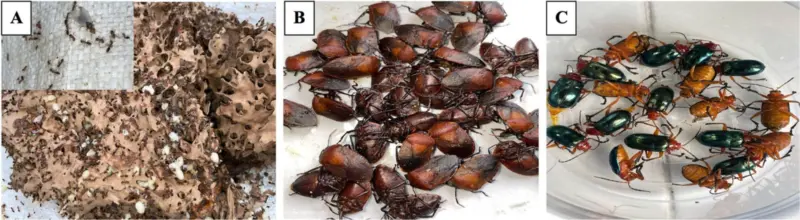
The researchers analysed the velvety tree ant (Liometopum lindgreeni), the stink bug (Coridius janus) and the taro borer beetle (Aplosonyx chalybaeus)-all commonly consumed by the Adi community. Using advanced laboratory techniques such as gas chromatography-mass spectrometry (GC-MS) and high-performance liquid chromatography (HPLC), the scientists mapped the insects' fatty acid profiles and vitamin B composition in detail.
A surprise winner: the taro borer beetle
Among the three species, the taro borer beetle emerged as a standout for its exceptional fat quality. The study found that more than 73 per cent of its total fat content consisted of unsaturated fatty acids, largely dominated by oleic acid-the same heart-friendly fat widely associated with olive oil. At approximately 57 per cent oleic acid, its levels were significantly higher than those reported in commonly farmed edible insects such as mealworms and house crickets.
"This fatty acid profile translates into very favourable cardiovascular health indices," the study noted, with the taro borer beetle showing the lowest atherogenic index-an indicator associated with a reduced risk of cholesterol-related heart disease.
Tree ants: tiny insects, big vitamin boost
While the taro beetle excelled in healthy fats, the velvety tree ant emerged as a vitamin powerhouse. The study revealed that this species contained high concentrations of vitamin B5 (pantothenic acid), along with substantial amounts of vitamin B2 (riboflavin) and vitamin B3 (niacin). Significantly, it was the only insect among the three found to contain vitamin B1 (thiamine), a critical nutrient for energy metabolism and proper nerve function.
Vitamin B5 levels in the tree ants were found to be several times higher than those typically present in meat, underlining their importance as a traditional dietary supplement rather than merely a seasonal delicacy.
Traditional diets, modern relevance
The findings assume added significance in the context of dietary transitions underway in Arunachal Pradesh. Several earlier studies have reported that tribal communities, including the Adi and Idu-Mishmi, are increasingly shifting towards carbohydrate-heavy diets while reducing their intake of fats and micronutrients. This dietary shift has been linked to emerging deficiencies in B vitamins and other essential nutrients.
"Insects like these provide exactly the nutrients that are missing from modernised diets," the researchers observed, describing them as a culturally appropriate, locally available and nutritionally dense solution to the problem of hidden hunger.
Sustainable nutrition rooted in culture
Beyond their nutritional value, the study also reinforces the ecological and cultural importance of entomophagy-the practice of consuming insects-which remains widespread across Northeast India. The insects examined in the study are collected seasonally, prepared using traditional methods such as steaming in bamboo pipes or grinding into chutneys, and consumed without industrial processing or additives.
Experts note that such practices align closely with global calls for sustainable and climate-resilient food systems, as insects require minimal land, water and feed compared to conventional livestock.
More than food
The researchers conclude that Arunachal's edible insects are not relics of a bygone past, but science-backed functional foods-rich in healthy fats and essential vitamins, and deeply embedded in local culture. As India grapples with questions of food security, climate resilience and sustainable nutrition, the study suggests that some of the answers may already lie buzzing quietly within its forests.
Rooted in nature: How Meitei plant names preserve Manipur's ecology