




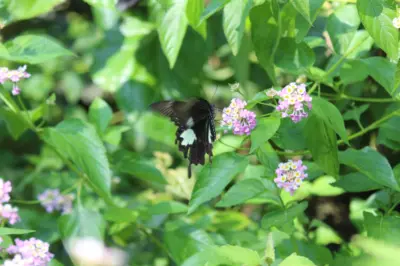

Guwahati: Two of the world's most notorious invasive plant species may be quietly helping conserve butterflies in Assam's Raimona National Park, according to a new study that challenges conventional approaches to managing invasive weeds.
Researchers from Bodoland University have found that Lantana camara and Chromolaena odorata, widely regarded as ecological threats, serve as critical nectar sources for butterflies, especially during seasons when native flowering plants are scarce.
The study, conducted in the Raimona National Park in the Bodoland Territorial Region (BTR), documented an impressive 220 butterfly species, along with 56 larval host plants and 41 nectar plant species, underscoring the park's rich butterfly diversity.
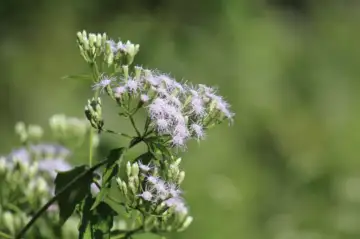 chomoleana odorata
One of the study's key findings is that Lantana camara alone attracted more than 30 butterfly species between April and October, while Chromolaena odorata supported over 24 species between December and February, together ensuring a year-round supply of nectar.
The researchers said the prolonged flowering period and abundant nectar produced by these invasive plants make them particularly valuable when native wildflowers are unavailable. Lantana's colourful flower clusters, which change colour as they age, were found to be especially attractive to foraging butterflies.
The study is believed to be the first from India to demonstrate that invasive plants commonly viewed as weeds can play a significant role in sustaining butterfly populations by providing nectar during periods of floral scarcity.
Besides serving as nectar sources, several invasive plants were also found to function as larval host plants, supporting butterfly development from the caterpillar stage.
Rather than advocating the unchecked spread of invasive species, the researchers recommend a balanced conservation strategy. They suggest retaining small, carefully managed patches of species such as Lantana camara, Chromolaena odorata and Ziziphus mauritiana in suitable parts of protected areas to support butterflies, while ensuring that these plants do not overwhelm native vegetation.
The research was carried out by Bishal Basumatary, a PhD scholar at Bodoland University, under the supervision of Dr Kushal Choudhury of the university's Department of Zoology.
The findings add a new dimension to invasive species management by suggesting that, in some cases, plants traditionally seen as ecological villains may also provide unexpected benefits for pollinators, highlighting the need for more nuanced conservation strategies in biodiversity-rich landscapes such as Raimona National Park.
What does the protest at Jantar Mantar tell us about Indian democracy?