

A new scientific study has detected microplastic contamination in some of Northeast India's most widely consumed traditional fermented fish products, highlighting a previously overlooked pathway of human exposure to plastic pollution.
The research, published in the journal Microplastics, found plastic particles in three popular ethnic foods-Ngari from Manipur, Hentak from Manipur, and Shidal commonly consumed in Tripura and Assam.
Scientists say the findings represent the first systematic evidence of microplastics in fermented fish products from the region.
Microplastics are tiny synthetic polymer particles smaller than five millimetres that originate from the breakdown of larger plastic materials or from products such as microbeads used in cosmetics.
They are now widely detected in oceans, freshwater systems, soil, air and a growing range of food products.
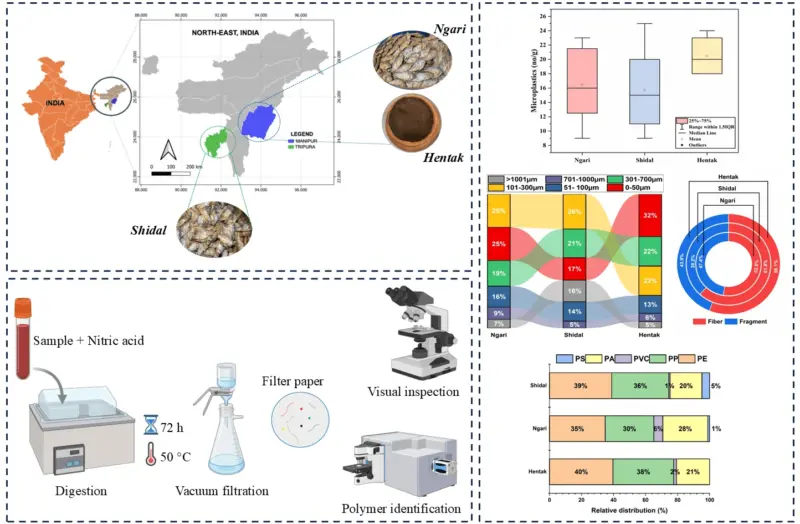
Researchers analysed 81 samples collected from local markets across Northeast India. The samples were examined using microscopic analysis and Laser Raman Spectroscopy to determine the number, size, shape and chemical composition of the plastic particles present.
The study found measurable levels of microplastics in all three fermented fish products. Hentak showed the highest average concentration at 20.50 particles per gram, followed by Ngari with 16.50 particles per gram and Shidal with 15.73 particles per gram.
Scientists attribute the contamination to several factors. One key reason is the use of whole fish-including the gastrointestinal tract and gills-during fermentation, where microplastics often accumulate in aquatic organisms.
Traditional processing practices and open-air market conditions may also allow airborne plastic particles to settle on the food.
The study found that fibres and fragments were the most common types of microplastics detected. Transparent and black particles were the most frequently observed colours.
Chemical analysis showed that the dominant polymers were polyethylene (PE) and polypropylene (PP)-two plastics widely used in packaging, food containers and fishing gear. Smaller amounts of polyamide, polyvinyl chloride and polystyrene were also detected.
Interestingly, the level of microplastic contamination in fermented fish products appeared lower than that reported in several marine seafood and dried fish products.
The study was led by Soibam Ngasotter and K.A. Martin Xavier from the ICAR-Central Institute of Fisheries Technology (CIFT), Kochi, with contributions from researchers affiliated with the ICAR-Central Institute of Fisheries Education (CIFE), Mumbai, and other academic institutions.
The team brought together expertise in fisheries science, food safety and environmental contamination to examine how plastic pollution may be entering traditional fermented foods widely consumed across Northeast India.
Researchers suggest that fermentation, which often occurs in relatively enclosed conditions, may limit additional exposure to airborne plastic particles compared with open-air drying used in other fish-processing methods.
Despite the presence of microplastics, the researchers emphasised that the findings should not cause immediate alarm. The concentrations recorded were lower than levels reported in some other processed fish products.
However, the study warns that long-term exposure through regular consumption could still be a concern.
The researchers say improved handling practices, reduced contact with plastic materials during processing and better waste management in production environments could help minimise contamination.
They also call for further studies to assess potential health risks from repeated dietary exposure to microplastics through traditional foods.
For communities across Northeast India, fermented fish products such as Ngari, Hentak and Shidal are deeply embedded in culinary traditions and serve as important sources of protein.
The new findings underline how plastic pollution is increasingly intersecting with traditional food systems.
Why the Mizo language's constitutional recognition is sparking debate