
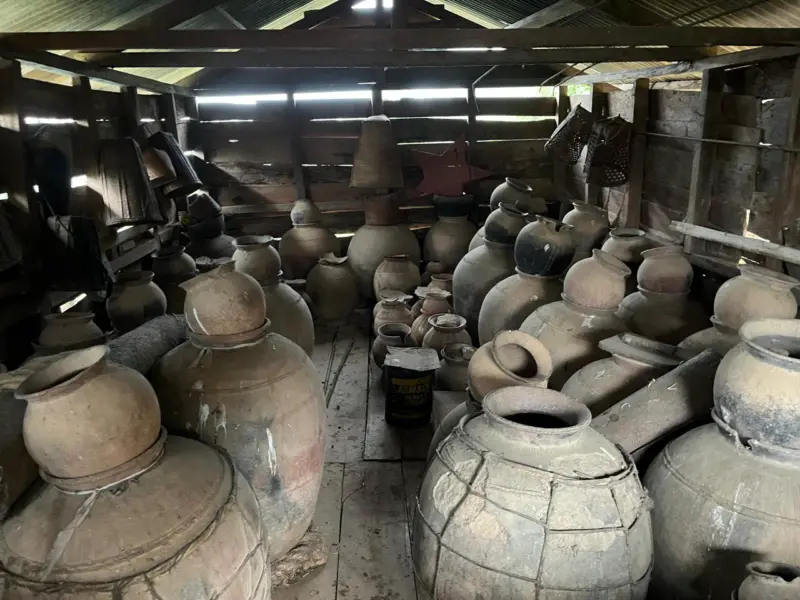

Mimi, Kiphire: In Nagaland's Kiphire district, the remote village of Mimi in the Pungro sub-division preserves one of the state's oldest and most fragile art forms: traditional hand pottery.
Once a vibrant household craft passed down through generations of women, this centuries-old practice now faces the threat of fading away amid changing times and modern neglect.
Thetraditionalartofpottery-making
Traditional pottery-making, a skill passed down through generations, is still practiced by a handful of dedicated artisans. Among them is Nuokho, a local potter who, though unsure of her exact age, estimates she is in her fifties. She fondly recalled how she learned the age-old craft by watching and imitating her elders as they moulded clay into graceful earthen forms.
"My mother and my mother-in-law were experts in making pots. I learned so much from them," she said, shaping clay with practiced hands. "It's been more than ten years since I started making pottery. I feel it's a blessing from God; not many people know how to do this. To carry the knowledge and skills of our mothers and grandmothers is such a blessing," she told EastMojo.
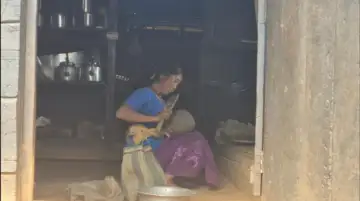 Nuokho, a local potter, engrossed in the age-old pottery-making.
Pottery in Mimi is often associated with women, an art that is almost exclusively practiced by them. She narrated how, traditionally, it was believed and widely observed that pottery-making was a woman's work, a skill passed down from mother to daughter. However, men have always played a vital supporting role in the process.
That is because the process begins deep in the forest, where local potters source raw materials-a task that is anything but easy.
Although men rarely shaped or crafted the pots themselves, their labor in sourcing and preparing the materials made them an essential part of the pottery-making tradition.
"It is not that men are forbidden to touch, but since ancient times, it was generally women who did pottery. The men assisted by venturing into the forests and distant areas to collect raw materials such as clay and soil, often digging and extracting them from deep within the earth."
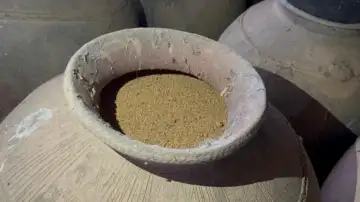
The pottery-making process generally unfolds in three stages: the collection of raw materials, shaping of the pottery items, and firing to strengthen and harden them. Each of these stages involves several meticulous steps.
To start, the collected clay and soil-usually a blend of red and grey types found in Mimi village-are ground, filtered, and refined into a powder-like texture resembling cement. The artisans then mix the materials with water and use a large wooden pounder to make the mixture smooth and pliable.
Once the mixture reaches the right consistency, the artisans begin shaping the pots by hand, using simple wooden tools, a smooth-surfaced stone, and a wooden spatula to mold and smooth the shape.
Nuokho shared that the motifs found on the pots are deeply symbolic, drawing inspiration from the tattoos once worn by their forefathers. "During our ancestors' time, it was customary for women to have tattoos on their foreheads and chins. It was believed that without these markings, even after marriage, women would not receive blessings," she explained.
The traditional tattoo patterns, along with the design motifs found on the attire of the Yimkhiung tribe, continue to inspire the artisans' creativity. "Nowadays, no one wears those tattoos anymore, but I still continue to make earthen pots, keeping alive a part of that tradition through my work," she said.
The newly shaped pots are then left to dry under the sun for one to two weeks-sometimes nearly a month during the monsoon season. Once thoroughly dried, the pots are fired using a unique traditional method. In this traditional firing method, the pots are placed in an open space and covered with layers of hay and sticks. Instead of lighting the fire from the top, the artisans ignite it from the bottom upward-a careful technique believed to prevent the pots from cracking or breaking during the process.
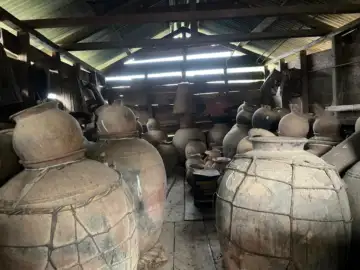
This age-old practice, though time-consuming and physically demanding, continues to hold deep meaning for those who keep it alive. The pots vary in size, from tiny pieces as small as smoking pipes to larger utensils and storage vessels used for keeping rice, beans, wheat, corn, and other harvests. These pots are cherished as family assets, often passed down from one generation to the next.
For Nuokho, pottery is not just a tradition but also a source of livelihood. "I'm happy that it has become a source of income. It has helped me raise my children," she shared with a smile.
But this "blessing" is fading fast. Where once every household owned the skill, at present, only five or six elderly women in Mimi still know the traditional techniques.
'Made inMimi'
Alarmed by the decline of this ancient art, the International Border Areas People's Welfare Organization (IBAPWO), a grassroots group based in Kiphire, recently stepped in. Founded in 1999 by a group of passionate individuals and officially registered in 2000, IBAPWO emerged to address social issues plaguing the border areas that are often neglected, particularly by focusing on substance abuse and improving living standards.
IBAPWO's chief functionary, N. Apong, shared how a casual visit to Mimi turned into a mission to preserve Mimi's pottery heritage.
"In March, we visited Mimi with social worker Jennifer Lang, who has worked in Northeast India for over 25 years. When we entered Mimi village, we were greeted by the villagers with potteries and traditionally made items. She was quite excited to know more about the traditional pottery-making that is being practiced in our community. That's when she asked how many of the womenfolk could really make pottery to this day. The answer was quite surprising when they said that there were only five or six elderly women, all over the age of 55, who could make pottery products. That was a striking surprise, and there was a big question-what if, after they pass on, we lose this practice or the skills to make pottery products," Apong narrated.
Funded by Roots to Branches Foundation, IBAPWO then organized a three-day pottery workshop from October 2-4, 2025, inviting five elderly artisans to teach and local youths to learn. About 27 residents, including children participated, eager to learn from the last generation of potters.
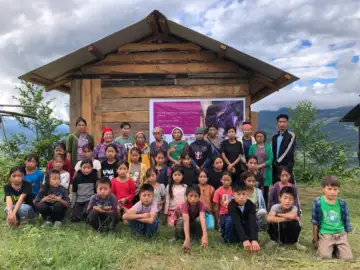 Participants of the pottery-making workshop.
Apong, a Yimkhiung himself, shared his deep sense of pride and responsibility toward preserving his community's heritage, saying, "I always felt that our community has a rich culture and we have not been explored by the outside community or the people from outside. So we want to make sure that when people come and explore us, we want to give them this rich culture; we want to show them what our tradition and our culture are made of-that's one thing."
He expressed concern that many traditions are slowly fading. "I think most of the traditions are getting lost, and all over the world, people are trying to preserve their culture. It's an identity that we don't want to lose-that's one thing. There is a responsibility to preserve our culture and our identity. Apart from that, we also want to explore and support the local people-the youths, the women as well-to generate more diversified livelihood options, so that's the other thing."
The workshop has marked a turning point for Mimi's traditional pottery-making. Pots made during the workshop were engraved with the words, "Made in Mimi."
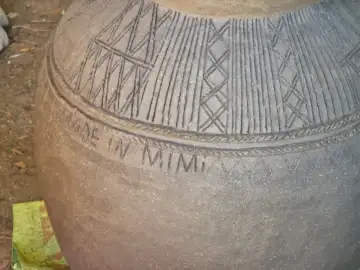 A "Made in Mimi" pottery product.
Niojila Yimkhiung, 30, a homemaker who recently began learning the craft, expressed her excitement about reviving the tradition. "Pottery-making is a practice passed down from our forefathers, and it's still being carried on today," she said with pride.
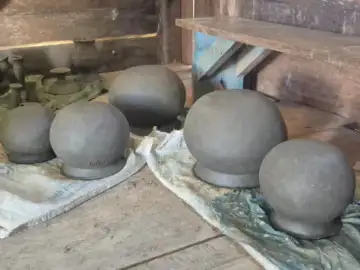
As she showed EastMojoaround the barn where her freshly shaped pots were left to dry, Niojila explained that the workshop had helped train younger women, ensuring that the craft continues to live. "These are the results of their guidance," she said. "If we can produce more in batches, we plan to sell our products in the market. It will be a Mimi product, locally made from natural clay."
Dear Reader,
Every day, our team at EastMojo travels through rain, rough roads, and remote hills to bring you stories that matter - stories from your town, your people, your Northeast.
We do this because we believe in truthful, independent journalism. No big corporate backing, no government pressure - just honest reporting by local journalists who live and breathe the same air you do.
But to keep doing this work, we need you. Your small contribution helps us pay our reporters fairly, reach places others ignore, and keep asking the tough questions.
If you believe the Northeast deserves its own fearless voice, stand with us.
Support independent journalism. Subscribe to EastMojo
Thank you,
Karma Paljor
Editor-in-Chief, eastmojo.com

Hiking among clouds and time: A walk across Meghalaya's ancient plateau

How a new mosquito found in Tripura may complicate dengue control

10 years, 420 species: How Sonam Lepcha uncovered Dzongu's butterfly kingdom
With an abundant source of clay in the area, the community hopes to preserve both the tradition and a source of livelihood. "We don't want to lose this practice," she added.
As she proudly displayed her creations, Niojila pointed to each with a smile. "This is the cup used by men during our forefathers' time to drink local rice beer," she explained. "And this one, it's for smoking.
There are two holes; this is how they used to smoke in the old days," she continued to demonstrate.
Holding up another piece, she added, "This is a three-branch flowerpot. I also have a single-branch pot; both are traditional designs." Niojila's small collection, each piece shaped by hand, now tells a story not just of skill but of the living memory of a craft deeply rooted in her community's history.
| Preserving tradition: Why bats are harvested and eaten in this Naga village