

In the years following independence, India undertook the complex process of integrating hundreds of princely states into one political system.
To ensure a smooth transition, former rulers were granted privy purses, tax-free annual payments that ranged from a few thousand rupees for smaller states to more than ₹25 lakh for the largest kingdoms.
These payments, costing the government roughly ₹4-5 crore annually, were constitutionally guaranteed until they were abolished in 1971.
In Mizoram, a very different story unfolded. Since the early 1990s, descendants of Mizo chiefs have been raising demands for compensation, arguing that their loss of authority and land was never adequately addressed.
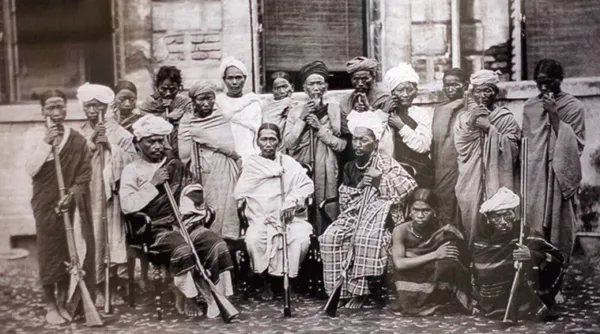
The chieftainship system in the Lushai Hills, as Mizoram was then known, formed the backbone of Mizo society for centuries. Villages functioned as autonomous units led by hereditary chiefs, known as Lal, who exercised authority over village land and collected tribute in kind from residents.
In pre-colonial times, from around 1500 to 1895, these chiefs held near absolute control over governance, justice, land distribution, and conflict. At the same time, communities retained the ability to move away if they were dissatisfied with a chief's rule.
By the mid-twentieth century, this system began to face resistance. Political awareness was growing, particularly after the formation of the Mizo Union in 1946, which called for the end of hereditary rule and the introduction of democratic governance. Responding to these demands, the Assam legislature enacted the Assam Lushai Hills District (Acquisition of Chief's Rights) Act in 1954.
Its Statement of Objects recorded that "with the growth of political consciousness, there has been an instant demand for the abolition of the system of chief." The law transferred the chiefs' rights over land and tribute to the state, to be administered through the District Council, with provisions for compensation.
Implementation followed soon after. Between 1955 and 1956, official notifications vested land rights in the state. Compensation was paid, but the scale remains a point of contention. A total of ₹14.78 lakh was distributed, largely covering customary tribute rather than the full value of the land.
Records indicate that around 309 chiefs and headmen were affected, with payments ranging from about ₹500 to ₹10,000, and only a few receiving slightly higher amounts.
Over the decades, descendants continued to press their claims. They argued that the abolition violated their constitutional rights as they existed at the time, particularly the right to property. They also pointed to the contrast with princely rulers elsewhere in India, who had received structured financial settlements.
This dispute reached the Supreme Court of India, which delivered its judgment on 13 March 2026. A bench of Justices J.B. Pardiwala and R. Mahadevan dismissed the petition, bringing a decisive legal end to the matter.
The Court held that the petitioners had failed to establish legal ownership of the land. Historical records, including British-era boundary papers, were examined but were found insufficient to prove ownership in a legal sense.
The Court concluded that no constitutional right to property had been violated. It also rejected comparisons with princely rulers, observing that privy purses were political arrangements made during the integration of princely states and did not create enforceable legal rights.
Despite the ruling, dissatisfaction remains strong among descendants of the chiefs. Keihawla Sailo, a former leader of the chiefs council, said, "The outcome is deeply unfair. As per the Guwahati High Court's earlier observations, the Government of Mizoram was to examine the chiefs' case in consultation with the central government.
"We had approached the then Chief Minister Lalthanhawla, who wrote a letter for the then Prime Minister Manmohan Singh. I took the letter and travelled to Delhi to meet the Prime Minister. I was informed that he would discuss it with the Home Minister."
"Our chiefs were not powerful rajas, yet the compensation they received was extremely inadequate. There was little effort to properly understand our conditions or examine our history. During the British period, we were neither part of British India nor East Pakistan.
Under the Government of India Act, 1935, we remained outside direct British administration and functioned under independent chiefs. While rulers in other parts of India were granted substantial compensation, in Mizoram, amounts as low as ₹200 or ₹500 were given, which was negligible," he said.
Lalramtiama, an advocate who represented the chiefs, said, "I have taken up this case because, after the abolition of chieftainship, the chiefs were reduced to a significantly diminished status. Earlier, they held authority over land, taxation, and forest resources. The transition was not uniform, and only limited forms of tax were taken, which did not reflect the full extent of their previous rights.

They should not be compared to local administrative bodies. They were traditional rulers and, in that sense, comparable to kings. They governed this region for centuries, dating back to at least the 14th century, and were the legitimate authorities of their time."
He added, "Compensation should have been addressed long ago. The demand has existed for decades, and there have even been favourable outcomes in earlier legal proceedings regarding grant-in-aid or relief. We have continued this fight to the present day.
"In earlier proceedings, there were inconsistencies in how the case was presented, particularly in combining different groups under a single claim. Our position has been clear. We are seeking grant-in-aid support.
In 2016, a petition was submitted to the President of India seeking relief amounting to ₹2,000 crore. We intend to pursue further legal remedies and hope for a positive outcome. This is not only about money. The chiefs and their families have faced long-term hardship and have not benefited from government services or institutional support," said the advocate.
Lalramtiama believes discrimination played a major role in how the Mizo chiefs were compensated, arguing that chiefs from lesser-known tribal regions were not accorded the same status as rajas, who were viewed as superior. He added, "Till today, they don't really look at us like Indians," he said.