




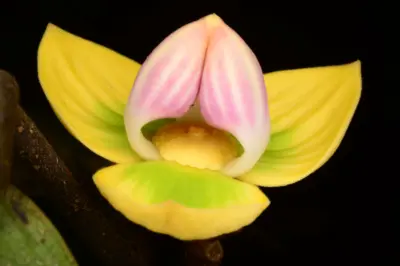

Guwahati: A flowering tree discovered in the forests of Arunachal Pradesh has not only added a new species to India's growing list of botanical discoveries but has also rewritten what scientists knew about an entire group of plants found across South and Southeast Asia and Australia.
The new species, Mitrephora rashmiae, has been described by researchers Navendu V. Page, Shivam Kishwan and Tejas U. Thackeray in the international peer-reviewed journal Feddes Repertorium.
Its scientific significance lies in an unprecedented reproductive feature.
The researchers found that M. rashmiae is the first known member of the Mitrephora genus to bear both male and bisexual flowers on the same plant-a rare reproductive strategy known as andromonoecy. Until now, no species in the genus had been reported to possess this characteristic.
The discovery is equally important from a biogeographical perspective. It is only the second Mitrephora species ever recorded from the Himalayan Biodiversity Hotspot, expanding the known range of a genus that is largely distributed across tropical Asia and Australia.
The tree was discovered during botanical surveys between Daporijo and Taliha in Upper Subansiri district of Arunachal Pradesh, growing along the edge of a forest stream at an elevation of about 410 metres.
Researchers have so far found only a single individual, prompting them to assign the species a provisional Data Deficient conservation status and to call for more extensive field surveys.
"The find underscores the urgent need for documenting biodiversity in hotspots such as Arunachal Pradesh and Northeast India. This would give us an option to prioritise species and habitats for conservation and make better decisions before planning our development activities," said lead author Navendu V. Page.
The evergreen tree grows up to seven metres tall and produces striking cream-yellow flowers with purple-striped inner petals that form a distinctive dome-like structure. Besides its unusual floral architecture, the tree differs from its closest relatives in having larger leaves, more flowers per inflorescence and unique fruit characteristics.
The researchers said the discovery highlights how much of the region's biodiversity remains undocumented despite decades of scientific exploration.
"This discovery not only shows the vast underexplored diversity of the Northeast, but also serves as a critical call to protect these delicate habitats before their hidden treasures are lost forever," said co-author Shivam Kishwan.
The species has been named Mitrephora rashmiae in honour of Rashmi Thackeray, recognising her role in fostering an early interest in nature and taxonomy and her support for the Thackeray Wildlife Foundation.
The authors said the discovery also raises broader questions about biodiversity conservation in one of the world's richest ecological regions.
"This discovery raises quite a few questions pertinent to this geographical region. How many more species of plants and animals are yet to be discovered from these parts? How many have we lost already to habitat loss and developmental projects? Can government and civil society organisations work with local communities to protect the biodiversity of the state?" asked co-author Tejas U. Thackeray.
With just one known tree recorded so far, the researchers have called for urgent botanical surveys to determine whether more populations survive in the forests of Arunachal Pradesh, warning that habitat degradation could erase species before they are even documented.
Assam: Fossils push India's Kewra lineage back 24 million years