




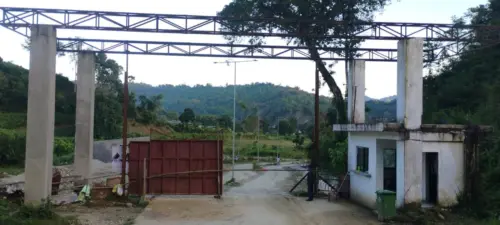

Students of Documentary Cinema and Screen Acting at the Film and Television Institute of India (FTII), Arunachal Pradesh, have once again boycotted classes after months of uncertainty, repeated assurances, and continued inaction by the authorities responsible for establishing and maintaining the institute.
The protest follows the government's failure to provide even basic academic and living infrastructure. Students from both departments are standing together and have decided not to resume classes for the second semester until their demands are addressed.
This is not their first protest. Earlier this year, students halted classes and sent multiple letters to the Satyajit Ray Film and Television Institute (SRFTI) and the Ministry of Information and Broadcasting (MIB). Despite these efforts, there has been no meaningful response, action, or accountability from the authorities.
The situation at FTII Arunachal Pradesh reflects deep institutional negligence towards higher education. The institute admitted its first batch in October 2024, with students arriving on campus in March, only to find an unfinished and unprepared facility.
There are no functional sound studios, preview theatres, performance labs, or editing labs. Documentary students lack access to basic sound recording facilities, while limited cameras, inadequate technical guidance, and a shortage of non-teaching technical staff continue to disrupt academic work.
Editing workstations are unavailable outside classrooms, and essential fieldwork has been repeatedly postponed.
Alongside academic deficiencies, students report serious concerns related to accommodation, medical support, and academic transparency.
Hostels remain inadequate, medical emergencies are poorly handled, and students receive little clarity on schedules, assessments, or institutional planning-conditions that triggered protests soon after enrollment.
Between 11 November and 3 December, students sent a series of written appeals to the authorities, including an ultimatum from Screen Acting students, a detailed representation from Documentary Cinema students, requests for meetings during IFFI Goa and online consultations with MIB and SRFTI, followed by a final letter after complete silence. None received even an acknowledgement. "We are the first batch of FTII Itanagar. We refuse to be the forgotten batch," students said.
Despite the unresolved crisis, students were instructed to return for the second semester in mid-December without any written assurance or visible improvement.
They were told the semester would begin even if only one student reported to campus. In response, students collectively decided not to comply until minimum academic and safety standards were met. They later agreed to return briefly-not to concede-but to verify progress and continue their protest.
RTI responses revealed that the government itself has acknowledged the institute is not fit to function, leading to the suspension of new admissions and likely postponement of the second semester.
Students argue that admitting them despite this knowledge amounts to premeditated negligence. "We will not begin Semester 2 until minimum academic conditions are met. If this cannot happen here, shift us to a functional campus," they said.
Today, students say they feel ignored, mentally exhausted, and financially strained after investing heavily in relocation and living costs. While future admissions have been paused to protect the institute's image, the futures of the current batch remain at risk. "We will not let our futures die in scaffolding. We will not be the cost of the government's mistakes," they assert.
The crisis at FTII Arunachal Pradesh is not an isolated case but part of a wider pattern of hurried institutional expansion without adequate planning, funding, or accountability.
Across India, students are increasingly forced to protest for basic infrastructure. The struggle of FTII Arunachal students is a warning that the cost of institutional negligence is being paid by students-and by the future of public education and creative training in the country.
Two frog species discovered in Arunachal, study highlights Brahmaputra's role