





Guwahati: Snakebites in Northeast India often slip beneath the radar - not only because of dense forests, remote villages and difficult terrain, but also due to a cultural silence that surrounds them.
In parts of Arunachal Pradesh, for instance, a snakebite is viewed as a bad omen, something families prefer to hide.
Now, for the first time, a nationwide study led by the Indian Council of Medical Research (ICMR) has brought this hidden burden into sharp focus.
Published in Nature Communications, the survey - covering 60 million people across 25 districts - is India's most comprehensive community-level assessment of snakebite envenomation. Conducted over a continuous one-year period between 2020 and 2024, depending on when states could begin fieldwork amid the pandemic, the study recorded 7,094 cases and provides unprecedented insight into who gets bitten, where, and at what cost.
Snakebite envenomation (SBE) is a neglected global health issue, concentrated in rural, tropical regions. India carries nearly half of the world's snakebite deaths, largely due to its vast agrarian population. The new study included key institutions from the Northeast - ICMR-RMRC Dibrugarh, Zoram Medical College, Mizoram University, and health institutions in Arunachal Pradesh.
"The incidence of snakebite and mortality reported in the study is much lower than anticipated," the study said. "In the Northeast, low population density and cultural beliefs - including the stigma in Arunachal Pradesh, where snakebite incidents are often kept secret - contribute to underreporting."
Despite this, several districts showed significant incidence rates:
• Pakke Kessang (Arunachal Pradesh): 42.16 per 100,000 (in a small population)
• Champhai (Mizoram): 24.46
• Dhalai (Tripura): 18.83
• South Tripura: 18.02
Researchers caution that actual numbers may be higher, given cultural secrecy, sparse health facilities, and limited reporting across the region.
One of the most alarming findings is that 43% of snakebite deaths occurred outside hospitals, often due to delays caused by poor transport, distant facilities, or reliance on faith healers.
The study also reveals clear demographic and seasonal trends. Men accounted for 64% of bites, with the highest incidence among those aged 30-39, reflecting the vulnerability of India's farm workforce.
Over 62% of bites occurred during the monsoon, when snake activity and agricultural work peak. Most bites affected the lower limbs and occurred during farming, walking, or other outdoor labour.
Clinically, the gaps are stark. Although 86% of victims reached hospitals, only 60% received anti-snake venom (ASV). Among those treated, 17% experienced adverse reactions, and treatment had to be stopped in 6% of these cases.
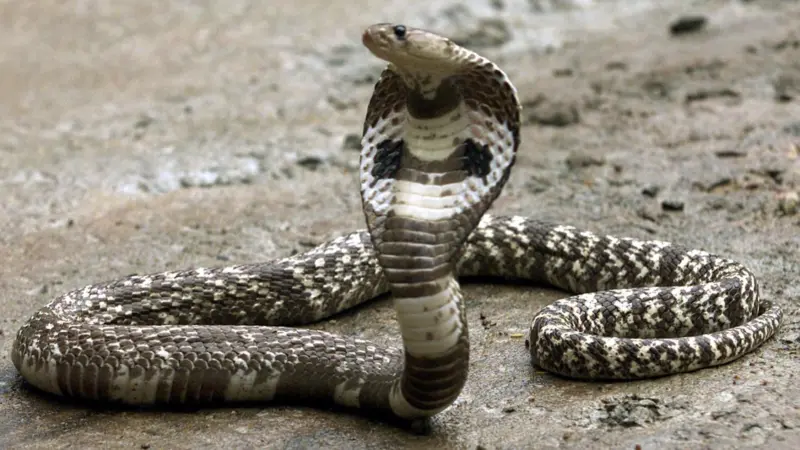
Hematotoxic bites were most common (33.4%), followed by neurotoxic bites (24.9%). Russell's viper, kraits, saw-scaled vipers and cobras were the leading venomous species.
The financial impact is severe: victims paid an average of ₹6,453, rising to ₹27,402 in private hospitals. Only 12% were insured, while more than 52% belonged to below-poverty-line households.
District-level differences were striking: Jaisalmer (Rajasthan) had the highest incidence, Kangra (Himachal Pradesh) the highest mortality rate, and Nanded (Maharashtra) the most deaths. Long-term impacts ranged from neurological complications to psychological trauma.
"The government must strengthen snakebite management and improve emergency response systems," a researcher urged.
Conducted through India's frontline ASHA workers, this first-of-its-kind national database shows that snakebite remains a disease of poverty, demanding urgent reforms in emergency care, ASV distribution, rural health systems and insurance safety nets. The final phase of the survey - now underway in West Bengal and Meghalaya - will include state-specific estimates and data on long-term disability.
Fed up: Why Senapati youths have decided to take up on corruptionna