





A new scientific study has documented, in rare detail, the traditional hunting and fishing practices of the Nocte tribe of Arunachal Pradesh, revealing a complex system of indigenous knowledge that is rapidly fading under the pressures of modernisation, wildlife laws and social change.
Published in the Journal of Threatened Taxa, the study records how generations of Nocte hunters in Tirap district have relied on intricately designed traps, ritual calendars and community rules to hunt and fish-practices that are now at risk of being lost forever.
Led by Miatcha Tangjang, a doctoral researcher at Amity University, along with ecologist Ajay Maletha and carnivore biologist Kausik Banerjee, the research draws on extensive fieldwork across 92 villages and interviews with 204 households conducted between 2022 and 2024. The authors describe the study as an urgent effort to preserve a "cultural legacy for posterity".
Traps, rituals and community law
Unlike modern hunting methods, Nocte hunting is deeply embedded in ritual and collective decision-making. Before any major hunt, village shamans perform Tansok, a pre-hunting ritual used to determine the right time and direction for hunting by interpreting signs from nature. Similar rituals guide farming, fishing and even the naming of children.
The study documents more than a dozen indigenous hunting and fishing tools, many crafted entirely from bamboo, wood, stone and forest creepers. Traps such as Kut-tai, Waa-khap and Phaknong-still widely used-reflect an intimate understanding of animal behaviour, terrain and seasonal movement.
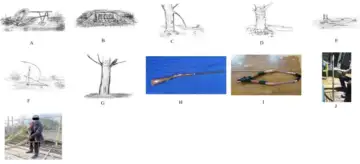
According to the research, 72 per cent of active hunters continue to use traditional flintlock guns alongside traps, while spears, catapults and crossbows remain part of the hunting toolkit. Hunting is driven primarily by subsistence needs (64 per cent), followed by cultural preservation (17 per cent), recreation (14 per cent) and limited commercial use (5 per cent).
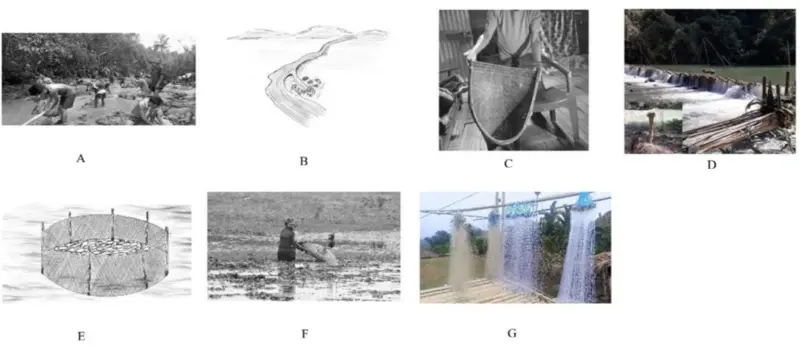
Fishing practices, often overlooked in conservation debates, emerge as some of the most sustainable traditions. Community fishing methods include temporary bamboo dams, hand-woven sieves and plant-based fish sedatives-techniques that avoid long-term damage to rivers and fish populations.
Knowledge at risk
Despite their sophistication, these practices are disappearing rapidly. Younger members of the community are increasingly disconnected from traditional skills, while modern firearms, changing livelihoods and formal education are reshaping social values. Statistical analysis in the study shows that people aged 18 to 30 are far less likely to hunt than older generations, pointing to a clear break in the transmission of knowledge.
Equally significant is the legal grey area the Nocte now inhabit. India's Wildlife (Protection) Act, 1972 bans the hunting of wild animals, placing traditional practices-once central to survival and identity-outside the law. The result, the authors note, is not the disappearance of hunting but its quiet continuation, largely undocumented and without dialogue.
Conservation beyond enforcement
The study challenges the assumption that indigenous hunting necessarily conflicts with conservation. Many Nocte practices are seasonal, selective and governed by taboos that limit overexploitation. Hunting is usually avoided during breeding seasons, and certain species are protected through cultural restrictions.
In recent years, local youth groups and village councils have also taken voluntary steps towards wildlife protection. These include discouraging destructive practices such as dynamite fishing, replacing animal parts with artificial alternatives in ceremonial attire, and surrendering firearms under state-led conservation campaigns.
The authors argue that recognising and documenting indigenous ecological knowledge is essential-not only to preserve culture, but to build more inclusive conservation models that work with communities rather than against them.
A record for the future
"This knowledge is largely oral, passed down through practice and memory," the study warns. "Without documentation, it risks disappearing within a generation."
By placing Nocte hunting traditions on record, the research offers more than an academic archive. I
t opens a space for dialogue between conservation law, cultural rights and sustainable resource use in one of India's most biodiverse regions. As debates over wildlife protection intensify across Northeast India, the study serves as a reminder that conservation is not only about saving species, but also about safeguarding the human knowledge systems that have shaped-and sustained-these landscapes for centuries.
How bamboo vaults give Guwahati's new airport an Assamese soul