
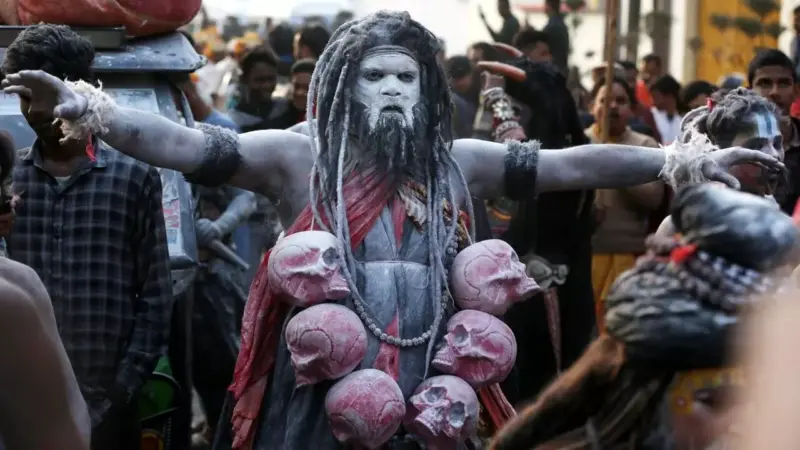

History of Naga Sadhu: Have you ever wondered where Naga Sadhus go after the Kumbh Mela? It is believed that this is the only time when these sadhus are visible among the general public.
Maha Kumbh 2025: Naga Sadhus at the Kumbh Mela (Naga Sadhu in Kumbh Mela) are the center of curiosity for many. The reason is their mysterious life. They live in seclusion, but whenever the Kumbh Mela is held, thousands of these Naga Sadhus manage to reach the Kumbh without being noticed by the public. It is believed that the Kumbh Mela is the only time they are visible among common people.
Where do they go after the Kumbh Mela?
During the Kumbh Mela, Naga Sadhus represent their akhadas. After the Kumbh, they return to their respective akhadas. The akhadas are located in various parts of India, and these sadhus live there. Two of the largest Naga akhadas at the Kumbh are the Mahaparinirvani Akhada (Mahaparinirvani Akhara) and Panch Dashnam Juna Akhada (Panch Dashnam Juna Akhara), and most of the Naga Sadhus come from here.
- Naga Sadhus are known for their austere and ascetic lifestyle. After the Kumbh, many of them go to the Himalayan mountains, forests, or other peaceful locations to practice meditation and austerities.
- Some Naga Sadhus reside in Varanasi, Haridwar, Rishikesh, Ujjain, or Prayagraj. These places serve as centers for their religious and social activities. Becoming a Naga Sadhu or receiving initiation as a new Naga happens during the Kumbh Mela at Prayag, Nashik, Haridwar, and Ujjain.
- Naga Sadhus also undertake religious pilgrimages across India. They participate in various temples, pilgrimage sites, and religious events to mark their presence.
Important Role of Naga Sadhus
The word "Naga" in Sanskrit means a person who resides in or near mountains. Naga Sadhus are mentioned in ancient Indian history. Evidence of their existence can be found in the coins and pictures from Mohenjo-Daro, where they are shown worshipping Lord Shiva in his Pasupatinath avatar. In ancient India, Naga Sadhus were warrior ascetics entrusted with the protection of Sanatan Dharma. They carried weapons like swords, tridents, maces, and bows and arrows, and were skilled in martial arts to protect temples.
They are known for defending Shiva temples from Mughal forces and invaders. Naga Sadhus even defeated Mughal Emperor Aurangzeb's special army over a hundred times. Even today, they roam like spiritual seekers with their hidden warrior skills.
Naga Sadhus at Kumbh Mela
The most important event of the Kumbh Mela is the royal bath, and the main participants are the Naga Sadhus. The Kumbh Mela begins with the formal bathing of the Naga Sadhus. A procession is taken out along the riverbank, led by the Naga Sadhus, who perform their martial skills while chanting mantras, riding on beautifully decorated chariots. After this, they take a holy dip in the river.