
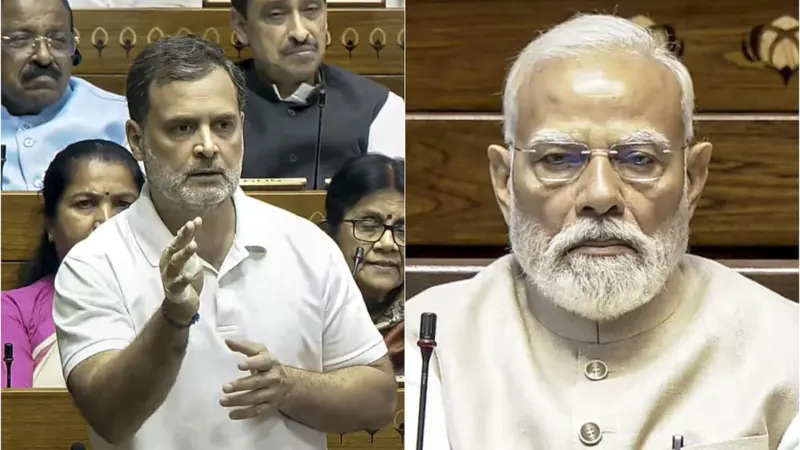

The Indian Parliament witnessed an unprecedented legislative setback as the Constitution (131st Amendment) Bill failed to secure the mandatory two-thirds majority in the Lok Sabha.
Despite receiving 298 votes in favor, the 230 votes against it ensured the bill's defeat, marking a significant blow to the government's legislative agenda. The proposed amendment sought to link the implementation of women's reservation with the controversial delimitation process, a move that triggered intense pushback from the opposition benches.
Rising political tensions and constitutional debate
The defeat has sparked a fierce war of words between the ruling party and the INDIA bloc. Union Home Minister Amit Shah accused the opposition of stalling women's empowerment, while Leader of the Opposition Rahul Gandhi hailed the outcome as a "victory for the Constitution." Opponents of the bill argued that tying women's quotas to the redrawing of electoral boundaries was a strategic maneuver that would unfairly impact the interests of various states and marginalized communities, including OBC, SC, and ST groups.
Uncertainty over 2029 electoral reforms
This legislative impasse leaves the promised 33 percent reservation for women in a state of limbo ahead of the 2029 general elections. The government's inability to bypass opposition concerns regarding the timing and methodology of delimitation suggests a deepening divide in parliamentary consensus. Moving forward, the administration faces the challenge of either decoupling these two sensitive issues or finding a middle ground to ensure the reservation policy can eventually be implemented.
At a glance
- The 131st Constitutional Amendment Bill failed to pass after failing to reach the required two-thirds majority in the Lok Sabha.
- The bill intended to link the 33 percent women's reservation policy with the nationwide delimitation of parliamentary constituencies.
- Opposition parties blocked the move, labeling the linkage unconstitutional and detrimental to the representation of marginalized communities and regional interests.
- The defeat puts the implementation of the women's quota for the 2029 elections at serious risk of further delay.