
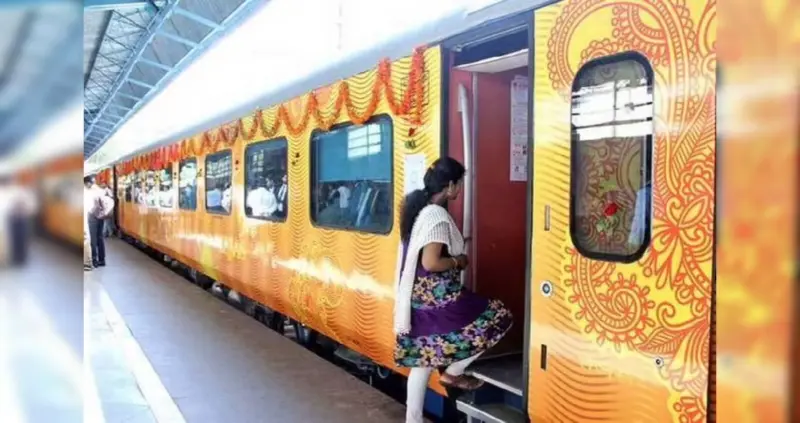

The 13019/13020 Howrah-Kathgodam Express, popularly known as the ‘Bagh Express,’ is a household name for millions of travelers.
While the name immediately brings to mind the image of a majestic Royal Bengal Tiger, the actual reason behind its naming has nothing to do with wildlife. Instead, it is a moving tribute to the heroes of the Indian freedom struggle.
Historically, when this train was first introduced during the British era, it used to run all the way to Amritsar. The name ‘Bagh’ was chosen to honor the martyrs of the Jallianwala Bagh massacre that took place on April 13, 1919. In Hindi, ‘Bagh’ means a garden. By naming the train after this hallowed ground in Amritsar, the railways sought to preserve the memory of those who sacrificed their lives for the nation’s independence.
Over the decades, the operational route of the train was modified, and today it terminates at Kathgodam instead of Amritsar. However, the legacy of its name remains untouched. Due to phonetic similarity, many people mistakenly associate it with the ‘Tiger’ (which is ‘Baagh’ in Hindi/Bengali), but in railway records, it remains a symbol of patriotism. Traveling in the Bagh Express is like traversing through a piece of Indian history, carrying forward the spirit of the Jallianwala Bagh martyrs across the heartland of India.