




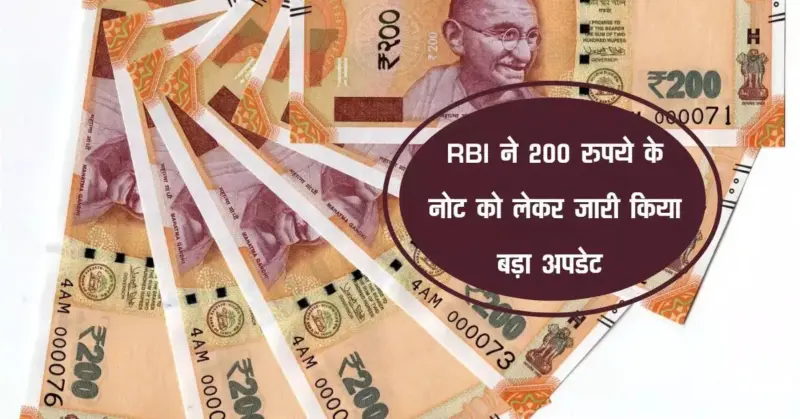

The Reserve Bank of India (RBI) has recently issued important guidelines regarding the circulation and condition of 200 rupee notes in the country.
The central bank has requested the withdrawal of thousands of these notes due to their poor condition. The RBI's decision to recall these notes comes after reports of several 200 rupee notes being found in a deteriorated state, some even rendered unusable due to damage or marks on them.
This is not the first time such a measure has been taken. Last year, the RBI had withdrawn over 135 crore worth of 200 rupee notes, which were also deemed unusable due to their poor condition. Experts believe that the increased use of the 200 rupee note, particularly after the phase-out of the 2000 rupee note, has led to faster wear and tear. The RBI's move aims to ensure that only usable and intact currency circulates in the economy.
Interestingly, while the 200 rupee note has faced significant wear and tear, it is not the only denomination affected. Smaller denominations, such as 5, 10, and 50 rupee notes, have also been recalled in large numbers. In fact, the condition of 500 rupee notes, which were also subject to a similar recall due to degradation, remains worse compared to the 200 rupee notes. This development highlights the challenges in maintaining the quality of currency notes in circulation and the RBI's ongoing efforts to ensure that the notes used by the public remain in good condition for daily transactions.