
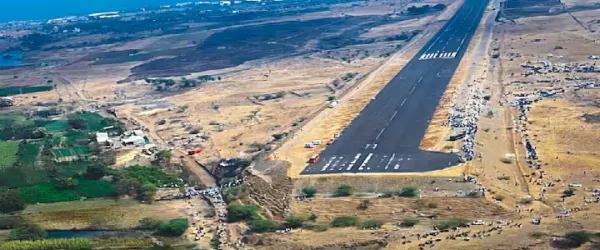

The tragic demise of Maharashtra's Deputy Chief Minister Ajit Pawar in a plane crash at Baramati last month has prompted the Ministry of Civil Aviation to launch a massive, nationwide overhaul of air safety protocols.
In an unprecedented move, the government has initiated a comprehensive review of 400 non-Air Traffic Control (ATC) airstrips across India to bridge the regulatory gaps that currently plague these smaller landing grounds.
The Peril of Unregulated Airstrips: India houses nearly 400 ‘Category A’ airstrips, managed by state governments, private operators, or Flying Training Organizations (FTOs). These runways lack dedicated ATC services, leading to a dangerous absence of standardized procedures for maintenance, rescue operations, and weather coordination. These strips are frequently used by political leaders and corporate honchos, making their safety a matter of national concern.
Standardizing the “Uncontrolled” Skies: Under the new mandate, a joint team from the Directorate General of Civil Aviation (DGCA) and state authorities will inspect these sites. The evaluation focuses on:
- Structural integrity of runways.
- Firefighting readiness and emergency response coordination.
- Communication facilities with local district authorities.
Currently, major uncontrolled strips like those in Ujjain, Bhagalpur, Alwar, and Hassan are under the scanner. The goal is to move beyond the current “regulatory vacuum” where the DGCA has limited jurisdiction over state-owned strips.
A Low-Cost Safety Revolution: Experts argue that upgrading these facilities is surprisingly affordable. Mark Martin, founder of Martin Consulting, suggests that essential safety features like windsocks, basic weather monitoring, and CCTV coverage can be implemented for less than ₹2 lakh per runway. By mandating monthly safety checks and daily digital weather updates, the government aims to ensure that no life is lost due to avoidable infrastructure failures. This proactive approach marks a turning point in India’