




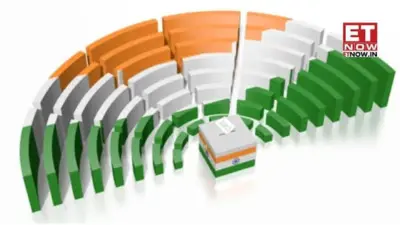

The government on Thursday introduced the Delimitation Bill in Parliament, sparking strong political backlash, especially from opposition parties in southern states.
Under the proposal, states and union territories with only one Lok Sabha seat will see no change in parliamentary representation, though their assembly strength will rise. This applies to Sikkim, Nagaland and Mizoram, along with six UTs. States and UTs with an odd number of seats are likely to benefit, as their representation would be rounded up after delimitation. In the remaining regions, seats are proposed to increase by 50 per cent, along with a marginal rise in Scheduled Caste (SC) representation.
The move has drawn strong reactions from leaders in southern states. Tamil Nadu Chief Minister MK Stalin and actor-politician Kamal Haasan have voiced concerns over the 2026 delimitation exercise, warning it could reduce the region's influence in Parliament. Stalin, in a recent remark, even urged newlyweds to plan families early, linking population trends to political representation.
What does Delimitation mean?
Delimitation refers to the redrawing of Lok Sabha and state assembly constituencies based on population. Using the latest census data, seats are allocated to states to ensure constituencies have roughly equal populations. Article 82 mandates this process after every census.
Articles 82 and 170 of the Constitution require periodic redrawing of parliamentary and assembly constituencies based on the latest census. The exercise is conducted by a Delimitation Commission set up by Parliament. Since representation is linked to population, states with faster population growth are likely to gain more seats, while those with slower growth may see their share shrink.
India conducted delimitation exercises in 1951, 1961 and 1971. The process was frozen in 1976 through the 42nd Amendment to promote population control and prevent disproportionate gains by high-growth states. The freeze was extended in 2001 via the 84th Amendment, deferring the next exercise until 2026.
Potential impact
The next delimitation exercise is likely to be based on the 2031 Census, with discussions already underway ahead of the 2026 deadline. Estimates suggest Lok Sabha seats could increase from 543 to 753 if current population trends persist.
Southern states currently account for 129 of the 543 Lok Sabha seats, which could rise to 144 out of 753. However, their overall share is expected to fall from 23.7 per cent to 19 per cent. In contrast, northern states, which presently hold 222 seats, may see their representation increase to 357.
Key changes
The upcoming Lok Sabha delimitation is likely to be delinked from the 2011 Census, with the government, amid opposition from southern states, looking to maintain the existing state-wise seat distribution while increasing the total strength of the House. The exercise is also expected to include 33 per cent reservation for women.
In effect, this could translate into a uniform 50 per cent increase in seats across all states. For example, Uttar Pradesh's representation may rise from 80 to 120 seats in an expanded Lok Sabha, with 40 of those seats aligned with the 33 per cent women's quota. While constituency boundaries will still be redrawn, the exercise will now be conducted with a significantly larger number of seats. Notably, the bill circulated among lawmakers also proposes several key changes to the existing framework.
Read more news like this on www.etnownews.com