




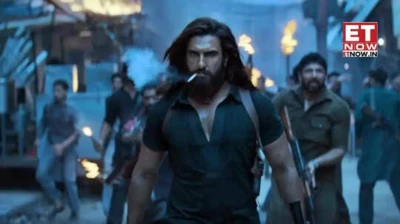

Bollywood's remix culture has once again walked straight into a courtroom battle. This time, the controversy revolves around Dhurandhar 2: The Revenge, filmmaker Aditya Dhar's sequel that has leaned heavily into nostalgia by reviving old chartbusters for a new generation.
But while audiences may be dancing to recreated versions of familiar tracks, veteran filmmaker Rajiv Rai is far from amused. In fact, he has gone as far as calling the makers "thieves".
The dispute centres on "Rang De Lal (Oye Oye)", a reworked version of the cult song "Tirchi Topiwale" from Rai's 1989 blockbuster Tridev. What may appear to casual listeners as yet another Bollywood remix has now opened up a larger conversation about copyright, creative ownership, and whether contracts signed in the late 1980s can even account for today's remix-heavy music business.
Interestingly, the timing makes the drama even sharper. Dhurandhar 2 is heading towards its expected OTT release on JioHotstar on May 14, barely days after the next hearing in the case. The legal uncertainty hanging over the film has suddenly become as talked about as its soundtrack.
Why Is Rajiv Rai Angry With The Makers?
Rajiv Rai's production banner, Trimurti Films, has objected to the way "Tirchi Topiwale" has been recreated in Dhurandhar 2. According to Rai, the song has not merely been reused but "mutilated". In an earlier interaction with Mid-Day, Rai openly attacked the film's makers and questioned how they could alter a song so drastically without his approval. He argued that nowhere had he granted permission for the song to be modified in this manner, even if music rights existed elsewhere.
The matter reached the Delhi High Court, which reportedly instructed Rai not to publicly comment further because the issue is sub judice. The court also directed both parties towards mediation in hopes of reaching a settlement quietly.
That effort, however, has failed.
A month later, the court was informed that mediation could not resolve the dispute. The matter will now return before the Delhi High Court on May 8, according to Bar and Bench.
Why Is The Legal Fight Being Called 'Ambiguous'?
The confusion largely stems from a music rights agreement signed decades ago. The makers of Dhurandhar 2, along with T-Series, maintain that the music label legally owns the rights to songs from Tridev. Their argument is straightforward. If the label owns the music rights, it should also have the authority to reproduce or remix those songs for another film. And Bollywood has plenty of precedent for this.
Over the years, T-Series has recreated several iconic songs for modern films, including:
- "Dilbar" in Satyamev Jayate
- "Aankh Marey" in Simmba
- "Ek Do Teen" in Baaghi 2
- "Hawa Hawaii" in Tumhari Sulu
But Trimurti Films sees things differently. Rajiv Rai's side argues that only distribution rights were sold to T-Series, not the freedom to alter the song visually and musically for an entirely different cinematic context.
That distinction is where the case becomes complicated.
Did You Know? In the late 1980s, remix culture was almost non-existent in Bollywood. Music labels mainly focused on cassettes, radio circulation, and distribution rights. The idea that songs would later be "reimagined" for entirely new films was not something most producers were actively negotiating in contracts back then.
That historical gap is now central to the dispute. Rai's side argues that since remixing was not a common industry practice in 1989, there was no reason to include clauses specifically preventing such recreations.
What About Credits To The Original Artists?
The recreated version in Dhurandhar 2 does credit the original creative team behind "Tirchi Topiwale", including lyricist Anand Bakshi, composers Kalyanji-Anandji, and singers Amit Kumar and Sapna Mukherjee. But for Rai and his production house, proper credit alone is not enough. Their objection is more emotional and artistic than technical. The argument is that a song deeply tied to a film's identity should not be completely reshaped without the consent of its original creators or producers.
This debate has quietly existed in Bollywood for years. At what point does a remix become respectful nostalgia, and at what point does it become exploitation of legacy content?
How Did The First Dhurandhar Use Old Songs So Smoothly?
Ironically, the first Dhurandhar managed to revive old music with far less controversy. One major reason was its partnership with Saregama Music, which owns one of India's largest catalogues of classic songs. That collaboration allowed the film to creatively reinterpret several older tracks across its soundtrack and background score.
Songs reintroduced in the first film included:
- "Na To Caravan Ki Talash Hai" from Barsaat Ki Raat
- "Na De Dil Pardesi Nu (Jogi)" from the 1995 Punjabi album Muhammad Sadiq And Ranjit Kaur Da Akhada
- "Ramba Ho" from Armaan
Composer Shashwat Sachdev also used "Hawa Hawa" during Sanjay Dutt's entry sequence as SP Chaudhary Aslam.
That usage itself carried an interesting backstory.
Singer-composer Hassan Jahangir later confirmed he received compensation of $50,000, roughly Rs 47 lakh, for the use of his iconic Pakistani track. The song has famously been recreated multiple times in India over the years, often without proper authorisation.
Why Did Dhurandhar 2 Shift From Saregama To T-Series?
The sequel changed its music strategy entirely. Instead of Saregama, the makers partnered with T-Series for Dhurandhar 2. They also attempted to make the recreations feel more collaborative by bringing back original performers wherever possible. For example, Bombay Rockers themselves participated in recreating "Aari Aari" alongside Jasmine Sandlas, Shashwat Sachdev, Reble and Token.
The film also revisited Nusrat Fateh Ali Khan's 1977 qawwali "Dil Pe Zakham Khate Hain".
T-Series, of course, has long built a reputation around modern remixes and recreated classics. Previous examples include:
- "Mere Rashke Qamar"
- "Dekhte Dekhte"
- "Sanu Ek Pal Chain"
- "Ye Jo Halka Halka Suroor"
The commercial success of such tracks has encouraged producers to continue mining nostalgia aggressively, especially for streaming audiences who enjoy familiar hooks with updated beats.
Has Rajiv Rai Objected To Remixes Before?
Absolutely.
This is not Rai's first courtroom battle over recreated music from his films. Last year, he also challenged the recreation of "Saat Samundar Paar" from Vishwatma in the romantic comedy Tu Meri Main Tera Main Tera Tu Meri, backed by Dharma Productions and Saregama.
At the time, the court declined to halt the film's theatrical release because of the huge financial investment already involved and the proximity to release week. However, the legal proceedings themselves have still not reached a final outcome, even after the film later arrived on Prime Video India in February 2026. That earlier dispute now makes the Dhurandhar 2 controversy look less like an isolated disagreement and more like part of a larger industry clash between legacy filmmakers and modern music labels.
Could The OTT Release Be Affected?
At the moment, that seems unlikely.
With Dhurandhar 2 expected to begin streaming on JioHotstar on May 14, there is very little time for a final verdict before release. Legal experts tracking the matter believe the ambiguity surrounding old contracts may prevent any immediate decisive ruling. Still, the case could eventually become a landmark one for Bollywood's remix economy. Because beneath all the courtroom drama lies a question the film industry has avoided answering clearly for years. When audiences cheer for an old song reborn, who truly owns that memory?
Read more news like this on www.etnownews.com