




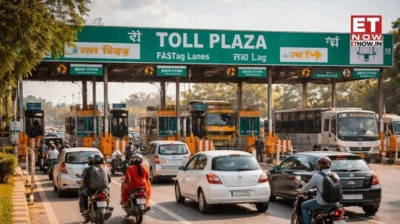

New Toll Rules: As the new financial year begins today, April 1, several key changes have come into effect. One significant development is for road users across India.
They will no longer be able to pay toll fees in cash from Wednesday as the National Highways Authority of India (NHAI) shifts to a fully digital payment system.
In a major step towards modernising highway travel, NHAI will implement a complete ban on cash payments at toll plazas across the country.
All Changes Explained
From April 1, commuters will have to pay toll charges only through digital modes such as FASTag or UPI. The move is aimed at improving efficiency and bringing more transparency to toll collection on national highways and expressways.
Officials believe that a fully digital system will help vehicles pass through toll plazas faster, reducing long queues and saving travel time.
With the removal of cash lanes, authorities expect a smoother flow of traffic, especially during peak hours.
Faster processing at toll booths is also likely to cut fuel consumption and reduce vehicle emissions, contributing to a cleaner environment.
However, the transition may cause inconvenience for some travellers, particularly those who are not prepared for digital payments.
Vehicles without a valid FASTag or insufficient balance may face penalties or could even be stopped at toll plazas.
In such cases, commuters will have the option to make instant payments using UPI by scanning QR codes available at toll booths.
But officials have warned that network issues could sometimes affect these transactions, leading to delays.
To avoid disruptions, travellers are advised to ensure that their FASTag is active, properly linked to their bank account, and has enough balance before starting their journey.
Keeping a working UPI app on their smartphone as a backup is also recommended.
The shift marks a significant step in India's push towards digital infrastructure, making highway travel faster, smoother and more efficient.
FASTag Annual Pass Fee
NHAI has also revised the applicable fee for the FASTag Annual Pass, increasing the rate from the current Rs 3000 to Rs 3075 for the 2026-27 Financial Year. According to the Ministry of Road Transport & Highways, this new fee structure takes effect on April 1, 2026. The adjustment follows the regulatory framework established under the National Highways Fee (Determination of Rates and Collection) Rules, 2008.
The revised rate applies specifically to eligible non-commercial vehicles equipped with a valid FASTag. This facility remains available at approximately 1,150 fee plazas across the network of National Highways and National Expressways.
The adoption of the FASTag Annual Pass continues to grow among private vehicle owners, with the user base currently exceeding 56 lakh individuals.
Read more news like this on www.etnownews.com