
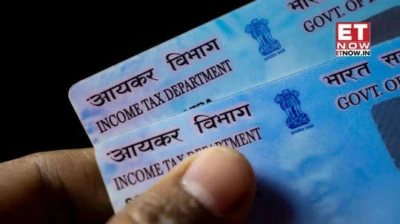

PAN card mandatory rules in India: Permanent Account Number (PAN) is a 10-character alphanumeric identifier issued by the Income Tax Department of India to persons (individuals), companies, and other entities.
It is crucial for every taxpayer in the country. Thus, having a PAN card in India is not an option; it is a necessity. Some of you might be unaware that it is required for more than just submitting income tax returns (ITRs). On that note, let's explore PAN card rules and where it is mandatory during transactions.
As per Income Tax Rule 114B, a Permanent Account Number (PAN) is required for high-value financial transactions above specified limits to promote transparency and help prevent tax evasion. Significant transactions include bank deposits/withdrawals exceeding Rs 50,000, purchasing immovable property (more than 10-20 lakh), vehicle purchases, large investments, and foreign travel and more.
Transactions where 'Permanent Account Number' is required
As per rule 114B, the following are the transactions in which quoting of PAN is mandatory by every person except the Central Government, the State Governments and the Consular Offices:
- Sale or purchase of a motor vehicle or a vehicle other than two wheeled vehicles.
- Opening an account [other than a time-deposit and a Basic Savings Bank Deposit Account] with a banking company or a co-operative bank
- Making an application for the issue of a credit or debit card.
- Opening of a demat account with a depository, participant, custodian of securities or any other person with SEBI
- Payment in cash of an amount exceeding Rs 50,000 to a hotel or restaurant against a bill at any one time.
- Payment in cash of an amount exceeding Rs 50,000 in connection with travel to any foreign country or payment for the purchase of any foreign currency at any one time.
- Payment of an amount exceeding Rs 50,000 to a Mutual Fund for the purchase of its units
- Payment of an amount exceeding Rs 50,000 to a company or an institution for acquiring debentures or bonds issued by it.
- Payment of an amount exceeding Rs 50,000 to the Reserve Bank of India for acquiring bonds issued by it.
- Deposit with a banking company or a co-operative bank:-
- Cash exceeding Rs 50,000 during any one day; or
- Cash deposit aggregating to more than Rs 2,50,000 during the period 09th November, 2016 to 30th December, 2016
- Payment in cash for an amount exceeding Rs 50,000 during any one day for the purchase of bank drafts or pay orders, or banker's cheques from a banking company or a co-operative bank.
- A time deposit of an amount exceeding Rs 50,000 or aggregating to more than Rs. 5 lakh during a financial year with a banking company or a co-operative bank, a Post Office, a Nidhi referred to in section 406 of the Companies Act, 2013, or a non-banking financial company
- Payment in cash or by way of a bank draft, pay order or banker's cheque of an amount aggregating to more than Rs 50,000 in a financial year.
- For one or more pre-paid payment instruments, as defined in the policy guidelines for issuance and operation of pre-paid payment instruments issued by Reserve Bank of India under section 18 of the Payment and Settlement Systems Act, 2007, to a banking company or a co-operative bank or to any other company or institution.
- Payment of an amount aggregating to more than Rs 50,000 in a financial year as a life insurance premium to an insurer
- A contract for the sale or purchase of securities (other than shares) for an amount exceeding Rs 1 lakh per transaction.
- Sale or purchase, by any person, of shares of a company not listed in a recognised stock exchange for an amount exceeding Rs. 1 lakh per transaction.
- Sale or purchase of any immovable property for an amount exceeding Rs. 10 lakh or valued by the stamp valuation authority referred to in section 50C of the Act at an amount exceeding ten lakh rupees.
- Sale or purchase of goods or services of any nature other than those specified above for an amount exceeding Rs 2 lakh per transaction.
Read more news like this on www.etnownews.com