




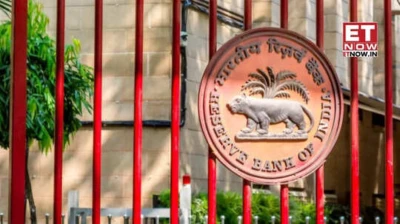

RBI IFR Decision: The Reserve Bank of India on Wednesday announced the withdrawal of the Investment Fluctuation Reserve (IFR) requirement for commercial banks, a step aimed at strengthening lenders' capital adequacy.
The IFR had served as an additional cushion for banks to offset potential losses arising from declines in the value of their investment portfolios.
At present, banks maintain this reserve as a safeguard against depreciation linked to mark-to-market (MTM) valuations. However, the central bank noted that commercial banks already maintain capital for market risk and adhere to updated norms governing classification, valuation, and operation of investment portfolios.
IFR norms to be discontinued for commercial banks
Taking into account the existing prudential regulations, the RBI stated that the IFR requirement will be discontinued for commercial banks, including Local Area Banks, but excluding Small Finance Banks, Payment Banks, and Regional Rural Banks.
The regulator also indicated that guidelines for other categories of banks will be revised. These changes aim to address operational difficulties faced by such institutions in meeting IFR thresholds and to bring greater uniformity and clarity across regulatory instructions. Draft directions will be released soon for public consultation.
Relaxation in CRAR calculation conditions
In another key announcement, RBI Governor Sanjay Malhotra proposed removing an existing condition related to non-performing asset (NPA) provisioning for including quarterly profits in the calculation of Capital to Risk-weighted Assets Ratio (CRAR).
Under current rules, commercial banks, excluding Regional Rural Banks and Local Area Banks, can include quarterly net profits in CRAR calculations only if the variation in incremental NPA provisions across the previous financial year's quarters does not exceed 25 per cent of the average. The RBI has now proposed to eliminate this requirement, with draft amendments to be issued for public feedback.
Monetary policy decision and broader context
The announcements were made as part of the first bi-monthly monetary policy for the current financial year. The Monetary Policy Committee, chaired by Governor Sanjay Malhotra, decided to keep the repo rate unchanged at 5.25 per cent while maintaining a neutral stance. The meeting, held against the backdrop of the ongoing West Asia war, also acknowledged emerging risks and their potential implications for the Indian economy.
Read more news like this on www.etnownews.com