




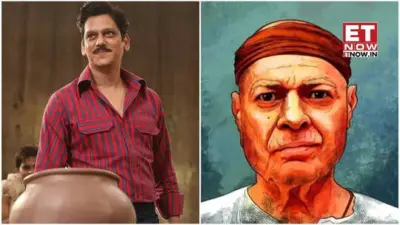

REAL STORY behind Vijay Varma's Matka King: When a crime drama arrives promising the story of the man who turned a street-side betting practice into one of India's biggest underground empires, curiosity is inevitable.
That is precisely the intrigue around Vijay Varma's latest series Matka King, where the actor plays Brij Bhatti-a fictionalised character widely understood to be inspired by the real-life "Matka King" of Mumbai, Ratan Khatri. While the show stops short of directly naming him, the parallels are unmistakable. From the rise of organised matka gambling in 1960s Bombay to the transformation of a modest betting system into a nationwide phenomenon, the series draws heavily from the extraordinary and controversial life of the man who became a legend in India's gambling underworld.
Directed by Nagraj Manjule and backed by Prime Video, the series revisits an era when matka moved from mill compounds and textile hubs into drawing rooms of the rich, the film industry, and even political circles. At the centre of that world was Ratan Khatri-a businessman whose name became synonymous with India's illegal betting economy for decades.
Who Was The Real Matka King?
The real man behind Vijay Varma's character is widely believed to be Ratan Khatri, a Mumbai-based gambling kingpin who revolutionised the matka business and built one of the most powerful underground betting networks in India.
Born in Karachi around 1932 into a Sindhi Hindu family, Khatri migrated to Mumbai with his family after the Partition of 1947. Like many refugees rebuilding their lives, he began from scratch and found work in the city's textile and trading ecosystem. It was here that he first encountered the early form of matka betting.
How Ratan Khatri Changed Gambling Forever
Before Khatri's rise, betting in Bombay's markets largely revolved around cotton rates transmitted from the New York Cotton Exchange. Punters would wager on opening and closing rates in a complicated format that was mostly limited to traders and insiders. Khatri saw an opportunity to simplify the game.
In 1962, after being encouraged by friends, he launched his own syndicate-Ratan Matka, also known as Main Bazaar Matka-and transformed the business by making the format more transparent, accessible, and easier for the common man to understand.
His key innovation included:
- Replacing complex cotton-market betting with a simplified numbered draw system
- Using numbered slips/cards drawn from an earthen pot, or matka, to create transparency
- Offering better odds and cleaner operations than many rivals
That change turned matka from a niche hustle into a mass-market obsession.
From Mill Workers To Movie Stars
What began among labourers and factory workers quickly exploded across classes. Matka was no longer just for the working class. By the 1970s, Ratan Khatri's betting empire had reportedly reached daily turnovers of nearly Rs 1 crore-an enormous sum for that era.
His clientele allegedly ranged from:
- Textile workers and small traders
- Wealthy businessmen
- Bollywood actors, producers and music composers
- Politically connected figures
The game's broad appeal came from one simple idea: it gave ordinary people the illusion of sudden wealth.
Why Ratan Khatri Became A Legend
Unlike many gambling operators of his time, Khatri cultivated an image of discipline and fairness. His public draws and structured operations gave punters a sense that his system was more trustworthy than rival bookmakers. This helped him become not just another operator, but the face of the industry itself.
Many in Mumbai's gambling circles regarded him as India's first truly organised bookmaker-someone who professionalised what had previously been a scattered, unstructured activity.
Did you know?
The phrase "Matka King" became so associated with Ratan Khatri that for years his name and the gambling format were almost interchangeable in Mumbai's underworld and popular culture.
Jail During Emergency And Fall Of An Empire
Khatri's empire was not without setbacks. During the Emergency imposed by then Prime Minister Indira Gandhi between 1975 and 1977, authorities cracked down on multiple illegal operations across the country. Ratan Khatri was jailed for 19 months during this period, significantly impacting his operations.
Though he returned after his release, the matka business gradually began changing in the 1980s and 1990s amid:
- Increased police crackdowns
- Rising mafia involvement
- Internal disputes within betting syndicates
- Growing fragmentation of the gambling market
By 1993, Khatri had largely retired from active matka operations.
His Connection To Bollywood
Khatri's influence went beyond gambling. At the peak of his wealth and notoriety, he also entered film financing and production-something many powerful businessmen and underworld-linked financiers of the era pursued.
He reportedly produced the 1976 film Rangila Ratan, starring Rishi Kapoor and Parveen Babi, further cementing his links with the Hindi film industry.
Why Vijay Varma's Character Is Not Named Ratan Khatri
In Matka King, Vijay Varma plays Brij Bhatti, not Ratan Khatri. This fictionalisation is likely a creative and legal decision, allowing the makers to dramatise events while drawing inspiration from real history without making the show a direct biopic.
Still, the series' premise closely mirrors Khatri's journey:
- A common man enters Mumbai's betting world
- Simplifies gambling for the masses
- Builds a massive empire in 1960s Bombay
- Changes the city's underground economy forever
Director Nagraj Manjule has also indicated the show explores not just crime, but class mobility, aspiration, and post-Independence Mumbai's social churn.
- Death And Legacy
Ratan Khatri died on May 9, 2020, at his Tardeo residence in South Mumbai following a cardiac arrest. He was 88. Yet decades after his retirement and death, his legacy remains unmatched. Many tried to inherit the matka business after him, but few came close to replicating the scale, discipline, or mythology he built around his name.
His story has inspired multiple fictional portrayals over the years, but Matka King may be the most direct mainstream dramatisation of his rise yet.
Why His Story Still Fascinates India
Ratan Khatri's life continues to intrigue because it is more than the story of a gambler. It is the story of post-Partition reinvention, Mumbai hustle culture, underground capitalism, and how one man built an empire by understanding aspiration better than anyone else. Long before startup founders were glamorised, Khatri created a business model that scaled nationally, built trust through process innovation, and turned an illegal side hustle into a multi-crore ecosystem.
That, perhaps, is why the legend of the Matka King refuses to die.
So, who was the real Matka King shown in Vijay Varma's series?
Not Brij Bhatti-but Ratan Khatri, the refugee-turned-gambling baron who built one of India's most infamous underground empires and changed Mumbai's betting culture forever.
Read more news like this on www.etnownews.com