
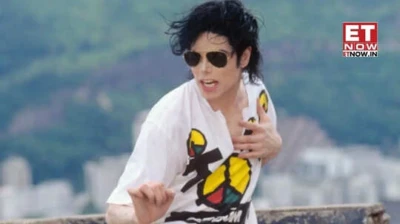

There are stories about Michael Jackson that feel almost myth-like, and then there are episodes that sound too improbable to be real until you trace the details.
February 1996 sits firmly in the latter category. At a time when Jackson was battling intense scrutiny and trying to reclaim his narrative, he chose to film one of his most politically charged songs, They Don't Care About Us, inside Brazil's favelas. What followed was a collision of art, authority, and ground reality. Local officials resisted. Courts intervened. And, in one of the most talked-about production decisions in music video history, Jackson's team allegedly relied on the protection of a powerful criminal network to get the job done. It was messy, controversial, and yet strangely fitting for a song that questioned power structures at every level.
Why did Brazil almost block the shoot?
Spike Lee, who directed the video, wanted authenticity. That meant filming in real locations such as Rio de Janeiro's Santa Marta favela and Salvador's Pelourinho district. The Brazilian government, however, had other priorities.
Officials feared the visuals would:
- Damage Rio's global image by highlighting poverty
- Affect tourism revenue and investor confidence
- Hurt the city's bid for the 2004 Olympics
A judge initially banned the shoot. That decision was overturned, but the resistance revealed a deeper discomfort. Jackson wanted to show reality. Authorities wanted to curate perception.
How did the crew manage to film anyway?
Here comes the part that still raises eyebrows. Reports suggest that Jackson's team turned to Marcinho VP, a figure linked to the Comando Vermelho, to ensure safety and access.
- The gang allegedly provided on-ground security
- Filming proceeded without interference in gang-controlled areas
- Local activity was reportedly paused during the shoot
Did you know?
Some accounts claim that a drug lord's house was temporarily converted into Jackson's dressing room. It sounds cinematic, but multiple reports from the time echo similar details.
Spike Lee later defended the decision, stating bluntly that in certain areas, official authority did not extend as far as people assumed. If you wanted to work there, you dealt with those who actually controlled the space.
What made They Don't Care About Us so different?
Released as part of the album HIStory: Past, Present and Future, Book I, the track marked a sharp turn in Jackson's artistic voice. Gone was the metaphor-heavy messaging. In its place stood something direct, angry, and unfiltered.
Musically, it fused:
- Pop and rock elements with percussive Brazilian rhythms
- Contributions from Olodum, whose samba-reggae sound gave the song its pulse
Lyrically, it was a protest. Not abstract, not symbolic. Personal and political at once.
What do the lyrics actually mean?
The song reads like a layered argument against systemic injustice, and many lines carry dual meaning.
"All I wanna say is that they don't really care about us"
This is the chorus, but also the thesis. It points to institutions that fail the very people they are meant to protect.
"Tell me what has become of my life / I have a wife and two children who love me"
Often interpreted as Jackson reflecting on how allegations and media trials disrupted his personal life.
"Skinhead, deadhead, everybody gone bad"
A commentary on widespread moral decay and the normalisation of hate.
"Don't you black or white me"
A rejection of racial categorisation and stereotyping, echoing themes he had explored earlier but with more urgency here.
Did you know?
The song was partly inspired by incidents like the beating of Rodney King, which exposed racial injustice to a global audience.
Why did the song spark controversy?
Before the album's release, certain lyrics were criticised for containing offensive language. Jackson insisted they were meant to expose hatred, not endorse it. Still, the backlash was immediate.
He later:
- Apologised for the hurt caused
- Altered the lyrics in subsequent versions
- Continued to defend the song's core message
Spike Lee publicly supported him, arguing that context had been ignored and that Jackson was being judged more harshly than others.
What happened in the two music videos?
There were two distinct versions, each amplifying the message differently.
The Brazil version
Shot in real communities, it showed:
- Crowds dancing with Jackson
- Vibrant street life
- A sense of collective resilience
Residents welcomed him. For many, it was a rare moment of global visibility.
The prison version
Far darker, it included footage of:
- War and civil unrest
- Police brutality
- Historical oppression
Together, the two versions created a contrast between lived reality and systemic violence.
Did the song succeed commercially?
Globally, yes. In the United States, the controversy limited its performance.
- Topped charts in several European countries
- Reached number four in the United Kingdom
- Peaked at number 30 on the Billboard Hot 100
Despite that, its cultural impact far outlasted its chart run.
Why does the song still matter today?
Over the years, They Don't Care About Us has evolved from a controversial release into a protest staple.
- It resurfaced during Black Lives Matter protests
- It was widely played after the death of George Floyd
- New generations continue to chant its chorus
Did you know?
Director Spike Lee later revisited the video, blending original footage with modern protest visuals, reinforcing its timeless relevance.
The song also sits in a lineage of protest music alongside voices like Bob Marley and his anthem Get Up, Stand Up, both urging people to challenge injustice.
Was this Jackson's boldest statement?
Arguably, yes. Jackson had always spoken about unity and love, but here he chose confrontation. He referenced figures like Martin Luther King Jr. and directly addressed institutional racism, police brutality, and media bias. This was not the polished entertainer. This was an artist willing to risk backlash to say something uncomfortable.
What is the real legacy of this moment?
The Brazil shoot, with all its complications and controversies, became symbolic of the song itself. It exposed uncomfortable truths:
- That power does not always sit where official systems claim it does
- That art can bypass authority when it insists on truth
- That visibility can be both political and deeply personal
They Don't Care About Us is no longer just a track in Jackson's catalogue. It is a statement that continues to echo, decades later. Not because it was perfect, but because it was fearless. And perhaps that is why the story of a global superstar filming under the protection of a favela gang still feels so compelling. It was chaotic, risky, and controversial. Much like the world the song was trying to hold accountable.
Read more news like this on www.etnownews.com