
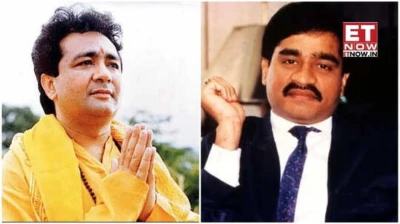

The 1990s weren't just about chartbusters, blockbuster debuts, or larger-than-life stardom in Hindi cinema. Behind the glamour, there existed a chilling parallel script-one dictated not by directors or producers, but by fear, intimidation, and organised crime.
It was a decade when the lines between cinema and the underworld blurred in ways that now seem almost surreal. Filmmaker Ram Gopal Varma, known for capturing the gritty underbelly of Mumbai in films like Satya and Company, recently revisited this dark chapter in a conversation with crime writer Hussain Zaidi. What emerges is not gossip or conspiracy, but a deeply unsettling account of how power, ego, and money reshaped Bollywood's ecosystem-and why some of its biggest names became targets.
When power was performed through fear
According to Varma, the underworld in the 1990s did not operate randomly. Their targets were carefully chosen-and almost always influential. Big names in the industry became symbolic trophies.
Actors like Salman Khan and Shah Rukh Khan, along with filmmakers such as Rakesh Roshan, were not just celebrities; they represented power, reach, and money. Targeting them was a calculated move.
- The idea was simple: Strike fear at the top to control the rest
- High-profile figures ensured maximum visibility and psychological impact
Varma explained that gangsters often saw themselves as protagonists in their own stories. To feel powerful, they needed to dominate individuals who were already seen as larger-than-life.
Beyond money: The hunger for control
While extortion was a key part of the equation, it wasn't the only motive. The underworld's ambitions extended far beyond financial gain. Varma pointed out that controlling casting decisions, influencing film projects, and dictating actor availability became tools of dominance. For instance, securing dates of a rising star like Hrithik Roshan wasn't just about making a film-it was about proving authority.
The psychology, he suggested, was almost theatrical. To become a 'hero' in their own narrative, these figures needed to overpower real heroes of the screen. And when persuasion failed, intimidation followed.
The chilling logic: "Kill one, control many"
One of the most disturbing insights shared by Varma revolves around a widely believed underworld tactic-using violence as a message. There was a belief within these networks that making an example out of one high-profile individual could create a ripple effect of compliance. Refusal was not just defiance; it was seen as a challenge to authority. This climate of fear meant that even rumours carried weight. The uncertainty of who was behind threats-whether Dawood Ibrahim's network or operatives like Chhota Shakeel-only added to the anxiety within the industry.
Why Rakesh Roshan was attacked
The shooting of filmmaker Rakesh Roshan in January 2000 came shortly after the massive success of Kaho Naa… Pyaar Hai, which launched Hrithik Roshan into overnight superstardom. Varma linked the attack to demands for Hrithik's dates. The alleged plan, he claimed, was to involve the actor in a project backed by underworld interests, with control exercised from behind the scenes.
Roshan, however, refused to comply.
- He declined to prioritise their film over existing commitments
- He resisted pressure to manipulate his son's schedule
In a later interview, Rakesh Roshan recalled that period as one filled with constant fear. He maintained that he never entertained such demands, despite repeated pressure.
Did you know?
Rakesh Roshan survived the attack after being shot outside his office and returned to filmmaking not long after-an act many saw as quiet defiance.
The many layers behind Gulshan Kumar's murder
The killing of T-Series founder Gulshan Kumar in August 1997 remains one of Bollywood's most shocking moments. Varma suggested that the reasons were complex and layered. At the time, Kumar was at the peak of his success. He had transformed T-Series into a music powerhouse, introduced new talent, and disrupted the industry's traditional structure.
But success often breeds resentment.
Varma recalled how, in that environment, Kumar became an easy target for blame and suspicion. If something went wrong in the industry, fingers were quickly pointed at him-fairly or not. There were also claims that individuals with personal grudges may have influenced gangster Abu Salem by feeding narratives against Kumar. In such a volatile setup, perception often became more dangerous than reality.
Abu Salem's ambition and the power play
Another dimension Varma highlighted was Abu Salem's own aspirations. The act, he suggested, was not just about extortion or retaliation-it was also about establishing identity. Kumar was known to have resisted extortion demands. Varma described him as someone unlikely to be intimidated by threats alone.
At the same time, eliminating a figure of Kumar's stature sent shockwaves across the industry. For a brief period, it even elevated Abu Salem's notoriety, making him a dominant name independent of Dawood Ibrahim's shadow.
Did you know?
Gulshan Kumar was shot outside a temple in Mumbai-a detail that made the incident even more disturbing for the public at the time.
A day that shook the industry
Varma also shared a personal memory from the day Kumar was killed. He recalled being at producer Jhamu Sugandh's home when news of the murder arrived. The reaction was immediate-shock, disbelief, and a palpable sense of vulnerability. If someone as powerful and visible as Gulshan Kumar could be killed in broad daylight, no one felt safe.
When reality inspired cinema
Years later, Varma channelled many of these real-life incidents into films like Satya, Company, and D. These weren't just crime dramas; they were reflections of a time when Mumbai's film industry was navigating one of its most dangerous phases. What makes these stories linger is not just their brutality, but their proximity to reality. The 1990s were not fiction-they were lived experiences for many within the industry.
The legacy of a turbulent decade
Today, Bollywood operates in a vastly different environment, with stronger regulations and less visible underworld influence. Yet, the echoes of the 1990s remain an important reminder of how vulnerable even the most powerful industries can be. The stories Varma revisits are not just about crime-they are about power, perception, and the fragile nature of control. And perhaps most importantly, they reveal how fear, when weaponised, can reshape an entire ecosystem. For readers today, these accounts serve as both history and caution-a glimpse into a time when cinema's biggest battles were fought far away from the screen.
Read more news like this on www.etnownews.com