
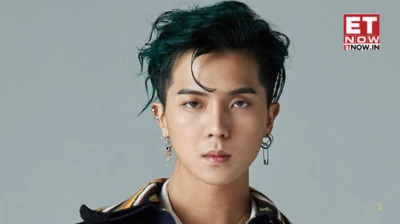

The first trial hearing in the military service violation case against Song Min-Ho, better known by his stage name Mino and a member of K-pop group WINNER, was held on April 21 at the criminal division 10 of the Seoul Western District Court.
The session marked the beginning of what is expected to be a closely watched legal proceeding, given the artist's public profile and the serious nature of the charges.
The prosecution has sought a prison sentence of one year and six months, arguing that Song was absent without permission for 102 days during his time as a social service worker - an alternative form of military service - at the Facilities Management Corporation and Public Convenience Facilities in Mapo-gu. The prosecutor's position was direct: the defendant was absent for a prolonged period and did not perform any actual duties during his assigned service term of 430 days.
What the Charges Involve
Under South Korea's Military Service Act, absence without justification for more than eight days can result in imprisonment of up to three years. The law reflects the weight South Korean society places on mandatory military service, and violations - particularly those involving public figures - tend to attract significant scrutiny.
Song's case centres on allegations that he was away from his assigned post for nearly a quarter of his total required service period without authorisation. A supervisor identified as Mr. Lee was also mentioned in connection with the case, though he denied any wrongdoing, stating clearly that he never conspired with Song to help him avoid his duties.
The Defence: Illness, Acknowledgment, and Remorse
Song's legal team took a notably different approach from a conventional denial strategy. His lawyer acknowledged all facts in the indictment - a decision that signals the defence is not contesting what happened, but rather seeking to contextualise it.
The lawyer told the court that Song holds himself responsible for failing to fulfil his obligations, and outlined two specific health conditions that affected him during the service period: bipolar disorder and a cervical disc rupture that caused ongoing physical pain. The defence requested that the court take both the mental health diagnosis and the physical condition into account when determining the final sentence, framing these not as justifications but as circumstances that contributed to his inability to report consistently.
Song's Own Words: An Apology Without Excuses
Perhaps the most striking moment of the hearing came during Song Min-Ho's final statement, in which he addressed the court directly and at length.
He apologised to everyone present and spoke openly about his bipolar disorder and panic disorder - conditions he said he has been managing. Crucially, he was careful to draw a clear line between explanation and excuse. "I know that this illness must never be used as an excuse or a justification," he told the court, adding that as someone with a public platform and a following that looks up to him, he felt a deeper sense of shame for what he described as a failure to set an example.
He characterised his choices during that period as foolish and expressed deep regret, apologising a second time before concluding his statement. He also spoke about his intention to undergo treatment and recover, and closed with a statement that will likely resonate with both his supporters and his critics - that if given the opportunity to re-enlist, he would complete his service faithfully to the end.
The Broader Context
Military service is among the most sensitive social obligations in South Korea, where able-bodied men are required by law to serve. Celebrities and public figures who are perceived to have avoided or manipulated their service requirements have historically faced severe public backlash, and the legal system has not shied away from imposing real consequences.
Song Min-Ho enlisted for social service in lieu of active military duty, a path available to those who qualify on health or other grounds. The allegation that he was effectively absent for over a hundred days without permission - regardless of the underlying reasons - strikes at the integrity of a system that millions of ordinary South Koreans navigate without exception or accommodation.
The court has not yet delivered its verdict. The next phase of proceedings will determine whether the prosecution's requested sentence of 18 months is imposed, reduced, or replaced with an alternative penalty. Song's acknowledgment of the facts, combined with his health disclosures and public apology, may weigh in his favour during sentencing - but the outcome remains uncertain.
For WINNER fans and the broader K-pop community, the case has opened a wider conversation about mental health, the pressures faced by performers even outside the spotlight, and the limits of what illness can and cannot excuse in the eyes of the law.
Read more news like this on www.etnownews.com