

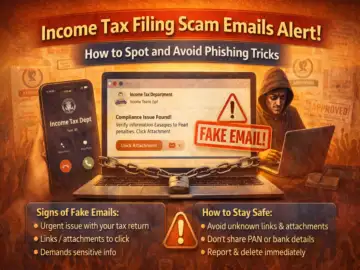
As the income tax filing season begins, a new wave of phishing scams is targeting taxpayers across India. Fraudulent emails pretending to be from the Income Tax Department are circulating widely, attempting to trick users into sharing sensitive personal and financial information.
Authorities, including the Press Information Bureau Fact Check unit, have already warned that these emails are fake and not issued by any official government body.
How These Scam Emails Look Convincing
Cybercriminals are using sophisticated techniques to make these emails appear genuine. Typically, such emails:
- Claim there are "compliance issues" or errors in your tax return
- Use formal language and official-looking formats
- Include logos and branding similar to government communications
Because of their realistic appearance, many taxpayers mistakenly trust these messages.
The Real Trap: Links and Attachments
The main goal of these scam emails is to get you to click on a link or download an attachment.
Once clicked, the link usually redirects you to a fake website that closely resembles the official income tax portal. These websites are designed to steal your confidential data.
You may be asked to enter:
- PAN details
- Bank account information
- Login credentials
- OTP (One-Time Password)
Sharing any of this information can give scammers direct access to your financial accounts.
How the Scam Works
The fraud typically follows a simple pattern:
- You receive a fake email claiming an urgent issue with your tax return
- The email pressures you to act quickly
- You click on the link provided
- A fake website opens, mimicking the official portal
- You enter your details, which are then stolen
Scammers often create a sense of urgency by mentioning deadlines or penalties to push victims into acting without verifying the source.
What Authorities Have Said
Both the Income Tax Department and PIB Fact Check have clearly stated that such emails are fraudulent. They have confirmed:
- No such emails have been officially sent
- Taxpayers should ignore and report suspicious messages
- Official communication is always done through verified channels
How to Identify Fake Income Tax Emails
Here are some simple ways to spot a scam:
- Check the sender's email address carefully (fake emails often use slightly altered domains)
- Avoid clicking on unknown links or downloading attachments
- Look for spelling mistakes or unusual formatting
- Be cautious of emails creating urgency or fear
Safety Tips to Protect Yourself
To stay safe during tax season:
- Always access the tax portal directly by typing the official website URL
- Never share OTP, passwords, or banking details via email
- Enable two-factor authentication on your accounts
- Regularly monitor your bank statements for suspicious activity
- Report phishing attempts to authorities immediately
Final Takeaway
With cyber fraud on the rise, taxpayers must stay alert-especially during the filing season. Scam emails are becoming more sophisticated, but a little caution can prevent major financial losses.
Always verify before you click. When in doubt, trust only official sources and avoid sharing sensitive information online.
Disclaimer
This article is for informational purposes only. Readers are advised to verify information through official government sources and report suspicious activity promptly.