

This Women's Day, we at Femina turn the spotlight on women who are not just breaking barriers for themselves but actively building pathways for others.
Across entrepreneurship, social impact and innovation, these changemakers are creating opportunities and reshaping ecosystems with women at the centre. Their work goes beyond business. Let's hear from them about what inspired them to work towards the upliftment of women and the changes they hope to see to make the world a more equitable place for all.
Geeta Ramaseshan, Senior Advocate, Madras High Court
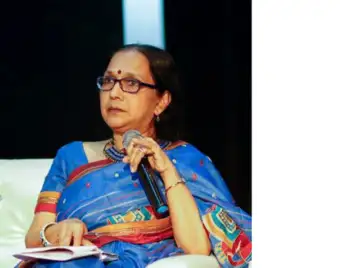
With over 45 years of experience, Geeta Ramaseshan is a respected lawyer known for her straightforward work in advancing the rights of women and marginalised communities. She voices her opinions and strong statements when it comes to gender issues, she also serves on the boards of several organisations focused on empowering women and minorities.
The Women's movement in the 70's had a great impact in my life. I started by being part of Penn Urimai Iyakkam in Chennai that specially worked for women who were displaced, sought better amenities for women in slums, and worked for women in the unorganised sector. The Iyakkam also took up cases relating to dowry deaths, rape and other form of violences against women.
'My professor Ms Rajalakshmi from Ethiraj College was my inspiration as she was a founder member of the organisation and I joined it while being a student of law. Subsequently after completing law, my focus was on access to justice especially to women who faced violence in the family.
'Today while my work encompasses all, I still give legal aid and take up cases of women who are not in a position to afford lawyers or the costs of the legal system. I have a team of lawyers who work with me.
'We are becoming such a unipolar world. While there is great visibility of women participating in various fields, discrimination still exists in many areas. Despite our Constitution and laws granting equal status, the right to choose one's partner, or to marry or not marry, is not always available to women.
'While there are many areas where change is required, some areas where I would like to see progress are equal pay and remuneration, the right to choice, a safe work environment and freedom from violence.
'Those of us who are privileged must work towards supporting women who are less privileged.'
Minu Margeret, Founder & CEO, Blissclub

As the founder of Blissclub, Minu Margeret is reimagining activewear for Indian women by placing comfort, functionality and body inclusivity at the centre of design. Her work has one clear mission: to build products and systems where women don't have to adjust, they can simply move freely and confidently.
'As a woman, I've lived inside the gaps that are consistently overlooked - ill-fitting clothes, restricted movement and products that felt like afterthoughts. These were not small inconveniences; they were signals. Signals that women's comfort, mobility and individuality were never truly at the centre of design.
'Blissclub was born from a very personal experience: a belief that India deserves more - more functional apparel with higher levels of comfort, built for Indian bodies, and not apparel that one has to adjust to. My inspiration comes from the women I see every day - their hustle, their ambition, their joy, their exhaustion - and the quiet truth that when women move freely, everything around them moves forward too.
'I would shift the world from accommodation to intention. Women don't need brands, workplaces or societies to 'include' them as an act of generosity - they need systems designed with them at the centre from day one. Whether it's apparel, public spaces, healthcare or leadership, true equity comes from building with women in mind, not adjusting for them later.
'If there's one change I'm committed to bringing, it's normalising the idea that women's comfort, safety and opportunity are not optional luxuries - they're the baseline.
'To every woman reading this: your strength doesn't need a spotlight, your ambition doesn't need permission, and your softness doesn't need justification. Women's Day isn't a reminder of what you should be - it's a celebration of everything you already are.'
Tejasvi Madan, Founder and CEO, Beyond Bound
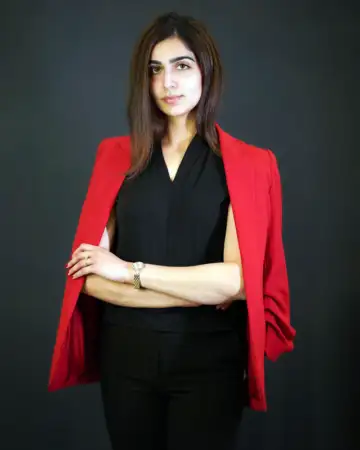
A former Goldman Sachs investment banker, Tejasvi Madan founded Beyond Bound to redefine women's athleisure in India through inclusivity and style. With a strong fitness-led vision, she is building a platform that empowers women to wear their choice when it comes to athleisure too.
'Women are constantly told to shrink their ambitions, their bodies, and their voices. I wanted to build something that encourages women to expand instead - in confidence, strength, and self-belief. With BeyondBound, we are breaking stereotypes with every stitch.
'For me, activewear is about versatility, functionality, and performance. A woman's day is dynamic, and what she wears should move with her, ensuring strength feels supported rather than restricted.
'Inclusivity is non-negotiable for us. We do not charge higher prices for bigger sizes because confidence should never come at a premium. Every woman deserves access to high-quality activewear without feeling excluded by size, price, or societal standards.
'The change I want to see is a world where women are not judged for being ambitious, muscular, soft, or unapologetically powerful. Equity begins when we normalize women taking up space.
'My message is simple: Take up space. Own your strength. Lift another woman as you rise - because when one woman grows, we all grow.'
Stuti Ashok Gupta, Co-Founder, Amrutam
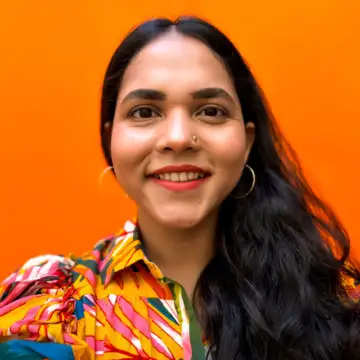
Based in Gwalior, Stuti Ashok Gupta is the co-founder of Amrutam, an Ayurvedic wellness brand focused on making holistic, women-first healthcare accessible for modern lifestyles. With a background in psychology and social impact, she is driving the brand's evolution from a traditional family business into a globally trusted D2C wellness platform.
'I grew up around conversations about Ayurveda- nourishment, hormones, and preventive care. Amrutam was founded by my father, and my mother, one of its co-founders, has always been the backbone behind its growth, building a brand centred on women's wellbeing.
'Now, as I carry this work forward and as a new mom to a girl, the purpose feels even deeper. I'm not building for a segment; I'm building for lived experiences I see around me every day. Women often put themselves last, and that gap is what inspired me to focus here.
'I would like women's health to move from reactive to preventive. Equity, to me, means access to simple, consistent care, the knowledge to understand your body, the confidence to ask questions, and the ability to build small daily habits that support long-term wellbeing. If something as simple as taking a few minutes each day to nourish yourself becomes normal, it shifts how women show up in every other part of their lives.
'My message is simple: start small, but stay consistent. Empowerment isn't built in big gestures, it's built in everyday habits, in paying attention to your body, and in giving yourself permission to prioritise your health without guilt.'
Padmini Janaki, Founder - Livf Fertility
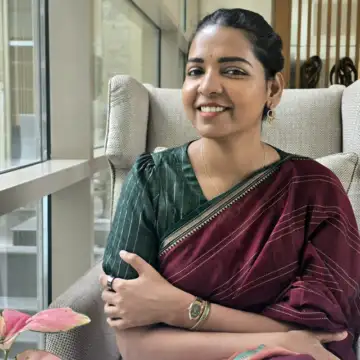
Chennai-based entrepreneur Padmini Janaki uses technology and AI-led guidance to focus on women's health and their fertility journey through Livf Fertility. Her platform has already supported over two lakh women in making informed, confident motherhood choices.
'I did not choose to work for women. I grew into it. I grew up watching women carry families, silence pain, postpone dreams, and normalise discomfort as duty. Later, when I began working in healthcare, I saw the same pattern in clinics - women waiting last, speaking softly, apologising for their own bodies.
'We celebrate women's strength, but we rarely protect their health, time, or dignity. That realisation stayed with me. When I built LIVF, my intention was not just to improve fertility care, but to restore agency - to create a space where women are heard and supported.
'If a woman understands her body, she understands her power. And when women reclaim power over their health, families and societies transform. That belief continues to guide everything I build.
'Equity for women will not come from slogans. It will come from systems.
We must redesign healthcare, workplaces and public conversations so that women are not forced to choose between ambition and wellbeing, motherhood and career, strength and vulnerability.
'I want to see a world where preventive healthcare for women is normalised, not delayed, reproductive health is discussed openly, not whispered, workplaces support biological realities instead of penalising them, girls grow up informed about their bodies, not ashamed of them.
'Most importantly, I want women to move from survival to sovereignty - from merely coping with life to actively designing it.'
Lorna Fernandes, Founder, PAMELNORA
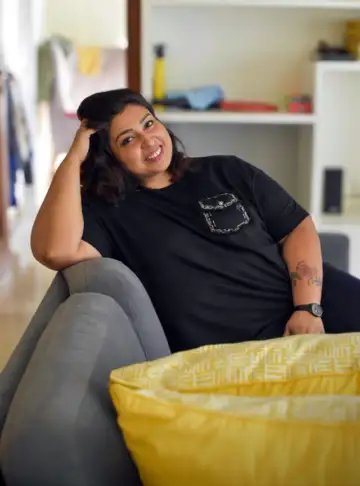
Lorna Fernandes founded PAMELNORA after her own journey as a plus-size woman navigating limited and inconsistent fashion choices in India. Through her brand, she is redefining inclusive fashion by placing plus-size women at the centre of thoughtful, high-quality design.
'PAMELNORA was born from my own experience as a plus-size woman who often felt unseen in fashion. I remember walking into stores and feeling like style wasn't created for bodies like mine - like I had to adjust my expectations or settle for what was available. That feeling stayed with me.
'I didn't just want to create clothes - I wanted to create dignity, intention and celebration. While PAMELNORA is size-inclusive, my heart has always been with plus-size women because I know what it feels like to not be considered first. I want women to feel seen the moment they wear us.
'I want plus-size women to stop feeling like they have to shrink themselves to fit in. For years, many of us were made to feel like we were 'extra' - extra size, extra space, extra adjustments. I want to change that feeling. I want plus-size women to feel chosen, considered and celebrated - not accommodated.
'The change I want to bring is simple and deeply personal - if PAMELNORA can make a woman stand in front of the mirror and feel confident, stylish and proud of who she is, then I know I'm creating the kind of change that truly matters.
'Every woman deserves the same meticulous craftsmanship, the same intricate beadwork and the same luxury - whether she is a size Large or an 8XL. We are creating a world where your size never defines your worth and where every woman has the right to feel beautiful, powerful and proud.'
Keerthi Aashish, Founder, Samāh
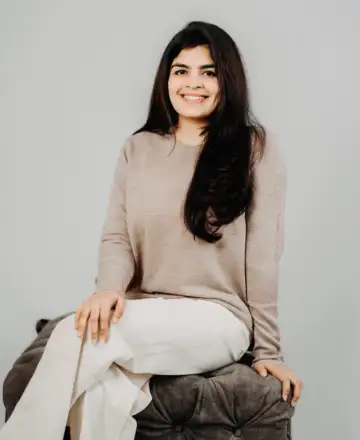
Keerthi Aashish is the founder of Samāh, India's first seed cycling and hormone health brand, and Vice Chairperson of Maheswara Medical College and Hospital. Blending healthcare insight with entrepreneurial vision, she is driving a food-first, education-led movement to make hormone literacy mainstream.
'It started very personally. After I had my daughter, I went through my own hormonal shifts and realised how little we are taught about our bodies. Most of us grow up thinking pain, mood swings, irregular cycles and exhaustion are just normal. We are told to tolerate it. When I became a mother, it hit me differently. I knew my daughter would grow up and have her own periods one day. I did not want her to inherit confusion, shame or silence around her body. That was the shift for me.
'I focus on women because women carry so much - physically, emotionally and hormonally. And yet hormone health is still not a mainstream conversation. If we can educate women early, help them understand their cycles and give them food-based tools to support themselves, that changes everything. It changes confidence, productivity, relationships and long-term health.
'I want body literacy to become normal. I want every girl to understand her cycle the way she understands her school timetable. I want workplaces to recognise that hormonal health is real and not dramatic. I want conversations about fertility to start before there is a crisis.
'Equity for women is not only about opportunity. It is also about health. When women are not constantly fighting their bodies, they show up differently in every area of life. If we can remove shame around periods, PMS, fertility struggles and menopause, we create a world where women do not feel small for natural biological processes.
'I honestly think women are tired of being strong all the time. We manage homes, careers, kids and expectations, and on top of that we are expected to just 'deal' with our hormones like they are a small side issue - period pain, PMS, mood shifts, fertility stress, menopause. We are told it's normal, so we normalise suffering.
'This Women's Day, I don't want to say be powerful or be unstoppable. I want to say be informed.
- Understand your body.
- Ask questions.
- Stop dismissing your symptoms.
- Stop feeling embarrassed about things that are biological.
And if you are a mother, like me, think about the kind of world you want your daughters and sons to grow up in.'
Sindhuja Sura, Founder, BoomBird
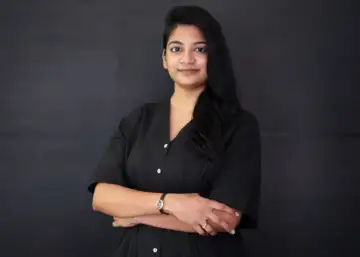
Sindhuja Sura, a Computer Science postgraduate from the University at Buffalo, USA, and former Managing Director of a CBSE school, founded BoomBird to reimagine personal safety through proactive, tech-enabled solutions that empower individuals to stay one step ahead.
'I didn't set out to build something specifically for women. It started when I noticed how safety conversations happen after an incident has occurred or when something has already gone wrong, especially for women in cities. The advice is always about taking alternate routes, sharing live locations, or staying constantly alert. Many of us have an unspoken daily checklist just to step out.
'It made me think about the in-between moments when something feels slightly off. No one really discusses what to do at the first sign of discomfort, and that's where BoomBird fits and that's where it all began. While personal safety matters for everyone, women often experience that extreme uncertainty more closely, and that is why it is naturally focussed and shaped around them.
'I would love to see a world where women don't have to constantly calculate risks in everyday life. For me, equity is not about large policy changes, it is about freedom of movement. If a woman can commute, work late, travel or explore solo without having to calculate the risks, that naturally creates more equitable access, mobility to work, and opportunity. Small shifts on how confident, or how prepared someone feels will make a difference.
'Preparedness is not fear, carrying a safety tool does not mean you are in danger, it means you are valuing your autonomy. Confidence often comes from knowing you have options. So, my message would be to normalise that, to see preparedness as something practical and empowering, and not extreme.'
Sankari Sudhar, Founder, Overqualified Housewives
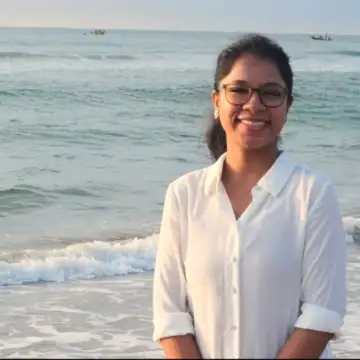
Image: Instagram
Chennai-based entrepreneur Sankari Sudhar founded Overqualified Housewives to help qualified women re-enter the workforce through flexible, meaningful opportunities. Drawing from her own career break after motherhood, she is building a platform that restores financial independence and professional confidence to thousands of women.
'I didn't choose to work with women as a mission. It came from my own experiences. After working eight years in the tech industry, I found it hard to find opportunities that respected both my skills and my role as a new mother, after a career break. I then realised that thousands of qualified women were quietly leaving the workforce for the same reason. That realisation motivated me to create a platform that helps women restart their careers through flexible opportunities, mentorship and the confidence they deserve.
'I want to help create a world where women are not expected to carry invisible responsibilities by themselves. For generations, women have been taught to handle everything quietly.
'Equity starts when responsibilities are shared and support systems are accepted as standard. When women develop their skills, mindset and confidence, they not only transform their own lives but also impact future generations.
'A fair world begins when women rise without guilt and without carrying the burden alone.'
Also Read: Back To Work: The Challenges Faced By Women & Creating Opportunities