
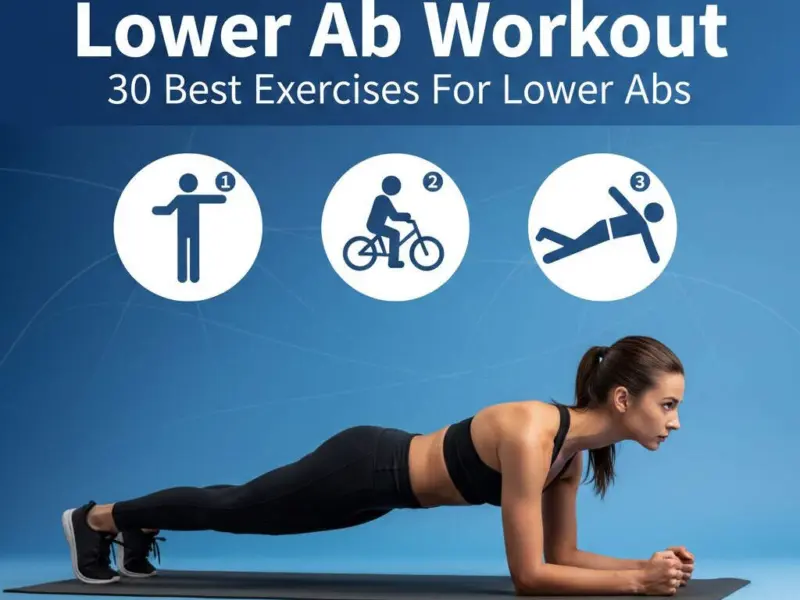

Incorporating a variety of abdominal exercises for lower abs into your fitness routine can lead to a more resilient and aesthetically pleasing midsection.
A well-defined and strong core is more than just a symbol of a sculpted physique. It serves as the foundation for overall strength, stability, and functional fitness. The abdominal muscles, commonly referred to as the "abs," play a pivotal role in supporting daily movements, enhancing athletic performance, and contributing to a healthy lifestyle.
According to a 2019 study, a strong core can also help improve posture, prevent injuries, and relieve back pain.[1] Let's look at some exercises for lower abs for females.
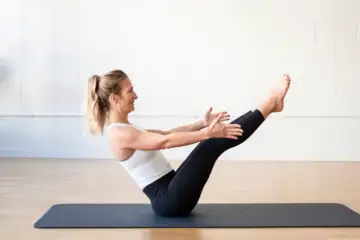
1. V-Sits
Source: Shutterstock
Steps to perform V-Sits:
- Sit on the floor with your knees bent and feet flat, spine tall and chest lifted.
- Lean back slightly while keeping your back straight, engaging your core to avoid rounding the spine.
- Lift both feet off the ground so your shins are parallel to the floor.
- Extend your arms forward at shoulder height, palms facing inward.
- Hold this position while breathing steadily, keeping your core tight and shoulders relaxed.
- To increase intensity, straighten your legs gradually into a full V shape.
- Hold for 20-30 seconds, rest, and repeat 2-3 times.
Why it works:
Research shows that some V-sit variations increase activity in the main abdominal muscles. This means holding the V position can strongly engage your core. [2]
Pro Tip: If your lower back lifts off the floor or you feel strain in your neck, bend your knees slightly and reduce the hold time.
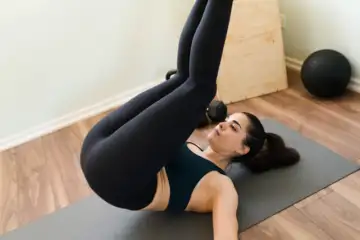
2. Reverse Crunches
Source: Shutterstock
Steps to perform Reverse Crunches:
- Lie flat on your back with arms by your sides and palms pressing gently into the mat.
- Bend your knees and lift your feet off the floor so your thighs are perpendicular to the ground.
- Engage your core and exhale as you slowly lift your hips off the mat, drawing your knees toward your chest.
- Keep the movement controlled and avoid using momentum.
- Inhale as you lower your hips back down with control.
- Perform 12-15 repetitions, resting briefly between sets.
Why it works:
Research shows that reverse crunch variations create high activity in the main abdominal muscle, including the lower measurement area. This means the move strongly works your abs.[3]
Pro Tip: Think of curling your tailbone upward rather than swinging your legs; that keeps the focus on the abs.
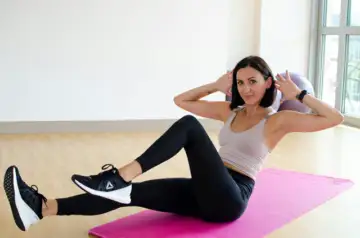
3. Bicycle Crunches
Source: Pexel
Steps To Perform Bicycle Crunches:
- Lie on your back with your hands lightly supporting your head and elbows wide.
- Lift both legs off the floor and bend them at a 90-degree angle.
- Bring your right elbow toward your left knee as you extend your right leg.
- Switch sides in a slow, controlled pedalling motion.
- Keep your lower back pressed into the mat throughout.
- Continue for 20-30 controlled repetitions.
Why it works:
Exercises that bend and twist your torso, like bicycle crunches, make your main abdominal muscles work. This can help strengthen your core as part of an ab routine.
Pro Tip: Slow down the movement to increase muscle engagement and reduce neck strain.
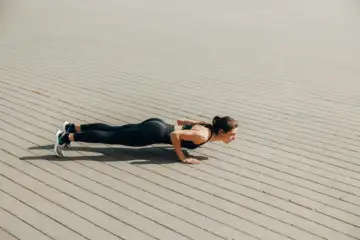
4. Alligator Crawl
Source: Shutterstock
Steps to perform Alligator Crawl:
- Begin in a forearm plank position with elbows under shoulders.
- Engage your core and glutes to stabilise your torso.
- Move forward by stepping with your right forearm and left foot simultaneously.
- Alternate sides, keeping hips low and spine neutral.
- Continue for 30-45 seconds.
Why it works:
Alligator crawls make your core work to keep your body steady while your arms and legs move. This helps strengthen your abs and improve stability.[5]
Pro Tip: Avoid rocking side to side; imagine balancing a glass of water on your back
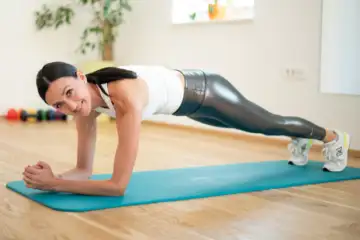
5. Body Saw
Source: Pexel
Steps to perform Body Saw:
- Start in a forearm plank with feet on sliders or a towel.
- Slowly push your body backwards by shifting weight toward your heels.
- Maintain a tight core and neutral spine.
- Glide forward again to the starting position.
- Repeat for 10-12 controlled reps.
Why it works:
Research shows that moving plank exercises can make your abs work harder than holding a plank still. The Body Saw uses this sliding motion to challenge your core and build strength over time. [6]
Pro Tip: Keep movements slow and controlled to avoid lower-back strain.
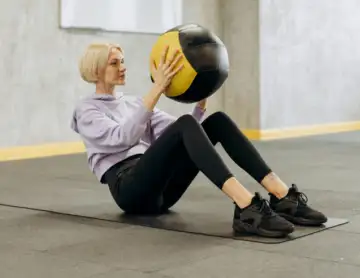
6. Medicine Ball Sit-Up And Throw
 Source: Pexel
Steps to perform Medicine Ball Sit-up and Throw:
- Sit on the floor with knees bent and heels lightly touching the ground.
- Hold a medicine ball close to your chest.
- Lean back slightly, engaging your abs.
- Sit up forcefully and throw the ball forward.
- Catch the ball and repeat for 10-12 reps.
Why it works:
Adding a medicine ball makes sit-ups more challenging and helps your abs work harder. This can improve overall core strength as part of a balanced workout. [7]
Pro Tip: Choose a manageable ball weight to maintain form.
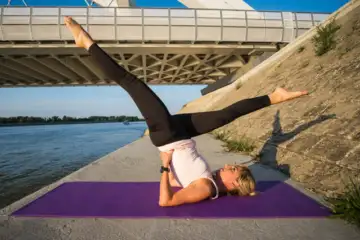
7. Pilates Scissors
Source: Shuttestock
Steps to perform Pilates Scissors:
- Lie on your back with legs extended toward the ceiling and arms by your sides.
- Lift your head, neck, and shoulders slightly off the mat.
- Lower one leg slowly toward the floor while keeping the other leg vertical.
- Switch legs in a controlled scissor motion.
- Keep your lower back pressed gently into the mat.
- Continue for 15-20 controlled repetitions.
Why it works:
Pilates scissors make your abs work to keep your hips and lower back steady while your legs move. This helps strengthen your core muscles as part of a Pilates routine. [8]
Pro Tip: Lower your legs only as far as you can while keeping your back flat.
8. Scissor Kicks
Source: Shutterstock
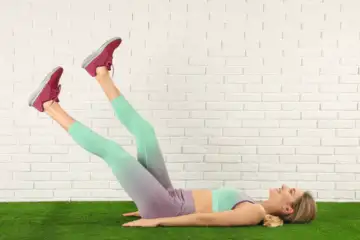
Steps to perform Scissor Kicks:
- Lie flat on your back with your hands placed under your hips for support.
- Lift both legs slightly off the floor.
- Alternate lifting one leg higher while lowering the other, keeping movements small.
- Keep your core engaged and lower back pressed into the mat.
- Continue the movement for 30-40 seconds.
Why it works:
Scissor kicks make your abs work to keep your hips and lower back steady while your legs move. This helps strengthen your core as part of an ab routine. [9]
Pro Tip: If your lower back arches, raise your legs slightly higher.
9. Double-Leg Lifts
Source: Shutterstock
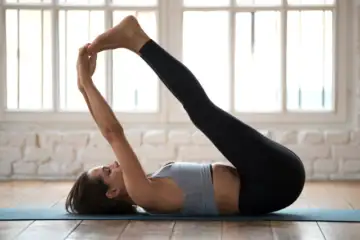
Steps to perform Double-Leg Lifts:
- Engage your core and slowly lower both legs toward the floor.
- Stop just before your lower back lifts off the mat.
- Exhale and raise your legs back up using your abs.
- Perform 10-12 controlled repetitions.
Why it works:
Research shows that double straight-leg raises can improve core strength over time. This means double-leg lifts can help strengthen your abdominal muscles as part of a core routine. [10]
Pro Tip: Bend your knees slightly if straight legs feel too challenging.
10. Flutter Kicks
Source: Shutterstock
Steps to perform Flutter Kicks:
- Lie on your back with legs extended and hands under your hips.
- Lift both legs a few inches off the floor.
- Alternate small, rapid kicks up and down.
- Keep your core tight and focus on breathing steadily.
- Continue for 30-45 seconds.
Why it works:
Research shows that core training improves trunk stability. Since flutter kicks require you to keep your hips and spine steady while your legs move, they can help strengthen your abs as part of a core routine. [11]
Pro Tip: Keep the kicks small to maintain control and reduce hip flexor strain.
11. Rolling Plank
Source: Pexel
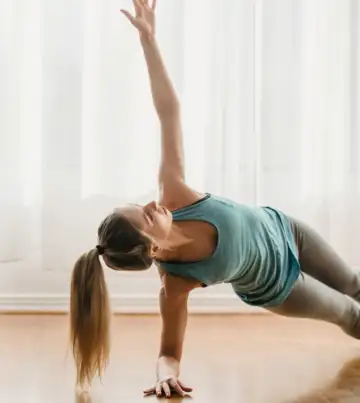
Steps to perform the Rolling Plank:
- Begin in a forearm plank with elbows directly under shoulders and body forming a straight line from head to heels.
- Engage your core and glutes to stabilise your spine.
- Slowly roll your body onto your right forearm and the outer edge of your right foot, keeping your hips level.
- Pause for a moment, then roll back to the centre.
- Repeat on the left side, moving slowly and deliberately.
- Continue alternating sides for 30-45 seconds, keeping the core tight throughout.
Why it works:
Research shows that plank variations can improve core strength and balance. Rolling planks challenge your abs to stay steady while you move, helping strengthen your core. [12]
Pro Tip: Move deliberately and avoid letting your hips sag; imagine your body as a straight plank sliding along the floor.
12. Slider Knee Tuck
Source: Shutterstock
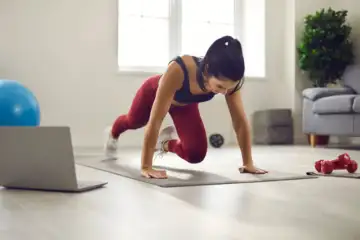
Steps to perform Slider Knee Tuck:
- Start in a high plank position with feet on sliders or towels.
- Keep your arms straight, shoulders stacked over wrists, and core engaged.
- Exhale as you draw your knees toward your chest, sliding your feet along the surface.
- Pause for a second, feeling the lower-ab contraction.
- Inhale as you extend your legs back to the starting plank position.
- Perform 10-15 controlled repetitions.
Why it works:
Slider knee tucks involve pulling the knees toward the chest while keeping the torso steady, which naturally engages the lower abs as your core works to control hip and spine movement. [13]
Pro Tip: Keep your spine neutral; avoid sagging your lower back by tightening your abs before each tuck.
13. The Hundred
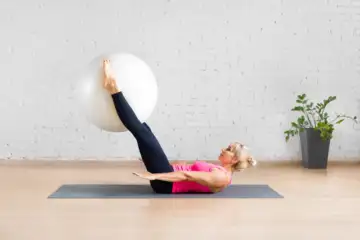
Source: Shutterstock
Steps to perform The Hundred:
- Lie on your back with legs lifted at a 45-degree angle and arms extended alongside your body.
- Lift your head, neck, and shoulders slightly off the mat, engaging the upper and lower abs.
- Pump your arms up and down in small, controlled movements.
- Inhale for five pumps and exhale for five pumps, maintaining steady breathing.
- Continue until completing 100 arm pumps, or 1-2 minutes.
Why it works:
Research shows the mat version of the Pilates Hundred can activate your abdominal muscles more than some equipment versions. Holding your body lifted while moving your arms makes your core work hard. [14]
Pro Tip: Keep your neck relaxed; do not pull your head forward with your hands.
14. Cross Body Climber
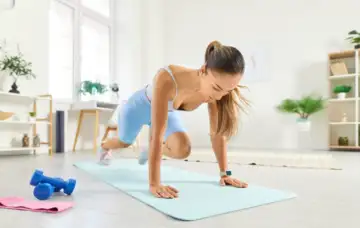
Source: Shutterstock
Steps to perform Cross Body Climber:
- Begin in a high plank with shoulders over wrists and core engaged.
- Bring your right knee toward your left elbow in a controlled motion.
- Return to plank and switch, bringing your left knee toward your right elbow.
- Maintain a flat back and stable shoulders throughout the exercise.
- Continue alternating for 20-30 repetitions.
Why it works:
Research suggests that some moving or unstable core exercises can make your abdominal muscles work harder than holding a still position. [15]
Pro Tip: Focus on controlled motion rather than speed for maximal muscle engagement.
15. Kneeling Cable Crunch
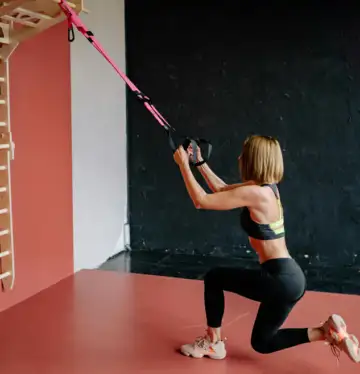
Source: Pexel
Steps to perform the Kneeling Cable Crunch:
- Kneel on a mat facing a cable machine or resistance band anchored above.
- Hold the cable or band lightly with both hands at shoulder height.
- Engage your abs and exhale as you curl your torso forward, drawing your elbows toward your knees.
- Pause briefly at the bottom, feeling your lower abdominal contraction.
- Inhale as you slowly return to the starting position.
- Perform 12-15 controlled repetitions.
Why it works:
Crunch-style movements activate your abdominal muscles. Adding resistance, like in a cable crunch, can make your abs work harder. [16]
Pro Tip: Avoid using momentum; focus on the contraction of your core rather than pulling with your arms.
16. TRX Prone Pikes
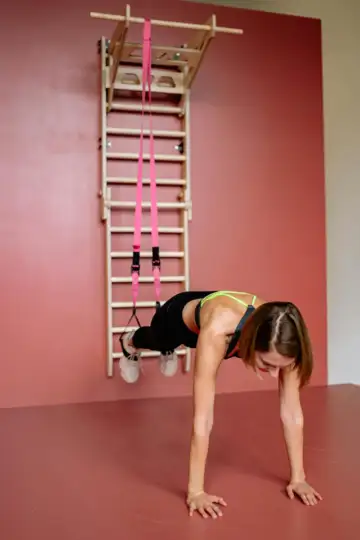
Source: Pexel
Steps to perform TRX Prone Pikes:
- Place your feet securely in TRX straps and assume a plank position with arms straight under your shoulders.
- Engage your core and glutes to stabilise the body.
- Exhale as you lift your hips toward the ceiling, forming an inverted V-shape.
- Hold briefly at the top, feeling the lower-ab engagement.
- Slowly return to the starting plank position.
- Repeat 8-10 controlled repetitions.
Why it works:
Suspension pike exercises make your abs work hard because your feet are off the ground. Lifting your hips while staying balanced challenges your core muscles.[17]
Pro Tip: Control both the upward and downward movement; avoid swinging your legs.
17. Dip Bar Leg Raise
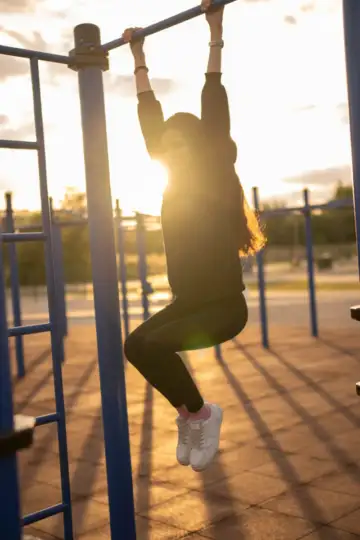
Source: Shutterstock
Steps to perform Dip Bar Leg Raise:
- Grip a dip station or parallel bars, supporting your body with arms fully extended.
- Keep your torso stable and engage your core.
- Slowly lift your legs straight in front of you until they reach hip height or higher.
- Pause, then lower them back down with control.
- Perform 10-12 repetitions, maintaining steady breathing.
Why it works:
Leg raises make your abs work as you lift your legs and keep your body steady. This helps strengthen your core muscles. [18]
Pro Tip: Avoid swinging your legs; control is key for lower-ab engagement.
18. Front Squat
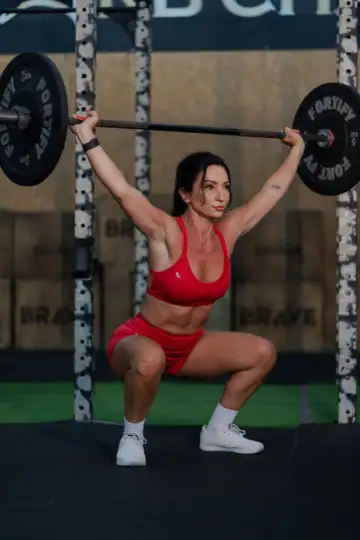
Source: Pexel
Steps to perform Front Squat:
- Stand with feet hip-width apart, holding a barbell or weight at your chest.
- Engage your core and maintain an upright chest.
- Inhale and bend your knees, lowering your hips into a squat until your thighs are parallel to the floor.
- Exhale and drive through your heels to stand back up.
- Repeat for 10 repetitions, maintaining a tight core throughout.
Why it works:
Front squats make your core work to keep your chest upright while you lift the weight. This helps train your abs as part of a full-body exercise. [19]
Pro Tip: Keep the weight close to your chest to reduce forward lean and maintain core engagement.
19. Firefighter
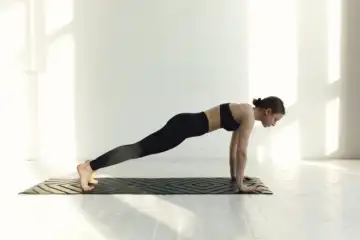
Source: Pexel
Steps to perform Firefighter:
- Begin in a high plank position with hands under shoulders.
- Jump both feet toward your hands in a controlled tuck position.
- Jump back to the plank.
- Maintain a neutral spine and engage your abs throughout.
- Perform 10-12 repetitions.
Why it works:
Research shows that harder or unstable plank moves can make your abs work more than holding a regular plank.[20]
Pro Tip: Land softly to protect knees and ankles.
20. Hollow Body Hold
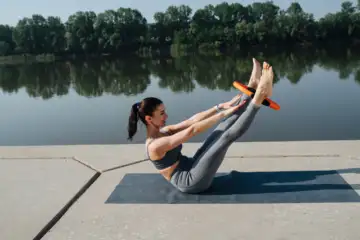
Source: Shutterstock
Steps to perform Hollow Body Hold:
- Lie on your back with arms extended overhead and legs straight.
- Engage your core and lift your head, shoulders, and legs off the floor.
- Press your lower back gently into the mat.
- Hold this position for 20-30 seconds while breathing steadily.
- Repeat 2-3 times.
Why it works:
Exercises that focus on gently tightening your abs can help strengthen your core over time. Hollow body holds make your abdominal muscles work to keep your body lifted. [21]
Pro Tip: If your lower back arches, bend your knees slightly while maintaining the lift.
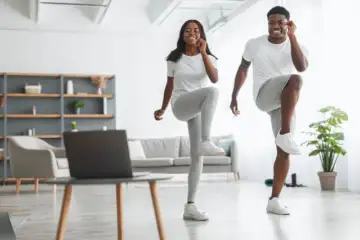
21. March With A Twist
Source: Shutterstock
Steps to perform March With A Twist:
- Stand tall with feet hip-width apart, knees slightly bent, and core engaged.
- Lift your right knee toward your chest while twisting your torso to bring your left elbow toward the raised knee.
- Lower your leg and return to neutral.
- Repeat with the opposite knee and elbow.
- Maintain a steady rhythm and keep shoulders relaxed.
- Perform 20 repetitions (10 per side).
Why it works:
Twisting while lifting your knee makes your abs work to control your balance and rotation. This helps strengthen your core muscles. [22]
Pro Tip: Focus on controlled twists rather than height; the abdominal contraction matters more than knee lift.
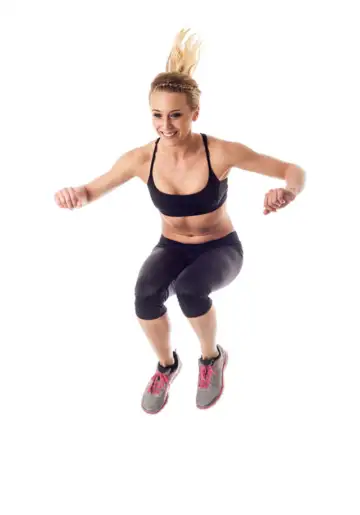
22. Tuck Jump
Source: Shutterstock
Steps to perform the Tuck Jump:
- Stand with feet shoulder-width apart and arms relaxed at your sides.
- Bend your knees slightly and engage your core.
- Jump upward explosively, bringing your knees toward your chest.
- Land softly with knees slightly bent to absorb impact.
- Repeat 8-10 jumps, maintaining controlled breathing.
Why it works:
Tuck jumps mostly work your legs, but your abs turn on to help keep your body steady when you jump and land. [23]
Pro Tip: Warm up thoroughly before attempting to reduce joint impact.
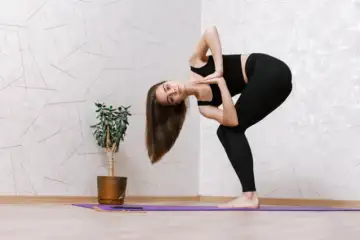
23. Chair Pose Twist
Source: Shutterstock
Steps to perform Chair Pose Twist:
- Stand with your feet together and bend your knees, lowering your hips into chair pose.
- Extend your arms forward at shoulder height.
- Engage your core and twist your torso to the right, bringing your left elbow toward your right knee.
- Return to the centre and repeat on the opposite side.
- Hold each twist for 2-3 seconds.
- Perform 8-10 twists per side.
Why it works:
Twisting your torso works the muscles along the sides of your stomach. Holding a squat while you twist makes your abs stay active to support the movement. [24]
Pro Tip: Lengthen your spine before twisting to avoid rounding your back.
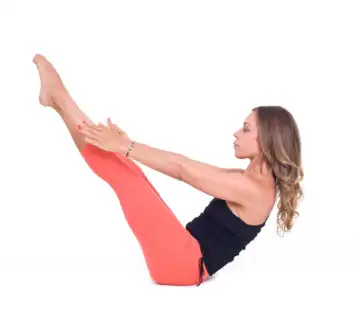
24. Boat Pose
Source: Shutterstock
Steps to perform Boat Pose:
- Sit on the floor with knees bent and feet flat.
- Lean back slightly, keeping your spine straight and chest lifted.
- Lift your feet off the floor so your shins are parallel to the ground.
- Extend your arms forward at shoulder height.
- Engage your core and balance on your sit bones.
- Hold for 20-30 seconds while breathing evenly.
- Repeat 2-3 times.
Why it works:
Research shows the Boat Pose turns on your abdominal muscles. Holding the V-shape makes your abs work to keep you balanced. [25]
Pro Tip: If balancing is difficult, keep your hands on the floor beside your hips until you build strength.
25. Rocking Plank
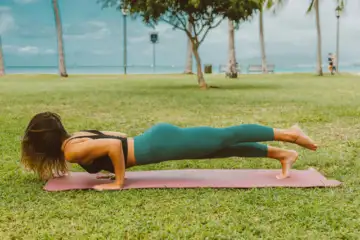
Source: Pexel
Steps to perform the Rocking Plank:
- Start in a high plank position with shoulders stacked over wrists.
- Engage your core and glutes to maintain a neutral spine.
- Rock your body forward slightly toward your hands, then back toward your heels.
- Keep movement controlled, avoiding hip sag or arching.
- Continue rocking for 30-45 seconds.
Why it works:
Rocking planks add small movements to a regular plank. Your abs have to stay tight to keep your body steady as you move. [26]
Pro Tip: Move slowly; control is more important than range of motion.
26. Bird-Dog Pose
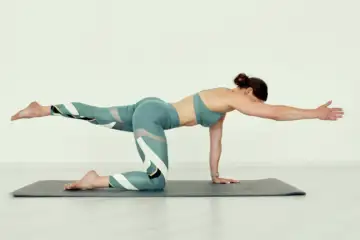
Source: Shutterstock
Steps to perform Bird-Dog Pose:
- Begin on all fours with hands under shoulders and knees under hips.
- Engage your core and slowly extend your right arm forward and left leg back, keeping spine neutral.
- Hold for 2-3 seconds, focusing on abdominal contraction.
- Return to the starting position and repeat with the opposite arm and leg.
- Perform 10-12 repetitions per side.
Why it works:
Studies show Bird-Dog turns on both your stomach and back muscles. Keeping your body steady while moving your arm and leg makes your core work to stay balanced. [27]
Pro Tip: Avoid letting your hips tilt; maintain a flat line from head to heels.
27. Mountain Climbers
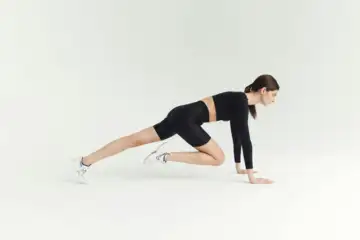
Source: Pexel
Steps to perform Mountain Climbers:
- Start in a high plank with arms straight and shoulders over wrists.
- Engage your core and glutes.
- Bring your right knee toward your chest, then quickly switch legs.
- Maintain a steady, controlled rhythm without sagging hips.
- Perform for 30-45 seconds.
Why it works:
Studies show that moving core exercises turn on your stomach muscles. Mountain climbers mix a plank with leg movement, so your abs work to keep your body steady. [28]
Pro Tip: Focus on core stability rather than speed to prevent lower-back strain.
28. Dead Bugs
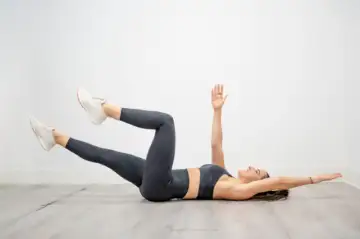
Source: Shutterstock
Steps to perform Dead Bugs:
- Lie on your back with arms extended toward the ceiling and knees bent at 90 degrees.
- Engage your core and press your lower back into the floor.
- Slowly lower your right arm behind your head while extending your left leg toward the floor.
- Return to the starting position and repeat on the opposite side.
- Perform 10-12 controlled repetitions per side.
Why it works:
In a study, a program that included Dead Bugs improved balance and agility. The movement uses slow, opposite arm and leg motions, which make your stomach muscles work to keep your back steady. [29]
Pro Tip: Move deliberately; avoid letting your back arch.
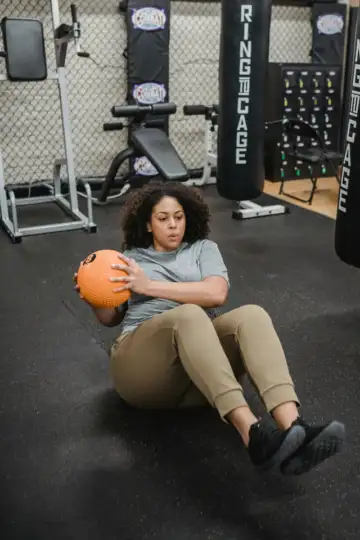
29. Medicine Ball V-Up
Source: Pexel
Steps to perform Medicine Ball V-up:
- Lie on your back holding a medicine ball overhead with arms extended.
- Engage your core and simultaneously lift your legs and torso off the floor.
- Reach the medicine ball toward your feet at the top of the movement.
- Lower back down slowly with control.
- Perform 10-12 repetitions.
Why it works:
Training with medicine balls can help build abdominal strength. In a V-Up, lifting your arms and legs together makes your stomach muscles work harder, especially when holding weight. [30]
Pro Tip: Use a light medicine ball initially to maintain form and avoid neck strain.
30. Star Plank
Source: Pexel
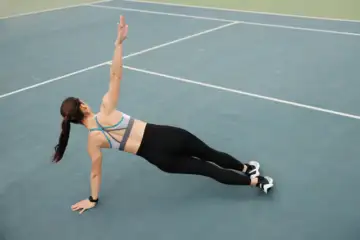
Steps to perform the Star Plank:
- Begin in a side plank position.
- Spread your arms and legs slightly wider than shoulder and hip width, creating a star shape.
- Engage your core by focusing on breathing.
- Focus on glutes and shoulders to maintain balance.
- Hold for 20-30 seconds while breathing steadily.
- Return to the standard plank, rest, and repeat.
Why it works:
Planks help build core strength and endurance by making your stomach muscles work. A star plank adds balance and challenge, so your core has to stay active. [31]
Pro Tip: Focus on keeping the body aligned; don't let your lower back sag.
It's also important to remember that everybody does ab exercises differently, and people need to get out of the mindset that all exercises work for all people.
Precautions
It's important to follow these precautions while performing any abdominal exercises:
- Aim to do a lower ab workout a few times per week, if you can.
- Start with beginner-friendly variations and gradually progress to more advanced exercises as your strength improves.
- Listen to your body and avoid pushing yourself too hard, especially if you experience pain or discomfort.
- Breathe regularly and avoid holding your breath during exercises to ensure proper oxygen flow to the muscles.
- Diet is also important. Not following a proper diet can be one of the reasons that causes lower belly fat in females.
- Use proper equipment, such as exercise mats or stability balls, to provide support and reduce impact on the spine.
- Stay hydrated and take breaks as needed to prevent fatigue and maintain focus on proper technique.
- If you experience dizziness, lightheadedness, or any unusual symptoms, stop the exercise and seek medical attention if necessary.
Key Takeaways
- Incorporate a mix of exercises for lower abs, targeting different areas of the core for comprehensive development.
- Regularity in workouts and adherence to a healthy lifestyle contribute to achieving and maintaining strong, toned abs.
- Pay attention to your body's signals, and consult with fitness professionals or healthcare experts as needed to ensure a safe and effective fitness journey.
Frequently Asked Questions (FAQs)
Q. What workout should I do for my lower abs?
A. Targeted exercises like V-Sits, Reverse Crunches, and Bicycle Crunches are effective for working the lower abs. Including a variety of movements ensures comprehensive engagement.
Q. How do I target my lower abs?
A. Focus on exercises that involve lifting the legs, such as Leg Raises and Mountain Climbers. Additionally, incorporate movements with a pelvic tilt to activate the lower abdominal muscles.
Q. How do you get the V lower abs?
A. To emphasise the V-shape in the lower abs, include exercises like V-Sits, Boat Pose, and Tuck Jumps. Consistency in training and maintaining a healthy diet also contributes to achieving defined lower abs.
Q. How can I tighten my abs fast?
A. While spot reduction is not possible, incorporating a mix of cardio exercises, full-body strength training, and targeted ab workouts can help tighten and tone the abdominal muscles. Consistency and a balanced diet are key.
Q. Which abs show first?
A. The upper abs tend to be more visible earlier than the lower abs for many individuals. However, overall body fat percentage plays a crucial role in revealing the definition of all abdominal muscles.
Q. What causes lower belly fat in females?
A. Lower belly fat in females can be influenced by various factors, including hormonal changes, genetics, poor dietary habits, lack of physical activity, and stress. Adopting a healthy lifestyle, including a balanced diet and regular exercise, can help address this concern.
Sources:
- Core Endurance Relationships With Athletic and Functional Performance in Inactive People
https://www.ncbi.nlm.nih.gov/pmc/articles/PMC6930174/ - The effects of different V-sit positions on abdominal muscle activation
https://doi.org/10.14474/ptrs.2020.9.3.201 - Electromyographic Analysis of Traditional and Nontraditional Abdominal Exercises: Implications for Rehabilitation and Training
https://doi.org/10.1093/ptj/86.5.656 - To Crunch or Not to Crunch: An Evidence-Based Examination of Spinal Flexion Exercises, Their Potential Risks, and Their Applicability to Program Design
https://www.researchgate.net/publication/232156729 - Strength and Balance Improvement with Plank Exercise Variations
https://www.researchgate.net/publication/373357542 - Effectiveness of Modified Plank vs Conventional Plank on Core Muscle Endurance and Stability in Recreational Athletes: A Quasi-experimental Study
https://www.jcdr.net/article_fulltext.asp?id=15043 - Effects Of Medicine Ball Training On Physical Fitness In Primary School Children
https://www.researchgate.net/profile/Nebojsa-Trajkovic-2/publication/319205788 - Pilates Exercises, Types, And Its Importance: An Overview
www.researchgate.net/publication/378658655_PILATES_EXERCISES_TYPES_AND_ITS_IMPORTANCE_AN_OVERVIEW - Functional Anatomy Series: The Abdominals
https://www.acefitness.org/continuing-education/prosource/april-2016/5865/functional-anatomy-series-the-abdominals/ - Analysis of the Effects of Double Straight Leg Raise and Abdominal Crunch Exercises on Core Stability
https://www.ijmsdr.org/published%20paper/1i1i17/Analysis-of-the-Effects-of-Double-Straight-Leg-Raise-and-Abdominal-Crunch-Exercises-on-Core-Stability.pdf - Effects of core strength training on core stability
https://www.ncbi.nlm.nih.gov/pmc/articles/PMC6110226/ - Strength and Balance Improvement with Plank Exercise Variations
https://www.researchgate.net/publication/373357542 - Exercise Technique: Push-up with knee tuck using a suspension device
https://www.researchgate.net/publication/265294530 - The Effects of the Use of Pilates Equipment during Pilates Hundred, Swimming Exercise on the Muscle Activation of Abdominal Muscles, Lumbar Erector Spinae, Gluteus of Lumbar Disc Disease Patients
https://www.researchgate.net/publication/331668404 - Comparison of the Electromyography Activity during Exercises with Stable and Unstable Surfaces: A Systematic Review and Meta-Analysis
https://www.mdpi.com/2075-4663/12/4/111 - The Effect Of Crunch Exercise Speed On Electromyographic Activity Of Three Abdominal Muscles: 1998
https://www.researchgate.net/publication/246652142 - Core Muscle Activation in Suspension Training Exercises
https://pmc.ncbi.nlm.nih.gov/articles/PMC5384053/ - Abdominal and hip flexor muscle activation during various training exercises
https://pubmed.ncbi.nlm.nih.gov/9118976/ - Exploring the Front Squat
https://www.researchgate.net/publication/271794654 - Electromyographical comparison of plank variations performed with and without instability devices
https://pubmed.ncbi.nlm.nih.gov/25264667/ - Comparison of the Effects of Hollowing and Bracing Exercises on Cross-sectional Areas of Abdominal Muscles in Middle-aged Women
https://www.researchgate.net/publication/260951371 - Abdominal Muscle Activation During Common Modifications of the Trunk Curl-up Exercise
https://pubmed.ncbi.nlm.nih.gov/29319600/ - Evaluating plyometric exercises using time to stabilization
https://pubmed.ncbi.nlm.nih.gov/20072070/ - The influence of rotational movement exercise on the abdominal muscle thickness and trunk mobility - Randomized control trial
https://pubmed.ncbi.nlm.nih.gov/34391272/ - Electromyographic analysis of trunk and hip muscles during Yoga poses prescribed for treating chronic low back pain
https://pubmed.ncbi.nlm.nih.gov/37949547/ - Strength and Balance Improvement with Plank Exercise Variations
https://www.researchgate.net/publication/ - Electromyographic and Stabilometric Analysis of the Static and Dynamic 'Standing Bird Dog' Exercise
https://pmc.ncbi.nlm.nih.gov/articles/PMC10305076/ - Core Muscle Activity during Physical Fitness Exercises: A Systematic Review
https://pmc.ncbi.nlm.nih.gov/articles/PMC7345922/ - Effect of Dead Bug Exercises on Dynamic Balance and Agility Among Adolescent Badminton Players at the End of Four Weeks - An Experimental Study
https://www.ijhsr.org/IJHSR_Vol.14_Issue.8_August2024/IJHSR19.pdf - Effect of Medicine Ball Exercise on Abdominal Strength Among Volleyball Players
https://www.ijcrt.org/papers/IJCRTAZ02012.pdf - Role of Plank Exercise in Improving Core Stability in School Children - A Narrative Review
https://ijsdr.org/papers/IJSDR2402041.pdf