




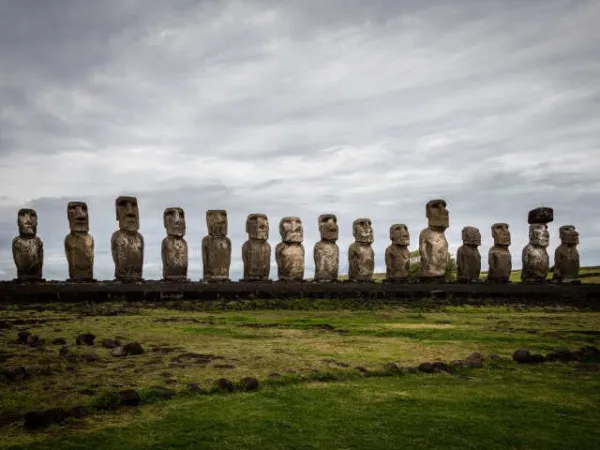

Nearly 900 stone giants stand in silence on Easter Island (also called Rapa Nui) in the South Pacific, a Chilean territory that is one of the most isolated inhabited places on the planet.
These Moai statues remain one of the greatest puzzles in archaeology. Over the centuries, the same questions have been asked: who built these statues? How were they moved? Why does their civilisation appear to have collapsed so dramatically? The island guards its secrets well, but exploration has offered some clues.
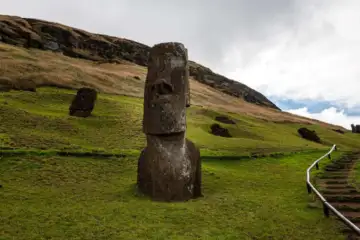
The Makers Of The Moai
The Rapa Nui people were Polynesian settlerswho arrived around 300 - 800 CE. They carved the statues entirely by hand using basalt stone picks. Each Moai was to represent a deceased ancestor, and was believed to channel spiritual power called mana to protect and guide the living community.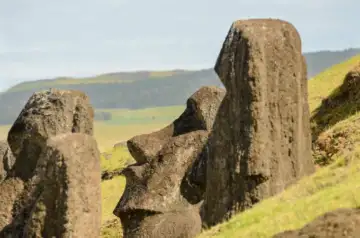
The Stone For The Moai
Almost all the statues - averaging 13 tonnes and standing 4 metres tall - were quarried from a volcanic crater called Rano Raraku sited on the island's east. Hundreds of Moai remain there, some half-finished as if work suddenly stopped mid-carving. Rano Raraku is essentially an open-air museum of abandoned giants, each frozen at a different stage of creation.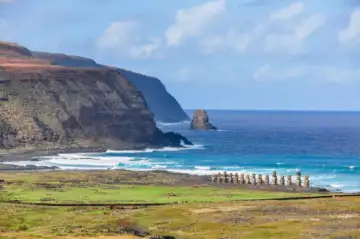
Moving The Moai
Given their weight and height, transferring the Moai to their current location would have been a colossal feat. Theories of how this was achieved include rocking them upright on wooden sledges, or "walking" them forward using ropes - this method was tested in 2012. The now-treeless island was once forested, which would have provided the timber needed for transport.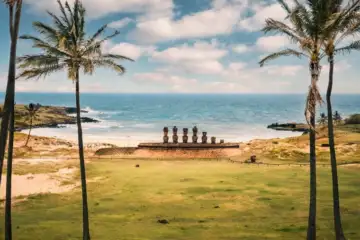
Why Do The Moai Face Inward?
Most of the giant statues stand on coastal platforms called ahu, facing inland toward the villages they protected. Only one group faces the sea: the seven Moai at Ahu Akivi. This inward-facing orientation reinforced their role as ancestral guardians who watched over the living.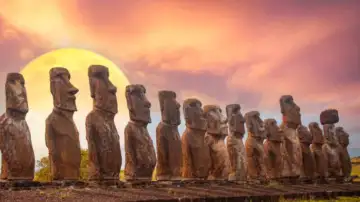
More About The Red Topknots
Many of the Moai used to be topped by large cylindrical hats called pukao, carved from a distinct red volcanic rock found only at Puna Pau quarry. Each of these 'hats' weighed up to 12 tonnes, and, by a remarkable feat of engineering that probably involved ramps and incremental lifting, were heaved atop already-erected statues.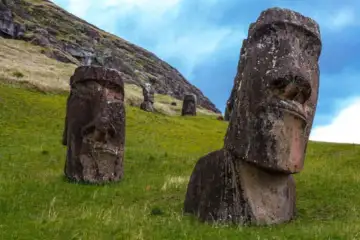
The Collapse Of The Civilisation
By the 18th century, most of the Moai had been toppled and the population had plummeted. Scholars today still debate whether the collapse was ecological, societal, or both. Perhaps it was due to deforestation, possibly caused by moving the statues, which led to soil erosion and, consequently, famine. Contact with Europe is thought to have brought disease and slave raids. Either way, a great civilisation was lost.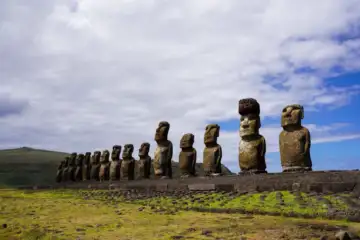
Frequently Asked Questions (FAQs)
Q. How many Moai exist on Easter Island?
A. There are approximately 900 statues catalogued across the island, ranging from fully-erected statues on coastal platforms to unfinished figures in the quarry.
Q. How tall is the largest Moai?
A. Paro, the largest erected Moai, stands at around 10 metres and weighs about 82 tonnes. Had it been completed, an even larger unfinished statue in the quarry would have reached 21 metres.
Q. Are parts of the Moai buried underground?
A. Yes, excavations in recent decades have revealed that many coastal Moai have torsos buried beneath the surface. These have inscriptions and carvings that have deepened the mystery of their meaning.
Q. Can visitors travel to Easter Island?
A. Yes. Easter Island is a Chilean territory and accessible by flight from Santiago. Since visitor numbers are carefully managed, visitors need a special entry permit to protect the Rapa Nui community.
Q. Is Easter Island at risk from climate change?
A. Yes, the island is threatened by rising sea levels and increased storm intensity, and several coastal Moai platforms have already suffered storm damage. The Chilean government is working with UNESCO to develop long-term preservation strategies.
Images: Shutterstock