




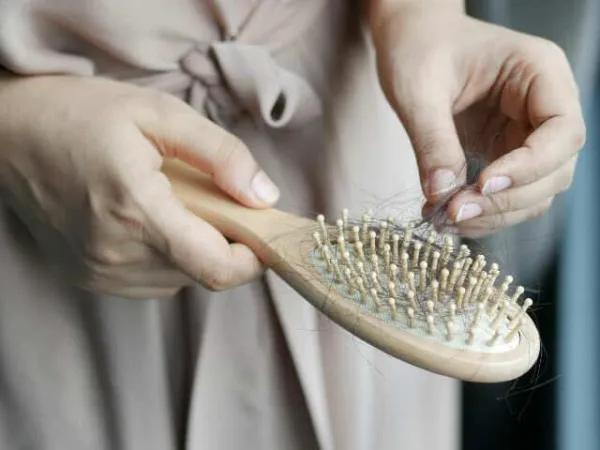

You wake up and find more strands on your pillow than usual. You run your fingers through your hair and come away with what feels like a small nest.
Your ponytail looks thinner than it did six months ago, and your parting seems to be getting wider. You blame stress; maybe you blame hormones or the weather, the pollution, or the products you're using. But what if the real culprit is something nobody's even testing for? What if your hair is falling out because your body is literally starving for iron, and nobody connected the dots?

This is the reality for countless Indian women, and Dr. Siddhi Sonawane, Consultant Dermatologist at Traya and Fellow of the American Academy of Dermatology, is on a mission to change that conversation. Because here's what most people don't realise: your hair doesn't just fall out randomly. It's sending you a message. And that message often has nothing to do with stress and everything to do with ferritin, the body's iron storage protein that nobody talks about but absolutely should.
Your Hair Follicles Are Starving For Iron
Let's start with the basics. Hair follicles are among the most metabolically active structures in your entire body. That means they need constant energy, constant nutrients, and constant support to stay in the growth phase. And when iron stores run low, your body makes a choice. It prioritises your brain, your heart, and your lungs. The things that keep you alive. Your hair? That moves to the back of the line.
"Hair follicles are among the most metabolically active structures in the body, which means they are highly sensitive to nutritional deficiencies - particularly low iron stores," Dr. Sonawane explains. And here's the part that changes everything: you can have completely normal hemoglobin levels and still be dealing with low ferritin. You can pass your anaemia screening and still be losing handfuls of hair every time you shower.
"Women can experience significant hair shedding even when their haemoglobin levels appear normal. It is important to understand that your iron profile and haemoglobin are two separate parameters," she notes. This distinction is crucial because most women get their hemoglobin checked during routine health checkups and assume they're fine if that number looks good. But hemoglobin and iron stores are not the same thing. Your body can maintain decent hemoglobin levels even while your iron reserves are depleting. By the time you notice hair falling out, your ferritin has usually been low for a while.
The Diffuse Hair Fall That Nobody Diagnoses
Source: Pexels
When ferritin drops, hair doesn't fall out dramatically overnight. It's subtler than that, which is partly why it goes undiagnosed for so long. What you get is diffuse hair fall, meaning hair is shedding from all over your scalp rather than in one concentrated area. Your density decreases gradually. Your hair grows slower. Some women find they can't grow their hair past their shoulders anymore, no matter how much they try. It's not dramatic enough to panic about, but it's noticeable enough to be frustrating.
"In many cases, the body prioritises essential functions over hair growth when iron stores are low, pushing more hair follicles into the shedding phase. The result is diffuse hair fall, reduced density, and slower regrowth over time," Dr. Sonawane explains.
Why Indian Women Are Especially Vulnerable
Source: Pexels
India has a perfect storm of conditions that deplete iron stores in women. Dietary patterns often lack sufficient bioavailable iron, especially for vegetarians. Menstrual blood loss is constant and significant. Pregnancy depletes iron stores further, and postpartum recovery often doesn't include proper iron replenishment. Restrictive eating patterns and dieting culture worsen the problem. And by the time a woman realises her hair is falling out, she's usually been dealing with low ferritin for months, sometimes years.
"This is particularly relevant in India, where dietary iron deficiency, menstrual blood loss, post-pregnancy depletion, and restrictive eating patterns are common among women across age groups," Dr. Sonawane notes.
Want To Hear Some Good News?
Source: Pexels
Here's what matters: low ferritin is identifiable and manageable when recognised early. It requires proper blood work, not just hemoglobin testing but a full iron profile work. It requires clinical assessment to rule out other causes. And most importantly, it requires professional guidance rather than self-prescribing supplements.
"A proper evaluation, including blood investigations and clinical assessment, can help determine whether iron deficiency is contributing to hair fall," Dr. Sonawane says. But she's also clear about the importance of professional involvement. "Self-prescribing supplements is not always advisable, as both deficiency and excess iron can have consequences."
Stop Normalising Hair Fall
Source: Pexels
The biggest issue is that hair loss in women has become normalised. Women share their hair-fall stories like it's inevitable, like it's just part of being a woman in India. But it's not inevitable. "Hair fall should never be normalised simply because it is common. In many women, the issue is not just cosmetic - it is the body signalling an underlying imbalance that deserves attention," Dr. Sonawane emphasises.
Your hair falling out is not just a cosmetic problem. It's your body waving a red flag. It's telling you something is wrong internally. And instead of reaching for expensive shampoos or scalp treatments, you need to address what's happening inside your body first. "Make sure your internal health is addressed first, and healthy hair will follow," Dr. Sonawane concludes.
So next time you find extra strands on your pillow, don't immediately blame stress. Ask your doctor to check your ferritin levels. Get a full iron profile done. Because the answer to your hair fall might not be a fancy treatment. It might just be iron. And that changes everything.