





05 August 2026, New Delhi: The Indian Council of Agricultural Research (ICAR) has developed India's first fully annotated telomere-to-telomere (T2T) reference genome of pigeonpea (Cajanus cajan) variety 'Asha', providing the country's most complete genetic reference for one of its most important pulse crops.
The achievement marks the latest milestone in ICAR's pigeonpea genomics programme led by the ICAR-National Institute for Plant Biotechnology (NIPB), New Delhi. In 2011, the institute published the world's first draft genome of a pulse crop using the same pigeonpea variety, 'Asha', making it the first crop genome to be sequenced entirely in India. An improved draft assembly followed in 2017, while the newly completed telomere-to-telomere genome represents the first fully assembled reference genome for the variety.
The T2T genome spans 752.65 million base pairs assembled into 92 contigs, providing a complete representation of all 11 pigeonpea chromosomes. Designated NIPB_CcT2T_4, the genome assembly was released in the National Center for Biotechnology Information (NCBI) database on 20 April 2026.
According to ICAR, the assembly includes all 11 centromeres and 22 telomeres, achieving chromosome-level completeness. Genome annotation identified 36,557 genes producing 48,008 messenger RNA (mRNA) transcripts, while transcriptome mapping recorded more than 99.9% read alignment, indicating a highly complete and accurate reference genome.
The genome is expected to support gene discovery, pangenome analysis, molecular breeding and genome-editing research. Researchers will be able to identify genes associated with yield, stress tolerance, disease resistance and nutritional quality, supporting the development of improved pigeonpea varieties.
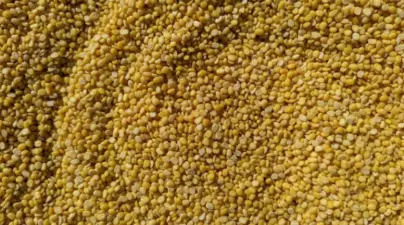
Pigeonpea, commonly known as arhar or tur, is one of India's principal pulse crops and an important source of dietary protein. The new reference genome is expected to strengthen research on pulse improvement and support breeding programmes aimed at increasing productivity and adapting the crop to changing climatic conditions.
India seeks to increase national pulse production to around 35 million tonnes by 2030-31 through improved seed systems, technology adoption, area expansion and strengthened post-harvest infrastructure.
Global Agriculture is an independent international media platform covering agri-business, policy, technology, and sustainability. For editorial collaborations, thought leadership, and strategic communications, write to pr@global-agriculture.com
04 August 2026, Chandigarh: Mahindra Tractors has launched a new Punjab-focused brand campaign in India featuring renowned Punjabi singer Sukhbir Singh. The campaign,
05 August 2026, Vietnam: As nations across Asia and the Pacific race to align food security with global climate commitments, Viet Nam's
16 June 2026, Nepal: Nepal's maize sector stands at a pivotal moment. As the country's second most important cereal crop after rice,