





Guest Author: Grace Waters, Environmental Journalist
20 May 2026, New Delhi: Agriculture is undergoing a major transformation driven by precision agriculture, where data, automation, and smart machinery are reshaping how crops are planted and managed.
Among the most impactful innovations in this space is precision planting and spacing technology, which enables farmers to place seeds with high accuracy, improving crop uniformity, resource efficiency and overall yield potential.
Precision agriculture refers to the use of digital tools and advanced equipment to manage farming activities at a highly detailed level. Instead of treating fields as uniform spaces, it recognizes variability in soil, moisture and fertility, and responds with targeted actions.
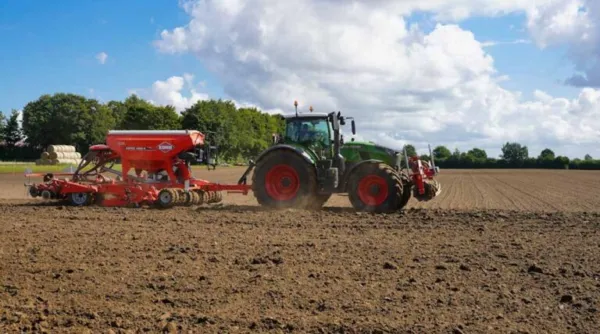
In planting operations, this means placing seeds with controlled spacing and depth using GPS guidance, sensors and automated systems. Studies show that accurate seed placement improves plant population consistency and supports higher yield performance by reducing variability in crop emergence.
At the core of precision planting systems are several integrated technologies working together:
- GPS-guided tractors and planters ensure straight, accurate planting rows
- Seed metering systems control how many seeds are released per unit distance
- Sensors and radar systems monitor spacing consistency during planting
- Variable-rate technology adjusts planting density based on soil fertility maps and field data.
- Automated control systems reduce human error in seed placement
These systems work together to reduce human error and improve consistency across the field, ensuring each seed is placed under optimal growth conditions.
Seed spacing directly affects how efficiently crops grow and compete within a field. When seeds are too close together, plants compete for sunlight, water and nutrients, leading to uneven growth and lower yields.
Proper spacing improves light penetration, nutrient access and air circulation, allowing plants to grow more efficiently and photosynthesize more effectively. It also helps reduce humidity buildup in the canopy, which can lower the risk of pests and disease.
Spacing decisions are not one-size-fits-all, as optimal distances depend on soil type, climate and crop variety. Because of this variability, site-specific approaches supported by precision agriculture are becoming increasingly common to improve consistency and productivity.
When spacing is too wide, field potential is wasted because fewer plants occupy the available land. Precision planting addresses this by ensuring each seed is placed at an optimal distance, supporting uniform growth and more efficient land use. It is most effective when supported by healthy soil systems.
Sustainable practices such as composting, crop rotation, and reduced chemical use improve soil fertility and structure, helping crops absorb nutrients more effectively. This shows that while spacing improves planting efficiency, soil health is equally important for long-term productivity.
The rise of smart farming technologies has significantly enhanced planting accuracy. Today's systems rely on a combination of digital innovations:
- IoT-enabled sensors that collect real-time soil and equipment data
- Machine learning algorithms that optimize planting patterns
- Automated seed drills that adjust spacing dynamically
- Drones and satellite imaging for field mapping and planning
These technologies work together to create a feedback loop: data is collected, analyzed and used to improve planting decisions continuously throughout the season.
An interesting but often overlooked aspect of precision planting is its conceptual overlap with pipelining systems, commonly used in engineering and data processing.
In agriculture, planting equipment functions like a pipeline - seeds move through a controlled flow system from hopper to metering unit to soil placement. Each stage must be precisely timed and synchronized to avoid bottlenecks or irregular spacing. Similarly, in industrial pipelining, tasks are divided into sequential stages to maximize throughput and efficiency.
This analogy becomes even more relevant in modern automated farms, where planting operations are integrated with data pipelines. Information from sensors flows through digital systems in real time, informing adjustments to machinery just as materials move through physical planting systems. The result is a highly coordinated setup where both physical and digital pipelines work together to improve agricultural efficiency.
A useful parallel can be seen in trenchless pipelining, which can extend underground pipe life to 35 to 50 years without major excavation or surface damage. Like precision planting, it focuses on long-term efficiency through accurate setup and minimal disruption rather than repeated corrective work.
The adoption of precision planting and spacing technologies offers several measurable advantages:
- Higher yield potential: Precise spacing reduces competition among plants, resulting in more uniform growth and stronger overall crop performance. This consistency often translates into improved harvest output across the entire field.
- Reduced input costs: Accurate seed placement reduces seed waste and improves fertilizer and irrigation efficiency. Over time, this leads to significant cost savings for farmers.
- Improved resource efficiency: Water and nutrients are applied more precisely based on plant needs and field variability. With agriculture using about 70% of global freshwater withdrawals, precision systems help reduce water waste while maintaining productivity.
- Enhanced field management: Uniform crop growth simplifies field operations such as irrigation, pest control and harvesting. It also allows farmers to manage large areas more efficiently with fewer complications.
- Data-driven decision-making: Precision planting systems generate valuable field data that helps farmers refine their strategies over time. This improves future planting decisions and supports long-term productivity gains.
Precision planting is evolving into a fully integrated system that combines automation, data analytics and intelligent machinery. As these technologies advance, planting operations will become increasingly autonomous, with systems capable of adjusting spacing, depth and density in real time based on field conditions.
Future integrations of AI, robotics and satellite-based monitoring into a unified farming ecosystem will allow farmers to respond dynamically to soil conditions, weather changes and crop requirements with minimal manual intervention. By improving efficiency while reducing resource waste, precision planting increases productivity and reshapes how farming systems operate globally.
Insecticides (India) Limited Launches New Paddy Insecticide 'Granuvia'
Global Agriculture is an independent international media platform covering agri-business, policy, technology, and sustainability. For editorial collaborations, thought leadership, and strategic communications, write
21 May 2026, Wendell: KIOTI Tractor, a division of Daedong-USA, Inc., today introduced the new CK40 Series compact tractors, marking a major
21 May 2026, New Delhi: The fields of tomorrow look nothing like those of a decade ago. Walk across a modern farm
29 April 2026, New Delhi: The National Bank for Agriculture and Rural Development (NABARD) has acquired equity stake in 24×7 Moneyworks