

12 May 2026, AU: Investment to reduce the economic costs to barley growers from the fungal disease, net form net blotch, have returned over $58 million worth of benefits from an $11 million outlay.
Efforts to reduce the cost to barley growers of net form net blotch infection have been underway since 2022 through the third phase of GRDC investment in the Centre for Crop and Disease Management (CCDM) at Curtin University.
An impact analysis has now found that investment in CCDM 3 has helped to reduce the risk of fungicide resistance while helping to improve varietal disease ratings. These benefits combine to reduce the long-term risk of net form net blotch for the barley industry and the costs in terms of yield loss, quality discounts and fungicides.
The analysis found the $11.06 million investment returned benefits worth $58.31 million - a benefit-cost ratio of 5.27 to 1, with 90% of the impact accumulating by 2046.
As Australia's second-largest grain crop, barley offers farming systems a flexible and resilient component to a rotation. Besides its adaptability to diverse climates, barley offers superior tolerance to drought, heat and sodic soils compared with wheat while also delivering strong returns, especially in premium malting markets.
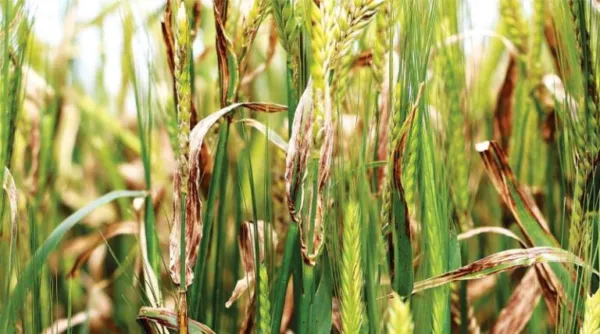
A major challenge faced by barley growers is the foliar disease net form net blotch. It reduces yields and grain weight while degrading grain quality by increasing screenings. This has the potential to cause market downgrades and impact profitability.
Managing the disease is complicated by 2 main factors. First, net form net blotch is a stubble-borne and seed-borne pathogen that requires integrated management strategies to decrease the risk and severity of infections.
Second, if not controlled well, the pathogen (Pyrenophora teres f. teres) has a tenacious propensity to develop resistance to fungicides. It exhibits resistance and reduced sensitivity to all the registered fungicides (Group 3, Group 7 and Group 11). Worse, the recent discovery of strains that carry mutations to all 3 modes of action makes shifting away from fungicide reliance particularly important.
As such, monitoring and responding to net form net blotch remains an ongoing challenge even as varieties with improved genetic resistance become a priority.
To help growers better manage fungal diseases, GRDC has invested in CCDM since 2014.
It is a strategic co-investment with Curtin University that is nearing the end of a third phase, called CCDM 3 (2022 to 2027).
CCDM's overarching objectives are to create enduring profitability for the grains industry by delivering adoptable innovative research outputs. This includes the development of human capacity and a focus on extension and industry partnership.
On average, net form net blotch costs growers an estimated total of $175/ha including yield loss (8.8% loss costing $72/ha), quality downgrades ($7/ha) and fungicide costs (2.9 applications costing $96/ha).
The total cost to industry averages an estimated $119 million per year. As such, the disease is one of the crop pathogens targeted by CCDM.
Key outputs relating to net form net blotch research during the third investment phase include:
- targeted monitoring capacity
- molecular analysis of fungicide resistance
- industry extension through the Australian Fungicide Resistance Extension Network (AFREN) and engagement supporting improved industry knowledge and skills for managing fungicide resistance
- faster detection and response to fungicide resistance development
- new genetic tools, knowledge and resources supporting a step change in varietal disease ratings.
As part of GRDC's ongoing efforts to continuously improve the delivery of research, development and extension services to the grains industry, an impact analysis was undertaken of CCDM 3's net form net blotch research. The analysis was conducted independently in March 2026 by George Revell, Senior Economist at Ag Econ.
For the analysis, impacts were focused on the approximate 680,000 ha of barley that is affected by the disease each year (15% of the total area).
The benefits of CCDM 3 research were modelled for 30 years from the last year of investment (2027). They were then related back to investment cost, which amounted to $11.06 million (adjusted for inflation and a 5% discount rate).
The investment was found to have returned $362.69 million in undiscounted benefits (meaning the total value of benefits projected to occur over the modelled period without adjusting for future differences in the value of money). Recalculated with a 5% real discount rate, the value is $188.87 million.
Of this amount, 73% is attributable to CCDM outputs across investment periods, with the third phase accounting for $58.31 million. Table 1 shows the projected benefit-cost ratio for the third investment period.
Table 1: The return on GRDC investment in CCDM 3 for net form net blotch over a 30-year span
The highest benefits were felt in the southern region, reflecting the highest frequency of the disease (100% of years) and the highest affected area in those years (32%).
Sensitivity testing showed a high level of variation in the return on investment, with the benefit-cost ratio ranging from $0.41 to $17.76 returned for every dollar invested. However, 98% of model simulations had a positive impact.
Benefits were driven by 2 key outcomes:
- improved industry knowledge and skills for managing fungicide resistance and faster detection of and response to fungicide resistance development, which generated $20.17 million in benefits (35% of the total)
- improvements in varietal disease ratings, which generated $38.14 million in benefits (65% of total).
At a farm level, the benefit for affected growers starts off at $5/ha from a reduced risk of fungicide resistance. Longer term, the benefit for affected growers reaches $42/ha driven by the commercialisation and widespread adoption of varieties rated moderately resistant (MR).
This gain in disease rating is driven by the CCDM providing elite lines with 3 quantitative trait loci (QTLs) for resistance from 2026. QTLs are a specific region of DNA where variation in genetic charactersitics changes the trait characteristics of the crops.
This material is expected to support progress towards the MR variety, potentially available to growers from 2037. With multiple QTLs for resistance, the new varieties are likely to contain multiple stacked resistance genes, increasing the longevity of the plant resistance ratings.
This amounts to a 2-step change in varietal resistance from the current average planted area.
MR-rated varieties are estimated to require 1.0 to 1.5 fungicide applications for net form net blotch, while still incurring a 0.3% to 2.3% yield loss. In contrast, MS-rated varieties (the current average) require 2.0 to 2.3 fungicide applications for the disease while still incurring an estimated 4.7% to 7.6% yield loss.
However, the analysis noted that the overall impacts are lower for net form net blotch compared to other CCDM-targeted pathogens. For example, see the impact analysis for wheat powdery mildew in GroundCover story Promising gains being made against wheat powdery mildew that is expected to achieve a 6-step change in varietal resistance.
Global Agriculture is an independent international media platform covering agri-business, policy, technology, and sustainability. For editorial collaborations, thought leadership, and strategic communications, write to pr@global-agriculture.com
13 May 2026, Australia: New Holland has expanded its footprint in Western Australia with the addition of a new dealership in Broome.
13 May 2026, New Delhi: Every year, farmers around the world lose 20-40% of their crops to pests and diseases. Behind each
29 April 2026, New Delhi: The National Bank for Agriculture and Rural Development (NABARD) has acquired equity stake in 24×7 Moneyworks