
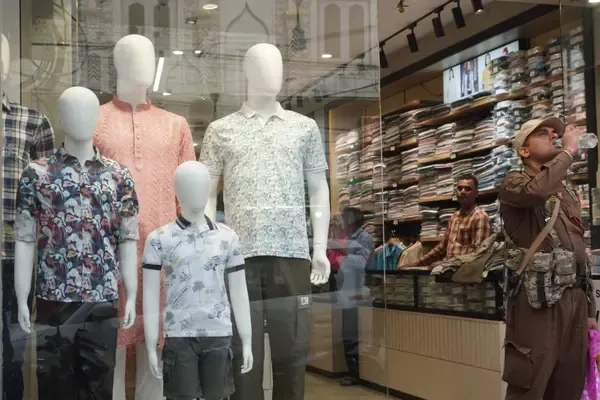

The glitter of discounts in Guwahati's evolving retail landscape reveals a deeper and more complex reality, one where perception often outweighs actual savings
Imagine it’s festive time with banners stretching across storefronts and mobile notifications buzz with “Mega Discount” alerts; shoppers are finding themselves asking a familiar question: are these discounts truly saving money, or are they simply clever marketing tactics designed to drive higher spending?
Rehab Gaps Leave Addicted Adolescents Without Support in Assam
From bustling markets in Guwahati like Fancy Bazaar to the polished corridors of malls, the city has become a microcosm of India’s retail boom; where “flat 50% off” signs compete with “buy one get one free” offers. But behind the eye-catching advertisements lies a growing scepticism among consumers.
“I used to feel excited seeing discounts,” said Sikha Agarwal, shopping for clothes in Fancy Bazaar. “But now I compare prices online, and sometimes I find that the so-called discounted price is almost the same as the original price listed a week ago.”
Her concern reflects a broader trend. With the rise of e-commerce platforms, price transparency has increased, allowing consumers to track fluctuations over time. However, it has also given retailers more sophisticated tools to manipulate pricing perceptions.
Retail experts explain that discounts often rely less on actual price cuts and more on consumer psychology. Anchoring, a strategy where a higher “original price” is displayed next to a lower “sale price” can make deals appear more attractive than they are.
“Many retailers inflate the Maximum Retail Price (MRP) before applying discounts,” said a marketing student Arup Sharma. “This creates an illusion of savings, even if the final price is not significantly lower than the product’s usual selling price.”
In Guwahati’s growing retail sector, this practice is becoming increasingly common, especially during festive seasons like Diwali and Bihu, when consumer spending peaks.
The debate over genuine discounts is particularly intense when comparing offline stores with online marketplaces. While physical retailers argue that they offer immediate availability and quality assurance, online platforms often lure customers with flash sales and limited-time deals.
At one mall, several store managers insisted their discounts were genuine. “We work directly with brands and offer seasonal clearance sales,” said a representative from a clothing outlet. “Our margins are lower during these periods, but it helps clear inventory.”
Yet some shoppers remain unconvinced. “Online sales feel more transparent because you can compare across multiple sellers,” said Rahul Borthakur, a banking professional. “In local stores, you often have to trust the seller’s word.”
However, online deals are not immune to scrutiny. During major sale events, critics have accused platforms of raising prices shortly before applying discounts, a tactic that has drawn attention from the Consumer Affairs Department.
Manish Kashyap, a college student says, “A days ago I searched for a shirt in an online platform. Two days later the price of the shirt increased from ₹1500 to 1999 which was unexpected. And after that the company added a discount coupon of 20 percent with my order, which means I had to pay same amount even after the discount. So why does a company do so?”
For many buyers who visit offline stores for purchase, they have limited varieties to choose from, but this is not in case of online purchase. However, most buyers note certain issues related to online shopping ranging from size issues, exchange and return policy and quality matters.
Manshi Jain, a housewife says, “Last week I went to buy clothes for my brother’s wedding. The shop had mentioned clearly ‘Buy 1 Get 1 Free at the rate of 1599’, but the reality hits different. I chose a dress for me which was priced for ₹2299. When I went to search for another one, I couldn’t as the shop had limited variety. And I had to pay full price to buy one dress.”
For small retailers in areas like Fancy Bazaar, the discount culture presents a double-edged sword. While offering discounts can attract customers, it also squeezes already thin profit margins.
“We cannot compete with big online platforms,” said Abdul Karim, a shop owner. “Customers come, check our products, and then order online because they think it’s cheaper. Sometimes, it’s not even true, but the perception is there.”
To survive, many local businesses have adopted their own promotional tactics, including bundle deals and loyalty discounts. But experts warn that this race to the bottom could hurt long-term sustainability.
Authorities have begun to take note of misleading discount practices. The Central Consumer Protection Authority has issued guidelines urging transparency in pricing and prohibiting false claims about discounts.
Still, enforcement remains a challenge, particularly in smaller cities like Guwahati, where monitoring every retailer is difficult.
Consumer right experts from the national consumer redressal forum emphasise the importance of awareness. “Shoppers should not rely solely on advertised discounts,” said, a consumer advocate. “Check price histories, compare across platforms, and ask questions in stores.”
The glitter of discounts in Guwahati’s evolving retail landscape reveals a deeper and more complex reality, one where perception often outweighs actual savings. What appears to be a thriving culture of bargains is, in many cases, a carefully crafted interplay of marketing strategies, consumer psychology, and competitive pressures. From inflated MRPs to limited-time offers, retailers both online and offline are increasingly relying on tactics that create urgency and the illusion of value, rather than delivering consistent, transparent pricing.
At the same time, consumers are no longer passive participants in this cycle. With access to digital tools and price comparison platforms, shoppers today are more informed and cautious than ever before. The voices of buyers like Sikha Agarwal and Rahul Borthakur reflect a growing awareness that not all discounts are genuine. This shift in mindset signals an important change: trust, once easily given to brands and retailers, now has to be earned through transparency and honesty.
However, the issue is not one-sided. Small businesses in areas like Fancy Bazaar are caught in a difficult position, struggling to compete with the scale and pricing strategies of large e-commerce platforms. Their challenges highlight the broader economic implications of the discount culture where survival often depends on adopting similar tactics, even at the cost of shrinking profit margins. If this trend continues unchecked, it could weaken the diversity and sustainability of local retail ecosystems.
Regulatory efforts by authorities offer a step in the right direction, but enforcement alone cannot solve the problem. True change lies in a combination of stricter oversight and greater consumer vigilance. Shoppers must look beyond flashy advertisements, question pricing claims, and make informed decisions based on actual value rather than perceived savings.
Ultimately, the question is not whether discounts are real or fake, but whether they genuinely benefit the consumer. In a marketplace driven by competition and perception, the responsibility is shared. Retailers must prioritise ethical practices, and consumers must remain alert and discerning. Only then can the promise of a “sale” return to what it was always meant to be a genuine opportunity to save, rather than a cleverly packaged illusion.