

In the end, Bihu is more than just a festival. It is an emotion, a shared experience that transcends boundaries. And at the centre of it all are the musical instruments that give it life, ensuring that the spirit of Assam continues to resonate, year after year
As the onset of spring gently touches the landscape of Assam, a familiar rhythm begins to echo across its towns and villages. The arrival of Bohag or Rongali Bihu is not merely the marking of a new year in the Assamese calendar, but a celebration of life itself. It is a time when people come together to rejoice, reconnect, and rediscover their cultural roots. At the heart of this celebration lies music, lively, soulful, and deeply traditional; brought to life through an array of indigenous musical instruments that define the very spirit of Bihu.
Guwahati Markets See Spike in Dhol Prices Before Bihu
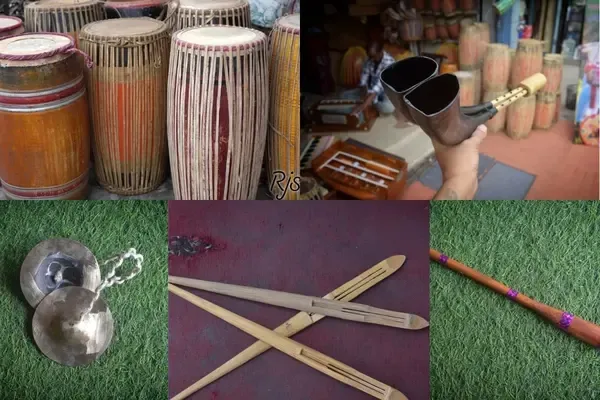
In the courtyards of rural homes, young boys and girls can be seen practising their steps for husori and jeng bihu, while in towns, stages are being set up for performances that will draw large crowds. Amidst all this preparation, the sound of the dhol slowly builds up, steady and inviting, as if calling everyone to join in. The dhol is not just an instrument; it is the heartbeat of Bihu. The Bihu dhol, often referred to as the pati dhol, is small in size but powerful in its presence. Its rhythmic beats set the tempo for the dances and songs, creating an energy that is infectious and impossible to resist.
Across different communities in Assam, drums take on various forms, each carrying its own story. Among the Dimasa and Tiwa communities, the khram is played with pride, while the Bodo and Rabha communities use the long-shaped kham, known for its deep and resonant sound. In the Darrang–Mangaldai region, the dhepa dhol stands out for its unique construction. Water is filled inside the drum, producing a distinct tone that adds a different dimension to the music. This drum is closely associated with ritualistic performances and reflects the spiritual aspect of Assamese culture.
Another powerful instrument is the joi dhol, known for its loud and commanding sound. It is often played during Deodhani dance performances, where the rhythm guides the movements of the dancers in a mesmerising display of devotion and artistry. In the same region, it is also used during religious ceremonies, sometimes played solo, showcasing its strength and versatility. The madal, on the other hand, is popular among tea tribe communities and accompanies jhumur songs, bringing a lively and cheerful rhythm to the performances.
Perhaps the most striking of all is the bor dhol, the largest among the drums. Its sheer size and booming sound make it a spectacle in itself. When played, it can be heard from a distance, drawing people towards the source of celebration.
Similarly, the kavi dhol, used in Goalpariya folk music, has its own distinct charm, played with a stick and producing a sound that complements the lyrical style of the region’s songs.
While drums form the backbone of Bihu music, wind instruments add melody and emotion. The pepa, made from buffalo horn, is one of the most recognisable sounds of Bihu. Its sharp and uplifting notes cut through the air, instantly creating an atmosphere of festivity. Whether it is the single-horned gutiya pepa or the double-horned juriya pepa, the instrument holds a special place in the hearts of the people.
The bahi, or flute, brings a softer and more soothing element to the music. Used by various communities such as the Mising, Rabha, and Bodo, the flute’s melody adds depth and balance to the overall sound. In Goalpara, the bam bashi offers a unique variation, with its funnel-like structure giving it a distinctive tone.
Simple yet charming, the xutuli is another instrument that captures the essence of Bihu. Often shaped like birds, it produces melodious sounds that resemble the chirping of birds, connecting the celebration to nature. Made from clay or bamboo, it is especially popular among children and adds a playful touch to the festivities.
Equally important are the handheld instruments that provide rhythm and texture. The gogona, commonly played by women, is a traditional reed instrument that produces a unique vibrating sound. It is not just an instrument but also a symbol of grace and cultural expression. The toka, a bamboo clapper, keeps the rhythm steady, especially during group performances like jeng bihu. Meanwhile, the taal, or cymbals, bring synchronisation to the music. Known by different names among different communities, they serve the same purpose of keeping time and enhancing the overall energy of the performance.
Beyond the instruments themselves lies a deeper narrative of tradition, continuity, and identity. For many families, the knowledge of making and playing these instruments is passed down through generations. An elderly artisan from a village near Mangaldai recalls how he learnt to make the pepa from his father, shaping buffalo horns with care and precision. Today, he continues the practice, even as he worries about the declining number of young people taking interest in the craft.
In urban areas like Guwahati, Bihu celebrations have evolved into large-scale events with organised performances and competitions. Yet, the essence remains rooted in tradition. Young performers, even those who have grown up in cities, make an effort to learn these instruments, often guided by elders or local cultural groups. For them, it is a way of staying connected to their roots in a rapidly changing world.
However, the journey is not without challenges. The rise of modern music and electronic instruments has influenced the tastes of younger generations. Traditional instruments, which require time and effort to learn, often struggle to compete with the convenience of digital alternatives. Additionally, the lack of proper documentation and institutional support poses a risk to the preservation of these art forms.
Despite these challenges, there is a sense of hope. Cultural organisations, schools, and community groups are taking steps to revive and promote traditional music. Workshops and training sessions are being organised to teach young people how to play instruments like the dhol, pepa, and gogona. Social media has also become a platform for artistes to showcase their talent, reaching audiences far beyond Assam.
As Bohag Bihu draws closer, the sounds of these instruments will once again fill the air, bringing people together in celebration. In every beat of the dhol, in every note of the pepa, and in every rhythm of the toka, there is a story waiting to be heard. It is a story of a land rich in culture, of people who cherish their traditions, and of a festival that continues to unite generations.
Bohag brings with it not only music and festivity but also a vibrant display of traditional attire that reflects Assamese identity. Men typically wear a dhoti paired with a kurta or chadar, along with the iconic gamosa, which is either draped around the neck or tied around the head as a turban. The gamosa, usually white with red woven motifs, symbolises respect and cultural pride. Their look remains simple yet elegant, with minimal use of ornaments such as a gold chain or ring. Women, on the other hand, adorn themselves in the traditional mekhela chador, often made of muga, paat, or eri silk, in shades of cream, red, and yellow with intricate designs. Their attire is complemented by traditional jewellery such as junbiri, lokaparo, gamkharu, keru, and thuriya, which are deeply rooted in Assamese heritage. The look is further enhanced with flowers like the kopou phool worn in the hair, adding grace and a natural charm to the festive appearance.
In the end, Bihu is more than just a festival. It is an emotion, a shared experience that transcends boundaries. And at the centre of it all are the musical instruments that give it life, ensuring that the spirit of Assam continues to resonate, year after year.