

GUWAHATI: Assam recorded 4,219 road accidents and 1,008 fatalities between January and March 2026, reflecting a marginal 2.6 per cent decline in deaths compared to 1,035 fatalities during the same period last year, officials stated in a press release dated Tuesday, April 28. On average, around 11 people are losing their lives on Assam's roads every day.
Riyan Parag Caught Vaping Inside RR Dressing Room; Risks Imprisonment, Heavy Fine
The figures were reviewed at a state-level road safety meeting chaired by Chief Secretary Ravi Kota on April 27, where district-wise performance across all 35 districts was assessed.
Despite the slight dip in fatalities, the overall number of accidents remained nearly unchanged from 4,232 cases reported in the first quarter of 2025. The Chief Secretary noted that the limited reduction in deaths, despite stable accident figures, indicates that crash severity continues to be a serious concern.
Nine districts- Guwahati City, Kamrup, Nagaon, Lakhimpur, Sonitpur, Golaghat, Barpeta, Dhubri and Hojai- accounted for nearly 50 per cent of the total fatalities. However, several high-burden districts, including Sonitpur, Nagaon, Dhemaji, Tinsukia, Dibrugarh and Biswanath, registered a notable year-on-year decline in fatalities, attributed to targeted enforcement and district-level interventions.
The meeting also highlighted that while Assam’s road accident severity index stands at 0.24- lower than the national average of approximately 0.36- it remains ‘disproportionately deadly’ than safer states such as Kerala and Tamil Nadu.
Expressing concern over the persistently high fatality rate, the Chief Secretary directed district administrations to undertake detailed reviews of every fatal accident. District Commissioners and Superintendents of Police have been instructed to ensure prompt corrective measures, including identification and rectification of accident-prone “black spots”, improved signage, and stricter enforcement of traffic rules.
Particular emphasis was laid on pedestrian safety, with officials noting that one in five fatalities involves pedestrians. The Transport Department has been asked to study best practices and expedite the formulation of safety guidelines for vulnerable road users.
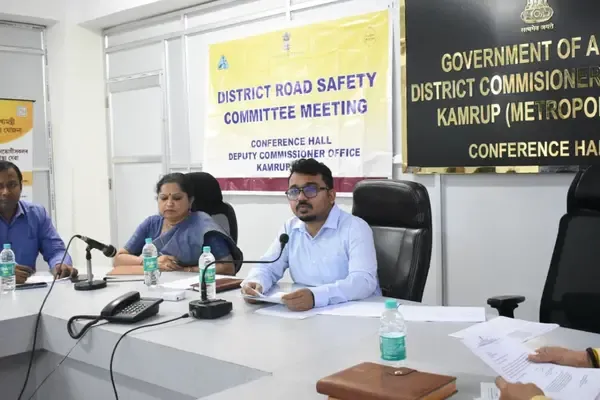
District administrations have also been directed to hold regular meetings of District Road Safety Committees (DRSCs), ensure timely data entry into monitoring portals, and prepare district-specific action plans based on local risk factors.
On the engineering front, agencies including NHAI, NHIDCL and the Public Works Department have been asked to prioritise road safety interventions such as widening of roads, improved junction design and corrective measures at high-risk locations.
The Director General of Police has been urged to intensify enforcement measures targeting helmet use, drunken driving, over-speeding and illegal parking, while districts have been encouraged to adopt innovative solutions such as relocating roadside markets away from highways.
The review also focused on strengthening post-accident response under the PM RAHAT scheme, for which Assam is the pilot state.
The scheme provides cashless treatment of up to ₹1.5 lakh for road accident victims for seven days. Officials were directed to ensure effective implementation and raise public awareness about empanelled hospitals.
To improve survival rates during the critical “golden hour”, the Health Department has been tasked with expediting the establishment of Trauma Centres and First Referral Units in high-need areas, along with mapping existing healthcare infrastructure and addressing gaps in manpower and equipment.
Reiterating that road safety is a shared responsibility, the chief secretary called for coordinated efforts across departments to reduce fatalities and improve emergency response systems.
Senior officials from the Transport, Police, Health and Public Works departments, along with representatives of national highway agencies and district administrations, attended the meeting.