
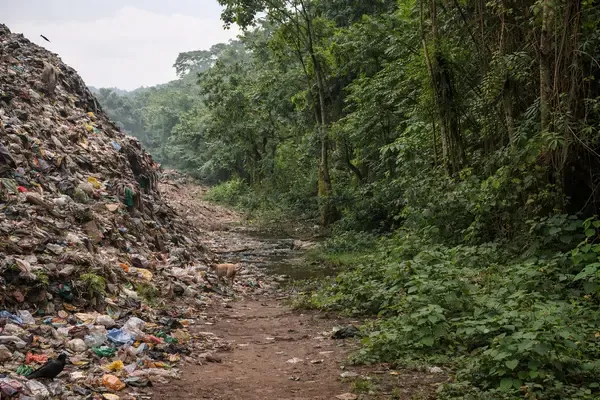

GUWAHATI: The Ministry of Environment, Forest and Climate Change on Monday, March 30, informed the Lok Sabha that the Solid Waste Management Rules, 2026 will come into force from April 1, after being notified earlier this year.
Man Allegedly Kills Woman in Visakhapatnam, Body Parts Stored in Fridge
The rules were notified in the Official Gazette on January 27, 2026, superseding the Solid Waste Management Rules, 2016, and aim to strengthen waste segregation and management under the principles of circular economy and extended producer responsibility.
The information was provided by Union Minister of State for Environment, Forest and Climate Change Kirti Vardhan Singh in a written reply.
Under the revised framework, waste must be segregated at source into four categories: wet, dry, sanitary and special care waste to improve collection and processing efficiency.
The rules also introduce “Extended Bulk Waste Generator Responsibility”, requiring bulk waste generators to ensure environmentally sound collection, transportation and processing of the waste they produce.
A centralised online portal will be set up to monitor all stages of solid waste management, including collection, transportation, processing and disposal.
The framework defines roles and responsibilities for urban and rural local bodies, as well as State and Union Territory governments and central ministries.
It also mandates a phased increase in the use of Refuse Derived Fuel (RDF) by industrial units, including cement and waste-to-energy plants, raising substitution levels from 5 per cent to 15 per cent over six years.
Additionally, the rules provide graded criteria for faster allocation of land for waste processing and disposal facilities, which will be subject to online reporting and audits.
The revised norms include time-bound action plans for legacy waste remediation, stricter restrictions on landfilling, and special provisions for hilly and island regions.
An environmental compensation mechanism based on the ‘polluter pays’ principle has also been introduced, along with central and state-level committees for implementation.