
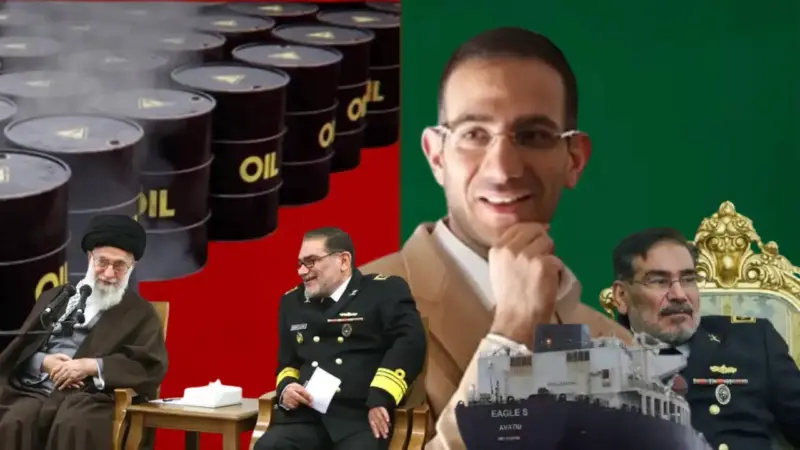

The Hidden Network of Oil Trading
In the clandestine realm of oil trading, few figures wield as much influence as Hossein Shamkhani, the son of Ali Shamkhani, a prominent advisor to Iran's Supreme Leader, Ayatollah Ali Khamenei.
Investigations have revealed that Shamkhani, operating under aliases such as 'H' and 'Hector,' has built a vast and secretive empire that has traded billions in Iranian and Russian crude oil, successfully bypassing Western sanctions through a sophisticated network of shell companies, vessels, and financial systems.
The saga begins with Milavous Group Ltd., a commodities trading and shipping firm based in Dubai, which made headlines in 2022 by securing high-end office space in one of the city's prestigious skyscrapers. As reported, Milavous rapidly expanded its operations, becoming a crucial player in a web that connected Iranian oil exports, Russian arms transactions, and even a hedge fund in London. According to the U.S. Treasury Department, this setup generated tens of billions in profits from illicit oil trades, often utilizing techniques like ship-to-ship transfers, blending with unauthorized oil types, and transshipping through Dubai and Oman.
Shamkhani's discreet tactics masked his considerable influence. Reports indicate that his companies collaborated with international oil firms and Wall Street banks, leveraging citizenship-by-investment programs to infiltrate global financial systems in regions like the UAE and Europe. The network's durability was bolstered by layers of complexity: over 115 affiliated companies, a fleet of aging tankers flying flags of convenience, AIS jamming to avoid detection, and intricate ownership structures that obscured the origins of the operations.
In mid-2025, sanctions struck hard. The U.S., U.K., and EU targeted significant parts of the network, including Milavous Group Ltd. and its affiliates. The U.S. Treasury's actions in July 2025 marked its largest Iran-related sanctions package since 2018, designating over 50 individuals and entities linked to Shamkhani, accusing him of controlling a substantial portion of Iran's crude exports and leveraging his father's political influence to accumulate wealth. The EU followed suit, imposing sanctions on Shamkhani for his involvement in the Russian oil trade and the shadow fleet, while the U.K. sought to dismantle related operations in London, prompting investigations into connections with banks like JPMorgan.
Despite the crackdown, the network proved resilient. Sources revealed that Shamkhani's operations reorganized, maintaining a significant presence in the market by altering routes, entities, and methods. In March 2026, the U.S. Justice Department intensified its efforts, filing civil forfeiture complaints to seize over $15 million linked to the network for allegedly violating sanctions and funding activities associated with the IRGC.
The ramifications of this empire extend beyond mere commerce. While the average Iranian faces economic struggles, currency devaluation, fuel shortages, and the impacts of war-intensified by the deaths of Supreme Leader Khamenei and Ali Shamkhani in the initial U.S.-Israeli strikes-elites like Hossein Shamkhani have transformed political connections into substantial offshore wealth, acquiring luxury properties in London, Dubai, and Europe, along with foreign passports.
Through interviews with traders, investigators, and officials, the investigation reveals the pathways: oil loaded in Iran, transferred at sea, blended and relabeled, then sold to buyers in China, India, and beyond. This shadow economy, valued at over $100 billion, has operated like a state within a state, robust enough to sustain Iran's regime despite ongoing conflict.
Shamkhani and Milavous have consistently denied any wrongdoing or connections to illegal activities. However, these findings illustrate how networks that evade sanctions thrive due to their complexity, political backing, and the global demand for cheaper oil, all while the conflict continues.