
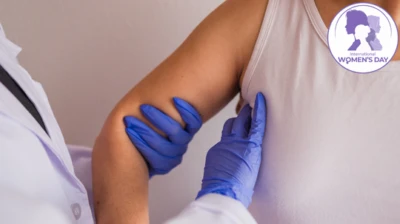
Breast cancer patients who chose to undergo complementary and alternative medicine treatments have the lowest survival rates, a JAMA Oncology study shows.
This form of cancer continues to be the most common cancer among women worldwide, and predicted that the number of new cases of the deadly disease will reach more than 3.5 million globally in 2050 -- rising by a third from 2.3 million in 2023.
The Global Burden of Disease analysis with data from 204 countries revealed that despite advancements in breast cancer treatments, yearly deaths from the disease will rise by 44 percent, from 764,000 to 1.4 million.
About 1.9 lakh Indian women are diagnosed with breast cancer annually, meaning that a new case is diagnosed every four minutes. On average, a woman in India dies of breast cancer every eight minutes, highlighting how urgently the country needs stronger awareness, early diagnosis and sustained care.
One factor that sets India apart is the age at which women are affected. Almost half of all breast cancer patients in the country are younger than 45. This is a much higher proportion than seen in many Western nations, where the disease is usually detected later in life.
Despite multiple advancements in therapies to cure breast cancer, including surgery, chemotherapy, radiation, endocrine therapy, and immunotherapy, a subset of patients continues to choose complementary and alternative medicine (CAM).
However, researchers from Yale University School of Medicine have now found that those who undergo CAM have over three times higher risk of death than those who receive standard therapy.
CAM consists of healthcare practices, products and therapies not generally considered part of conventional Western medicine such as herbal products, vitamins, minerals, meditation, acupuncture, hypnotherapy, tai chi, Reiki and guided imagery.
Using CAM alongside standard treatment was linked to a 45 percent higher risk of death compared with using standard treatment alone, the study noted.
Additionally, women who combined CAM with standard treatment were also less likely to receive key therapies such as hormone therapy or radiation, which worsened their chances of survival and recovery.
What Leads To Breast Cancer?
In 2023, 28 percent of the global breast cancer burden (6.8 million years of healthy life lost to disability, illness, and early death) was linked to six potentially modifiable risk factors. These include:
- High red meat consumption -- linked to nearly 11 percent of all healthy life lost
- tobacco use (including second-hand smoke; 8 percent),
- high blood sugar (6 percent),
- high body mass index (4 percent),
- high alcohol use and low physical activity (both 2 percent)
Substantial progress has been made in reducing the global breast cancer burden linked to high alcohol use and tobacco between 1990 and 2023, which declined by 47 percent and 28 percent, respectively.
Can AI Help With Earlier Detection?
Using artificial intelligence (AI) in breast cancer screening can reduce the number of cancers diagnosed in late stages by 12 percent, according to a major new study from Sweden.
The study found that fewer women in the AI group were diagnosed with breast cancer in the years after screening. There were 1.55 cancers per 1,000 women in the AI-supported group, compared with 1.76 per 1,000 in the standard screening group.
According to lead author Dr Kristina Lang of Lund University in Sweden, this indicates better early identification of clinically relevant cancers. She said of the results: "Our findings show that AI-supported screening improves the early detection of breast cancers that are more likely to become aggressive or advanced.
"This results in fewer serious cancers being diagnosed in the interval between screenings."
She added that wider adoption of AI-supported mammography could ease workforce pressures on radiologists while improving early detection, including of aggressive cancer subtypes.
Read more news like this on www.healthandme.com