




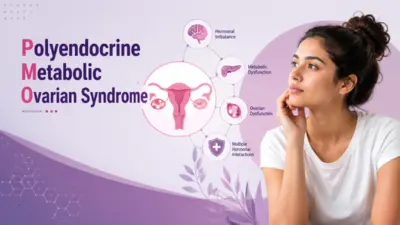

When the name misleads, the disease remains misunderstood. Hence, endocrinologists now propose renaming PCOS as Polyendocrine Metabolic Ovarian Syndrome or PMOS. This is because the term "Polycystic Ovarian Syndrome" is considered a misnomer.
The name makes it sound like the condition is only related to the ovaries. However, over 30% of such patients have normal ovaries. The root lies in the hypothalamus, pituitary, adrenals, pancreas, and adipose tissue - truly polyendocrine.
The cysts in the name are actually antral follicles. The real burden is insulin resistance, dyslipidemia, NAFLD, and a 2-fold higher cardiovascular risk by age 50.
Not just reproductive: PCOS is India's commonest endocrine disorder - 1 in 5 young women. It drives diabetes, hypertension, depression, and infertility.
PMOS, the acronym, expands as:
P - Polyendocrine: HPO axis + adrenal + insulin + leptin dysfunction
M - Metabolic: Insulin Resistance, obesity, fatty liver, CVD risk
O - Ovarian: Anovulation, hyperandrogenic ovarian dysfunction remains key
S - Syndrome: Heterogeneous, lifelong
This aligns with the 2023 International PCOS Guideline that defines it as a "metabolic + reproductive + psychological disorder". Yet patients are still told, "You just have cysts." PMOS reminds every physician to check OGTT, lipids, BP, and mental health at age 18, not 45. .
The bottom line is that by changing the name, it is possible to change the game. When a 16-year-old hears "Polyendocrine Metabolic Ovarian Syndrome", she understands it's not vanity or infertility alone.
Read more news like this on www.healthandme.com