




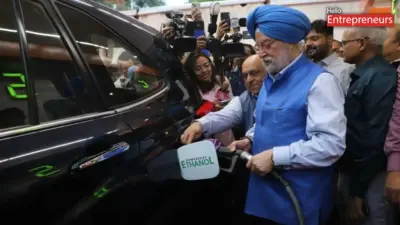

New Delhi: In India, the last few years have seen significant progress towards alternative fuel with the introduction of E85 fuel to the public. Rising to a price of ₹82.12/litre in Delhi, E85 is priced at about ₹20 lower than petrol at more than ₹102/litre. The government states this will help to mitigate fuel imports, improve emissions and feed agriculturalists. But many experts and vehicle owners have an important question: Is E85 truly good for consumers and more affordable, or is it yet another policy that could generate purported savings with results that are at best ambiguous?
E85 is fuel consisting of a combination of 85% ethanol and 15% petrol. Bioethanol is obtained from crops like sugarcane, maize, and other agricultural products. The ethanol blending policy to reduce India's dependence on imported crude oil has been in the news for some years now. Energy security can be aided by a decrease in imports in the case of India as it has a huge dependence on crude oil imports. Hence, it is highly desirable to cut down the imports of crude oil, as imported crude oil use is nearly 85% of India's total requirement. The new fuel seems like a pretty good deal at face value. If the price gap is ₹20 per litre, it will appeal to a lot of people who want to save on fuel costs. But the bottom line is more complicated.
The biggest concern is fuel efficiency. Ethanol has a less energy density compared to petrol. In general, cars that use E85 will use more fuel in the same amount of time. There are a number of automotive professionals who estimate a decrease in mileage by as much as 20% to 30% when compared with regular petrol. This means that fuel stations might not always be cheaper than running, depending on the price charged. But in some cases, drivers might end up spending nearly the same (or more) dollars per kilometer traveled.
Another significant factor is the compatibility of vehicles. Normal gasoline-powered cars do not have the equipment necessary to run on E85. It will only be used in specially designed Flex-Fuel Vehicles (FFVs) that are capable of safely accepting high ethanol levels. Generally, the use of E85 fuel in a traditional petrol car may cause damage to components of the fuel system and have an impact on the performance of the engine. At present, not too many flex fuel vehicles in India, where firms like Hero MotoCorp and Maruti Suzuki have begun to bring in compatible vehicles.
Those in favor of the policy say it's more than just fuel savings. Ethanol production also generates demand of these agricultural products which may help provide alternative income for farmers. The government also says it feels the use of ethanol will cut carbon emissions and the import of crude oil into the country. The long-term benefits may be able to support the economy and the environment.
But critics argue that consumers should take a closer look at the advertised pump price. They insist that lower miles would make E85 less or not economically feasible. Increasing demand for water for crops like sugarcane for ethanol generation has also been a concern, with some experts expressing worry about more reliance on water-consuming crops. Also, flex-fuel vehicles could force consumers to also buy new cars, placing an additional financial strain on them.
In reality, E85 is neither an all-in-one, nor an all-failing solution. It provides potential energy security, a reduction of oil imports, and helps to support local agriculture. As with all things, however, the true value of the savings to the consumer will depend on fuel efficiency, vehicle compatibility, and future fuel pricing. Whether it can actually offer cost savings to consumers in addition to at the pump is the real question about the success of E85, as India transitions to a flex-fuel future.