




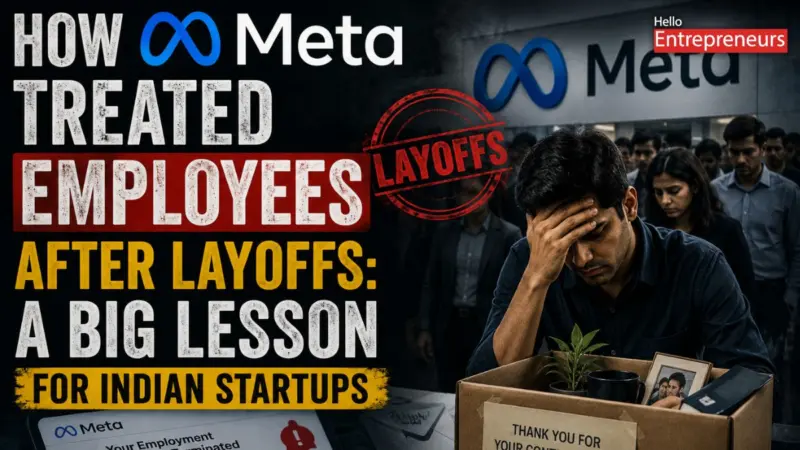

New Delhi: In a world first for the company, the latest round of job cuts at Meta have been the catalyst for a global conversation on how companies respond during tough times. Job reductions are not an uncommon occurrence in the tech sector, but how Meta executed its recent layoffs has left many employees, industry experts, and social media users astounded.
Meta dismissed nearly 8,000 staffers around 10% of the workforce worldwide, as part of a major restructuring centered around AI, according to reports. It’s also relocating about 7,000 workers to teams centered on AI and eliminating thousands of managerial positions.
The layoffs were not the issue however, the way they are done creates the biggest backlash. It was reportedly the day of the cuts that employees were asked to work from home. Then at about 4 AM local time, the emails of termination started coming in. Workers were suddenly cut off from company systems without any personal discussion and adequate explanation.
Many took this as a disrespectful and cold as all people felt. Employees posted some heart-wrenching pictures online, with some stating that they were working many hours, missing work time for their families and even contributing to the development of the company's own automated systems, only for the company to lay them off due to its AI-first policy. One viral post alleged that some employees were “constructing the AI that has replaced them.”
Soon after, social websites and Reddit conversations were littered with hateful remarks. The cuts were regarded as “inhuman” and “corporate cruelty” by many users. Others asked if in the present times, big tech firms are looking at their staffs as sources to tap into and not as permanent partners.
The added layer of sensitivity is that Meta still is continuing to invest a lot of money into AI infrastructure. The company is reportedly planning to invest more than $125 billion into AI-related initiatives and data centers this year.
This has left the tech world more at ease that if even the most talented engineers and managers at one of the world's wealthiest tech firms are not safe, then what is today's job security? It's even more difficult for foreign workers, particularly Indians who work in the United States on H-1B visas. Earlier, similar cut in the workforce had approached Indian professionals who had recently gone to foreign countries after undergoing long visa procedures. In these cases, a person may lose their job, and then face many uncertainties due to the limited time they have to find a new employer or leave the country.
This entire episode is an important lesson that can be learnt by the Indian startups. The Indian startup ecosystem is flourishing. There are any number of companies that would like to be the next giant technology company and they would like to do so globally. But a growth should not be at the cost of human life.
In the past few years, there have been multiple cases of startups in India where their employees received delayed salaries, underwent sudden downsizing, had poor communication and overwork culture. Many employees were let go in the short e-mails and unplanned calls during the low-demand phase. Some staff were made aware of job cuts via blocked accounts or social media rumours.
For Indian startups, there is one fundamental principle: An employee is not a mere line item in the spreadsheet. When things get tough, a company is put to the test in terms of its culture. In certain instances layoffs need to be made, particularly when times are tough, but its leadership effect matters so much. Communication, sufficient notice periods, emotional support, career change assistance and talking supportive can make a huge difference.
Rather than of losing all of the jobs, a company can still preserve the dignity of its employees. Another crucial factor is transparency and awareness of the use of AI. Companies globally are keen to drive AI forward in order to boost efficiencies and cut expenses. Laborers, however, should be aware of what possibilities these technologies have for their work in the future. When workers feel that they are setting up systems that may come to replace them, this can lead to strife.
It's always been a hallmark of tech that we innovate. But innovative solutions that are not empathetic raise mistrust. While the company's reduction in workforce could help it be leaner and become more AI-driven, the widespread response reflects the public's concern about employee welfare. Reputation can go beyond profits and products in today's connected world and into the workplace culture of a company.
This is something that Indian startups should remember when trying to create their long-term brands. It is not a sign of being a weak employee that you show respect to your employee it's a good way of leadership.