




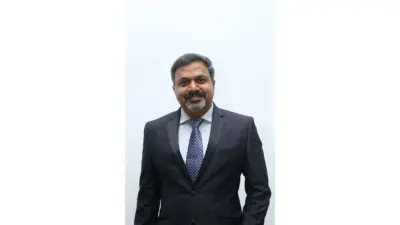

Prashanth Reddy, Founder & CEO, Anvayaa
New Delhi: Some of the most impactful businesses are not born in boardrooms; they begin with a deeply personal problem that refuses to go away. For Prashanth Reddy, founder of Anvayaa, that problem was strikingly simple yet emotionally loaded: who takes care of your ageing parents when you live miles away?
As the only child residing in a different country from his parents, Reddy experienced firsthand the quiet anxiety that millions of working Indians carry every day. Friends and extended family can offer occasional help, but informal support is inconsistent, unreliable, and often emotionally uncomfortable for everyone involved.
Recognising a Gap That India Refused to Address
India's ageing challenge is not a distant concern. With an elderly population already exceeding 14 crore and projected to grow significantly over the coming decades, the demand for structured elder care has never been more urgent. Yet for years, the sector remained fragmented and reactive. Hospitals addressed medical emergencies. Informal neighbourhood arrangements lacked structure and accountability. And for families managing demanding careers, geographic distance, and daily responsibilities, there was no reliable system to ensure ongoing support for their parents.
Reddy's insight was not simply that eldercare services were scarce, it was that the very nature of demand was evolving. Families were no longer looking for someone to intervene only during a health crisis. They were seeking something more holistic: preventive health monitoring, regular companionship, daily assistance, and the assurance that someone dependable would respond when it mattered most.
This shift, from crisis-driven intervention to continuous, preventive care, fundamentally changed the way Anvayaa was built.
Building for Continuity, Not Just Crises
Anvayaa's model is premised on a belief that Reddy articulates clearly: the majority of an elder's needs are not strictly medical. They encompass the fabric of daily life, having someone to talk to, assistance with routine tasks, reminders around medication, help navigating the healthcare system, and the comfort of knowing that an emergency will not go unaddressed.
This philosophy translated into a service structure centred on continuity. Anvayaa deploys full-time care managers across 38 cities, supported by a round-the-clock command centre. These care managers serve as a consistent, trustworthy bridge between the senior and their family professionally trained, yet emotionally attuned to the realities of ageing. Alongside human support, Anvayaa has integrated technology into its model through a patented health monitoring smartwatch designed specifically for Indian seniors, offering features such as real-time vital tracking, fall detection, and direct connectivity to its operations centre.
It is this combination of professional human presence paired with live technological visibility that Reddy believes builds the trust families seek.
Trust as a Business Challenge
Trust, he readily admits, has been one of the hardest things to earn in this business. Eldercare is a deeply emotional terrain. Families do not hand over responsibility for their parents lightly. No amount of branding or marketing can substitute for transparency, consistency, and honesty about the boundaries of what a service can deliver. Scaling that level of trust across cities, each with its own cultural norms, family expectations, and local realities has required both patience and operational discipline.
A telling indicator of where demand is coming from: a significant portion of Anvayaa's new members today are families with children settled abroad. India's growing diaspora, unable to provide direct care from thousands of kilometres away, is increasingly turning to organised services to fill that gap. It is a demographic reality reshaping the economics and expectations of the eldercare market.
A Market at an Inflection Point
Reddy believes India's eldercare sector is entering a structural transformation. The fragmented, ad hoc arrangements that have historically characterised the space are gradually giving way to more preventive, holistic, and professionally managed models. Perhaps most telling is a trend that Anvayaa was among the first to identify and actively champion: eldercare as a corporate responsibility. Long before it became a boardroom conversation, Reddy was educating employers on the silent productivity crisis brewing in their own workforce, the compounding stress of employees managing ageing parents from a distance. That advocacy is now paying off, with a growing number of corporates recognising elder care as a legitimate employee benefit, not a peripheral personal matter.
More Than a Service - A Societal Imperative
What distinguishes Reddy's vision is that it extends beyond building a successful company. His ambition is to shift the national conversation around ageing to reframe elder care not merely as a family duty to be privately managed, but as a collective societal responsibility that deserves structured investment, policy attention, and cultural recognition.
Anvayaa, in this sense, is not simply a response to ageing India. It is an attempt to build a dependable, scalable infrastructure around it one where dignity, companionship, and reliable support are treated not as privileges for the few, but as essentials that every ageing Indian deserves.
In turning a personal worry into a professional mission, Prashanth Reddy may have identified one of the most consequential opportunities of our generation and one that will only grow more urgent with time.