




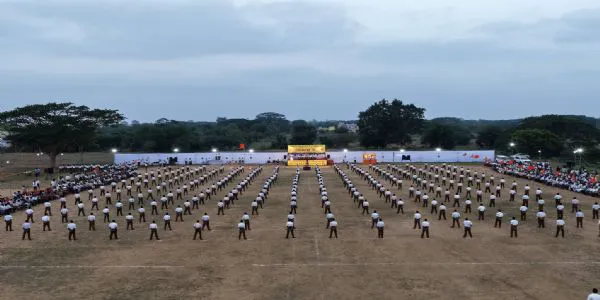

Bhubaneswar, 25 May (H.S.) : Rashtriya Swayamsevak Sangh (RSS) Purva Kshetra Kshetriya Karyavah Durga Prasad Sahusaid that "Panch Parivartan" (Five Transformations) forms the foundation for building a strong, self-reliant, and prosperous Bharat.
Addressing the concluding ceremony of the Odisha (Purv) Prant Sangh Shiksha Varg (Samanya) at Saraswati Shishu Vidya Mandir, Keshav Dham, Gatirout Patna in Cuttack, he emphasized that RSS has been working for the past century to unite Hindu society, remove social weaknesses, and inspire national awakening through character-building.
Sahu said RSS is not merely an organization but a continuous mission dedicated to the awakening of the Hindu nation. Describing Hindutva as a comprehensive way of life rooted in humanity, discipline, values, and universal welfare, he stated that RSS follows the principle of "nation-building through individual character-building."
Highlighting the significance of the 150th anniversary of Vande Mataram, Sahu referred to Bankim Chandra Chattopadhyay's Anandamath and its symbolic depiction of Bharat Mata in three forms - Bharat's glorious past, its colonized condition, and its future resurgence. He said the vision of a prosperous Bharat would be realized only when all citizens consider Bharat Mata as their mother and work collectively for national resurgence.
Referring to RSS founder Dr. Keshav Baliram Hedgewar, Sahu said Hedgewar believed that merely ending British rule would not automatically restore Bharat's greatness. According to him, internal weaknesses such as social disunity, selfishness, indiscipline, and loss of historical consciousness were equally responsible for national decline. RSS, he said, was founded to remove these weaknesses and reorganize society on the basis of unity and national consciousness.
Sahu stated that RSS shakhas play an important role in developing discipline, patriotism, and a "nation first" mindset among swayamsevaks. He also cited the example of Bharatiya Mazdoor Sangh, saying it introduced a balanced labour philosophy that combined workers' rights with national responsibility.
Emphasizing the role of RSS during disasters and emergencies, he said swayamsevaks are often among the first to reach affected areas for relief and rehabilitation work. He added that RSS-inspired organizations are currently running more than 1.5 lakh service projects across the country in sectors such as education, healthcare, and rural development.
Explaining the concept of "Panch Parivartan," Sahu said the five key themes are environmental protection, social harmony, civic responsibility, self-awareness rooted in Bharatiya values, and family awakening. He stressed the need for reducing plastic use, conserving water, protecting forests, and promoting plantation drives as part of practical environmental responsibility.
On social harmony, he called for eliminating caste discrimination and untouchability while promoting equality and mutual respect. He also urged people to reject divisive tendencies based on caste, language, or region.
Sahu emphasized the importance of "Swa Bodh" or self-awareness, urging citizens to abandon colonial mindsets and take pride in Bharatiya culture, traditions, indigenous products, and native languages. He also highlighted civic duties such as respecting the Constitution, obeying traffic rules, participating in voting, and protecting public property.
Describing family as the foundational unit of Bharatiya society, Sahu said strengthening family values and imparting patriotism and moral education to children are essential for social stability. He called upon participants to adopt the principles of Panch Parivartan in their personal lives and spread awareness in society.
Former Deputy Director of Odisha Directorate of Secondary Education Dr. Mihir Das, who attended as chief guest, praised RSS for its century-long contribution to character-building and nation-building. He said RSS swayamsevaks consistently demonstrate patriotism and commitment during public crises.
The training camp saw participation from 308 trainees representing 183 locations across 19 districts of Odisha Purva Prant. Participants included students, teachers, doctors, engineers, and professionals from various sectors. The camp featured rigorous physical training, intellectual sessions, and discussions aimed at strengthening discipline, ideological clarity, and organizational skills.
---------------
Hindusthan Samachar / Monalisa Panda