
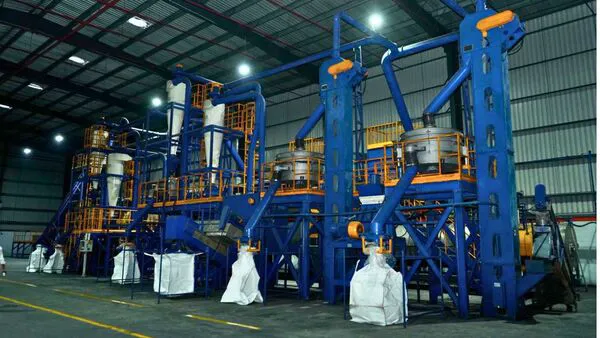

Rocklink India Pvt. Ltd. has set up its first integrated recycling facility in India at the UPSIDC Industrial Area in Sikandrabad, Uttar Pradesh.
The plant is designed to handle lithium-ion batteries, rare earth magnets and metal-bearing industrial waste, supporting domestic material recovery and circular supply chains.
The facility has an initial lithium-ion battery recycling capacity of 10,000 tonnes per year. It also includes rare-earth magnet dismantling and processing operations at 60 tonnes per month. A rare earth chloride processing line, with a capacity of 1,500 tonnes annually, is scheduled for completion in the first quarter of 2026.
Recycling Technology and Process Efficiency
The company's EPR-registered plant can process 95 types of pre- and post-consumer battery scrap. Its in-house developed R2 recycling technology converts battery waste into reusable materials while removing volatile organic compounds through controlled processing and gas treatment systems. The process achieves over 98 per cent recovery of metals such as aluminium, copper and iron, and produces black mass for further refining.
The facility is equipped to handle multiple battery formats and chemistries. Rocklink India also plans to add battery refurbishment operations to enable reuse of viable cells through testing, balancing and pack assembly.
( This CATL LFP battery addresses a major user concern with game-changing tech. Here's how)
Rare Earth Recycling
For rare earth recycling, the plant will process NdFeB, SmCo and AlNiCo magnets using semi-automated dismantling systems. The company is also introducing its Magcycle reverse logistics model in India to streamline collection and recycling of magnet scrap.
Rocklink India says it will work with research institutions, startups and government stakeholders to improve recycling processes and strengthen supply chains for critical materials.