
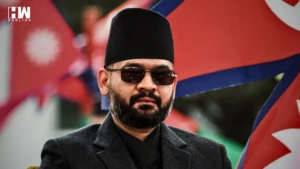

This is Balendra Shah, popularly known as Balen Shah, the current Prime Minister of Nepal.He took oath of office on March 27, 2026. His rise is unusual.
From being a structural engineer and a well known rapper to serving as an independent Mayor of Kathmandu, he has now moved to the highest political office, backed by a strong youth driven shift in the country's politics.
Here is a closer look at his persona and early approach to governance.
The "Dark Glasses" Persona
Balen Shah is almost always seen wearing black aviator sunglasses in public. This appears to be a deliberate branding choice.
In South Asian politics, where leaders traditionally project a relatable, "man of the people" image through attire and symbolism, his aviators stand out. They reinforce his outsider identity and signal that he is not attempting to fit into the established political mould. The emphasis is not on optical transparency, but on a different kind of vision.
At the same time, there is a risk. What currently reads as composure and control could, in a moment of national crisis, be interpreted as distance or even detachment if not balanced with visible accessibility.
Immediate Reforms
Within a short period of taking office, he has indicated a series of strong reforms aimed at reducing political influence in key institutions.
These include a proposed ban on campus based political activity and a shift towards non partisan student councils. There is also an emphasis on keeping civil servants and teachers away from political affiliations.
In education, the move towards continuous assessment up to Grade 5 reflects a structured, foundational approach. As a structural engineer, this aligns with a logic of strengthening the base before building complexity at higher levels.
On the cultural front, there are signals of encouraging institutions with foreign names to adopt original Nepali identities.
Are These Reforms Prudent
Views are divided. Supporters believe Nepal's institutions have been deeply affected by political interference. Reducing this influence could improve efficiency and restore merit based functioning.
However, the political risk is significant. By restricting campus politics, he is directly weakening the grassroots networks of established parties such as the Nepali Congress, Communist Party of Nepal UML, and Communist Party of Nepal Maoist Centre. This may improve administrative efficiency, but it also creates resistance from groups that continue to have strong street level influence.
Visionary or Immature
This is the central debate around Balen Shah. The "immature" label often stems from his earlier provocative positions, including the "Greater Nepal" map controversy during his tenure as Mayor.
However, a more accurate reading may be that he is not immature, but unconventional. He operates less like a traditional statesman and more like a disruptive CEO, prioritising speed, clarity, and visible outcomes.
The real test of his leadership will not be these early decisions. It will be how he handles Nepal's delicate geopolitical position, often described as a "yam between two boulders," balancing relations between India and China.
The Political Dynamic
It is also important to note the internal political structure. While Balen Shah is the face of the government, the legislative strength is influenced by figures like Rabi Lamichhane of the Rastriya Swatantra Party. The balance between executive intent and legislative control will play a crucial role in determining the stability and longevity of this government.
Conclusion
It is still early in his tenure. He brings a different background, a distinct style, and a clear intent to alter how systems function. Whether this translates into durable institutional reform or faces structural resistance will become clearer with time.