




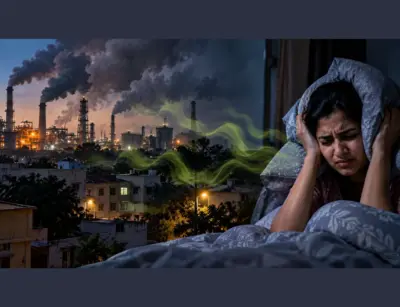

Hyderabad: Residents across the city report strong chemical smells at night, raising concerns over industrial emissions, monitoring failures and respiratory problems.
Children, elderly people and those with respiratory conditions are among those reporting discomfort as pungent odours spread across Hyderabad's suburbs and central neighbourhoods at night. Areas mentioned in the report include Secunderabad, Begumpet, Somajiguda, Panjagutta, Khairatabad and Banjara Hills.
The problem has long been reported in industrial areas on the outskirts. Residents are now reporting similar odours in central parts of the city, with some saying the smell interrupts their sleep and causes breathing difficulties.
Srinagar Colony Road Dug Up Just 6 Days After Relaying: Residents Question GHMC, HMWSSB
Why the smell intensifies at night
The report attributes the problem partly to temperature inversion during the night and early morning. Under these conditions, air near the ground may remain trapped beneath a layer of warmer air, limiting the dispersion of pollutants.
It alleges that some pharmaceutical and bulk drug units release chemical vapours at night to avoid inspections during the day. However, the source does not identify the individual factories responsible for the reported odours or provide independent emissions measurements to establish the cause in each neighbourhood.
Industrial areas report persistent chemical odours
Bachupally, Mallampet, Nizampet, Patancheru, Beeramguda, Pocharam, Jannaram industrial zone, Jeedimetla, Cherlapally and Quthbullapur are among the areas identified in the report.
Pharmaceutical and bulk drug manufacturing units use solvents such as butanone, methanol, acetone and isopropyl alcohol. The source alleges that some units release untreated emissions instead of routing them through pollution-control systems.
Industrial rules require appropriate pollution-control and treatment arrangements. The report alleges that some operators open bypass valves at night to release untreated gases, potentially exposing nearby residents to chemical odours.
Residents in central Hyderabad also report exposure
Industrial areas such as Jeedimetla, Bollaram, Bachupally and Kathedan, along with units in Sanath Nagar, are cited as possible sources of pollution affecting residential neighbourhoods.
According to the report, winds from the north-west may carry emissions from industrial areas through Kukatpally and Begumpet towards Panjagutta and Banjara Hills. Low wind speeds may limit the dispersal of pollutants, allowing odours to linger.
The report also points to dry-cleaning units and dyeing shops that use perchloroethylene and other chemicals. It alleges that inadequate exhaust systems allow vapours to escape into the air.
Some small units are also accused of discharging untreated, chemical-laden wastewater into municipal drains at night. The source says the waste may react with material in the drains and contribute to foul smells.
Residents report breathing problems and eye irritation
People exposed to the odours report throat irritation, dry coughs and breathing difficulties. Those with asthma and other respiratory conditions are said to face greater discomfort.
Other reported symptoms include burning and redness of the eyes, itching, headaches, dizziness and nausea. Some residents say the smell wakes them from sleep and that they experience a racing heartbeat, making it difficult to rest.
The report cites medical concerns that prolonged exposure to certain industrial pollutants may affect lung function and contribute to chronic respiratory conditions. It also says children and elderly people may be more vulnerable to respiratory infections and allergic reactions.
Other potential effects mentioned include increased blood pressure, strain on the heart, fatigue and memory problems. The specific chemicals and exposure levels responsible for these effects have not been established in the supplied report.
Online post flags chemical odour in Bachupally
A social media post dated September 9, 2025, reported a strong chemical odour in Bachupally and suggested that nearby industrial units could be responsible. It warned that the smell might worsen in the evening and could cause respiratory discomfort, particularly among children, elderly people and those with pre-existing conditions.
The post reflects residents' concerns but does not independently establish the source of the emissions.
How pollution monitoring systems can be bypassed
The report questions the functioning of the Telangana Pollution Control Board's monitoring mechanisms. It refers to the Online Continuous Emission and Effluent Monitoring System (OCEMS), which uses sensors and analysers to measure pollution from industrial units and transmit readings to the pollution control authorities.
It alleges that some industries interfere with the system by coating or covering sensors, manipulating readings, cutting power supplies or disconnecting internet and signal connections. These actions could prevent monitoring data from reaching the authorities' servers.
The report also alleges that some units divert emissions through alternative pipes, bypassing the monitored outlet. In such cases, sensors on the designated outlet could record little or no pollution even if emissions continue elsewhere.
According to the report, technical staff can identify interruptions in data transmission and the timing of disconnections through monitoring dashboards. It alleges that authorities sometimes issue notices rather than taking stronger action against repeat offenders. The supplied material does not include official responses from the pollution control board or the industries concerned.
What residents can do when odours spread
The report recommends the following precautions when strong chemical odours are detected:
- Close windows and doors to limit the entry of outside air.
- If available, use an air purifier with a high-efficiency particulate air (HEPA) filter and an activated carbon filter, while recognising that effectiveness varies by pollutant.
- Remain indoors until the odour subsides, if staying indoors is safer than going outside.
- Avoid exposure and seek medical attention if breathing difficulties or other serious symptoms develop.
An N95 mask can filter airborne particles but does not reliably protect against many chemical gases and vapours. Residents should follow local emergency guidance if authorities issue an alert.
The report calls for effective monitoring of industrial emissions and action against any units found to be violating pollution-control requirements.