
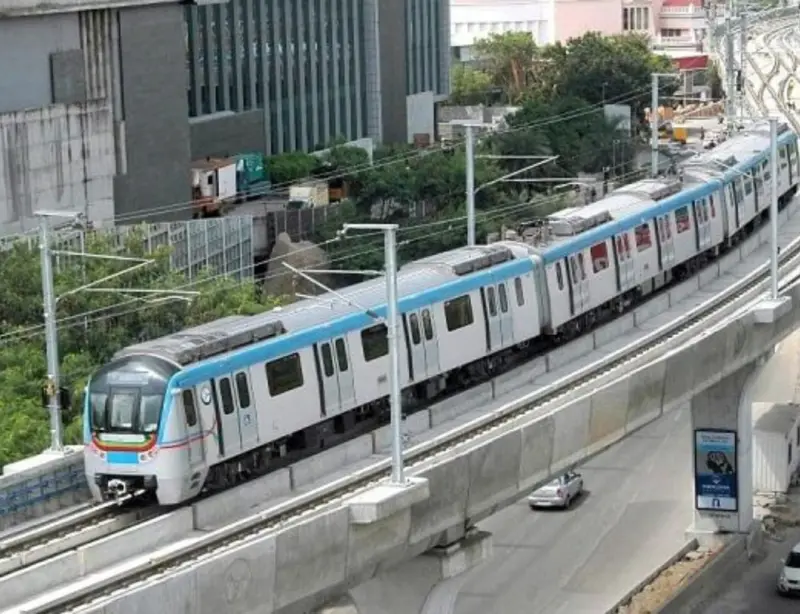

HYDERABAD: The Rapid Rail Transit System (RRTS) has emerged as a new proposal even as the state prepares for Metro Rail Phase II. The Centre has suggested implementing the RRTS project in Hyderabad , citing lower construction costs and faster travel compared with the existing metro.
The Union Ministry of Housing and Urban Affairs has indicated that RRTS can provide a high-speed rail experience for passengers. The system runs faster than the current metro services in the city. The development comes as the state government has already acquired the first-phase metro project from Larsen & Toubro as part of Phase II plans.
Approval uncertainty over metro expansion plans
The state has submitted detailed project reports (DPRs) for Metro Phase II to the Centre for approval. However, it remains unclear whether these will be cleared or if the Centre will push for RRTS instead. This uncertainty has triggered debate over the future of urban transport expansion.
Metro phase II involves extensive corridor expansion
The government has planned metro expansion across eight corridors covering 76.4 km, including:
- Nagole to Airport (36.8 km)
- Raidurg to Kokapet Neopolis (11.6 km)
- Mahatma Gandhi Bus Station (MGBS) to Chandrayangutta (7.5 km)
- Miyapur to Patancheru (13.4 km)
- LB Nagar to Hayathnagar (7.1 km)
Additional corridors covering 86.1 km include:
- Airport to Future City (39.6 km)
- Jubilee Bus Station (JBS) to Medchal (22 km)
- JBS to Shameerpet (22 km)
The total estimated cost of Metro Phase II is about ₹48,000 crore. Including ₹15,000 crore for acquiring Phase I, the overall cost may reach ₹63,000 crore. The state plans to raise funds from international agencies such as Japan International Cooperation Agency (JICA) and Asian Development Bank (ADB) at around 2% interest. A preliminary agreement has already been reached with JICA.
RRTS seen as faster, cost-effective alternative
The Centre has indicated that the RRTS can be implemented across 192.2 km with a similar cost of ₹48,000 crore, making it more economical.
RRTS trains can operate at a maximum speed of 160 kmph, compared with 80 kmph for metro trains. They use the European Train Control System (ETCS), which is more advanced than current metro signalling systems.
The system is already operational between Delhi and Meerut over an 82.15 km stretch under the name 'Namo Bharat'.
Construction concerns flagged by metro authorities
The Centre has proposed RRTS corridors on routes such as Patancheru-Lakdikapul-Aramghar, Raidurg-Kokapet, LB Nagar-Hayathnagar, MGBS-Chandrayangutta, Airport-Future City, JBS-Medchal, and JBS-Shameerpet.
However, Hyderabad Metro Rail Limited (HMRL) has noted that flyovers along these routes could increase construction costs. The Centre has suggested building underground corridors to reduce expenditure.
Despite these proposals, the state is likely to proceed with metro expansion.