
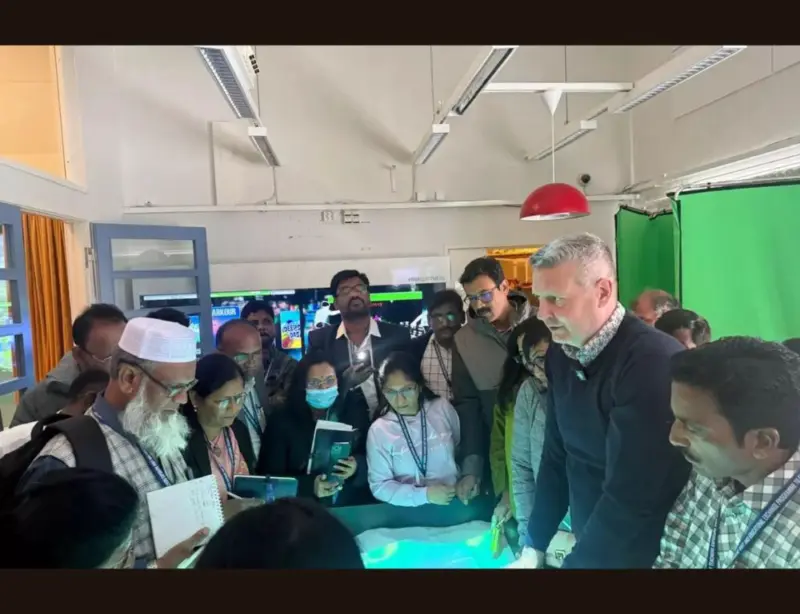

HYDERABAD: A team of Telangana education officials is studying the school education system in Finland, widely regarded as one of the best in the world.
The 40-member delegation, led by education secretary Yogita Rana, is visiting schools to examine teaching methods, teacher training, and curriculum design. The team is assessing how best practices in Finland can be adapted in Telangana.
Focus on teachers and continuity
Teachers hold a central position in Finland's education system. A master's degree is mandatory to become a teacher. In addition to academics, teachers are trained in arts, music, and theatre.
One teacher typically stays with the same group of students from Class 1 to Class 6. This helps identify each child's strengths and weaknesses and tailor teaching methods accordingly. Teachers also have full autonomy in planning lessons.
Mother tongue instruction, balanced schedules
Students are taught in their mother tongue Finnish or Swedish. The system ensures balance between study and rest, with a 15-minute break after every 45-minute class.
Class sizes are limited to around 20 students in primary school and 25 in high school. Schools provide free, nutritious mid-day meals and regular health check-ups, including dental care.
Weekly teaching hours are also fewer. For Class 1 students, there are only 21 periods per week. Computer education is integrated into all subjects rather than taught separately.
Early education and compulsory schooling
Early Childhood Education and Care (ECEC) is mandatory. Parents can enrol children in daycare from six months of age.
Free and compulsory education begins from Class 1. Before enrolment, children aged six to seven must complete a one-year preparatory programme.
No exams or rankings till Class 9
Unlike India, where exams begin early, Finland does not conduct annual exams until Class 9. Student assessment is based on continuous and comprehensive evaluation.
There are no school rankings, and quality remains consistent across institutions. About 98% of students study in government schools, while private schools account for only 2%.